CAS 5398-36-7
:Ethyl 2-amino-4-thiazolcarboxylat
Beschreibung:
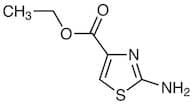
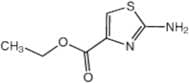
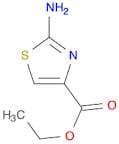
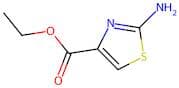
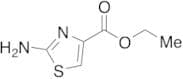
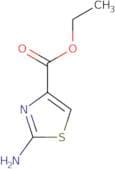
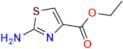
Ethyl 2-amino-4-thiazolcarboxylat ist eine organische Verbindung, die durch ihren Thiazolring gekennzeichnet ist, eine fünfgliedrige heterocyclische Struktur, die Schwefel und Stickstoff enthält. Diese Verbindung weist eine ethylesterfunktionelle Gruppe auf, die zu ihrer Reaktivität und Löslichkeit in organischen Lösungsmitteln beiträgt. Das Vorhandensein der Aminogruppe (-NH2) erhöht ihr Potenzial zur Bildung von Wasserstoffbrücken, was sie zu einem vielseitigen Zwischenprodukt in der organischen Synthese macht. Ethyl 2-amino-4-thiazolcarboxylat wird häufig in der Synthese verschiedener Arzneimittel und Agrochemikalien aufgrund seiner biologischen Aktivität eingesetzt, insbesondere bei der Entwicklung von antimikrobiellen und entzündungshemmenden Wirkstoffen. Ihre molekulare Struktur ermöglicht verschiedene Substitutionsreaktionen, was sie zu einem wertvollen Baustein in der medizinischen Chemie macht. Darüber hinaus ist es wichtig, diese Verbindung mit Vorsicht zu behandeln, da sie Gesundheitsrisiken darstellen kann, wenn sie eingenommen oder eingeatmet wird, und geeignete Sicherheitsprotokolle während ihrer Verwendung in Laborumgebungen befolgt werden sollten.
Formel:C6H8N2O2S
InChl:InChI=1S/C6H8N2O2S/c1-2-10-5(9)4-3-11-6(7)8-4/h3H,2H2,1H3,(H2,7,8)
InChI Key:InChIKey=XHFUVBWCMLLKOZ-UHFFFAOYSA-N
SMILES:C(OCC)(=O)C1=CSC(N)=N1
Synonyme:- 2-Amino-1,3-Thiazole-4-Carboxylate
- 2-Amino-1,3-thiazole-4-carboxylic acid ethyl ester
- 2-Amino-4-(ethoxycarbonyl)-1,3-thiazole
- 2-Amino-4-Thiazolecarboxylic acid ethyl ester
- 2-Amino-4-ethoxycarbonylthiazole
- 2-Aminothiazol-4-carboxylic acid ethyl ester
- 2-Aminothiazole-4-carboxylic Acid Ethyl Ester
- 2-Imino-2,3-dihydro-thiazole-4-carboxylic acid ethyl ester
- 4-Thiazolecarboxylic acid, 2-amino-, ethyl ester
- Ethyl 2-amino-1,3-thiazole-4-carboxylate
- Ethyl 2-amino-4-thiazolecarboxylate
- NSC 43547
- Weitere Synonyme anzeigen
Sortieren nach
Reinheit (%)
0
100
|
0
|
50
|
90
|
95
|
100
9 Produkte.
Ethyl 2-Aminothiazole-4-carboxylate
CAS:Formel:C6H8N2O2SReinheit:>98.0%(GC)(T)Farbe und Form:White to Orange to Green powder to crystalMolekulargewicht:172.20Ethyl 2-aminothiazole-4-carboxylate, 98%
CAS:This Thermo Scientific Chemicals brand product was originally part of the Alfa Aesar product portfolio. Some documentation and label information may refer to the legacy brand. The original Alfa Aesar product / item code or SKU reference has not changed as a part of the brand transition to Thermo SciFormel:C6H8N2O2SReinheit:98%Farbe und Form:Powder, Pale cream to cream to pale yellowMolekulargewicht:172.20Ethyl 2-aminothiazole-4-carboxylate
CAS:Formel:C6H8N2O2SReinheit:97%Farbe und Form:SolidMolekulargewicht:172.2049Ref: IN-DA003Q38
5kgNachfragen10kgNachfragen25kgNachfragen1g21,00€25g24,00€5g25,00€10g25,00€100g61,00€500g186,00€Ethyl 2-amino-1,3-thiazole-4-carboxylate
CAS:Ethyl 2-amino-1,3-thiazole-4-carboxylateFormel:C6H8N2O2SReinheit:≥95%Farbe und Form: yellow powderMolekulargewicht:172.20g/molEthyl 2-aminothiazole-4-carboxylate
CAS:Formel:C6H8N2O2SReinheit:97%Farbe und Form:SolidMolekulargewicht:172.2Ethyl 2-Amino-1,3-thiazole-4-carboxylate
CAS:Kontrolliertes ProduktFormel:C6H8N2O2SFarbe und Form:NeatMolekulargewicht:172.2Ethyl 2-amino-thiazole-4-carboxylate
CAS:Ethyl 2-amino-thiazole-4-carboxylate (ETAC) is an inhibitor of protein synthesis. It binds to the dna and inhibits transcription, leading to cell death by inhibiting the production of proteins vital for cell division. ETAC has been shown to have cytotoxic activity against cancer cells and hemolytic activity. It also has a strong fluorescence probe property, which may be used in cancer diagnosis. ETAC can inhibit protein synthesis in cells that are resistant to other antimicrobial agents and platinum-based chemotherapy, making it a potential treatment for these infections. The pharmacokinetic properties of ETAC are not well studied but it is excreted through urine, suggesting that it is hydrophilic and may be metabolized with glucuronidation or sulfation. The molecular modeling study suggests that the hydrogen bond between ETAC and the dna phosphate group may explain its inhibitory effects on DNA synthesis.Formel:C6H8N2O2SReinheit:Min. 99.0 Area-%Molekulargewicht:172.21 g/mol