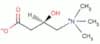
CAS 541-15-1
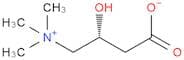
:(-)-Carnitin
Beschreibung:
(-)-Carnitin, mit der CAS-Nummer 541-15-1, ist eine quartäre Ammoniumverbindung, die eine entscheidende Rolle im Stoffwechsel von Fettsäuren spielt. Es handelt sich um eine natürlich vorkommende Substanz, die im Körper aus den Aminosäuren Lysin und Methionin synthetisiert wird. Charakteristisch ist, dass (-)-Carnitin ein weißes, kristallines Pulver ist, das in Wasser löslich ist und einen leicht bitteren Geschmack hat. Es existiert als Zwitterion bei physiologischem pH-Wert und besitzt sowohl eine positive als auch eine negative Ladung, was zu seiner Löslichkeit und biologischen Aktivität beiträgt. Diese Verbindung ist essentiell für den Transport von langkettigen Fettsäuren in die Mitochondrien, wo sie zur Energieproduktion oxidiert werden. Darüber hinaus wurde (-)-Carnitin auf seine potenziellen Vorteile bei der Verbesserung der sportlichen Leistung, der Unterstützung von Gewichtsverlust und der Verbesserung der Herzgesundheit untersucht. Es ist oft als Nahrungsergänzungsmittel erhältlich und wird für sein Sicherheitsprofil anerkannt, obwohl Personen vor der Anwendung, insbesondere solche mit bestehenden Gesundheitsproblemen, Gesundheitsfachleute konsultieren sollten.
Formel:C7H15NO3
InChl:InChI=1S/C7H15NO3/c1-8(2,3)5-6(9)4-7(10)11/h6,9H,4-5H2,1-3H3/t6-/m1/s1
InChI Key:InChIKey=PHIQHXFUZVPYII-ZCFIWIBFSA-N
SMILES:C([N+](C)(C)C)[C@@H](CC([O-])=O)O
Synonyme:- (-)-<span class="text-smallcaps">L</span>-Carnitine
- (-)-Carnitine
- (3R)-3-Hydroxy-4-(trimethylazaniumyl)butanoate
- (D)L-Carnitine
- (R)-(3-Carboxy-2-hydroxypropyl)trimethylammoniumhydroxid
- (R)-(3-carboxy-2-hydroxypropyl)trimethylammonium hydroxide
- (R)-Carnitine
- 1-Butanaminium, 2,4-dihydroxy-N,N,N-trimethyl-4-oxo-, inner salt, (2R)-
- 1-Propanaminium, 3-carboxy-2-hydroxy-N,N,N-trimethyl-, hydroxide, inner salt, (R)-
- 1-Propanaminium, 3-carboxy-2-hydroxy-N,N,N-trimethyl-, inner salt, (2R)-
- 1-Propanaminium, 3-carboxy-2-hydroxy-N,N,N-trimethyl-, inner salt, (R)-
- 3-Hydroxy-4-(trimethylammonio)butanoate
- <span class="text-smallcaps">L</span>-Carnipure
- Aminocarnifarm
- Ammonium Hydroxide Inner Salt, 1-(3-Carboxy-2-Hydroxypropyl)Trimethyl-2R-
- Ammonium, (3-carboxy-2-hydroxypropyl)trimethyl-, hydroxide, inner salt, <span class="text-smallcaps">L</span>-
- Ammonium, (3-carboxy-2-hydroxypropyl)trimethyl-, hydroxide, inner salt, L-
- Carniking
- Carniking 50
- Carnil
- Carnilean
- Carnipass
- Carnipass 20
- Carnitene
- Carnitor
- Carnivit
- Coaxel
- L-Carnipure
- L-Carnitine Base
- Levocarnitine
- Levocarnitinep
- Natrulon RC
- St 198
- Vitamin B<sub>T</sub>
- Vitamin BT
- hidroxido de (R)-(3-carboxi-2-hidroxipropil)trimetilamonio
- Weitere Synonyme anzeigen
Sortieren nach
Reinheit (%)
0
100
|
0
|
50
|
90
|
95
|
100
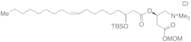
3-tert-Butyldimethylsilyloxyoleyl O-(Methoxymethoxy)carnitine Ester Chloride Salt
CAS:Kontrolliertes Produkt<p>Applications 3-tert-Butyldimethylsilyloxyoleyl O-(Methoxymethoxy)carnitine Ester Chloride Salt is an analog of Carnitine (C184110), an essential cofactor for the metabolism of fatty acids.<br></p>Formel:C33H66ClNO6SiFarbe und Form:NeatMolekulargewicht:636.42L-Carnitine extrapure, 99%
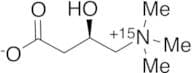
CAS:Formel:C7H15NO3Reinheit:min. 99%Farbe und Form:White, Crystalline compound, Clear, ColourlessMolekulargewicht:161.20L-Carnitine-15N
CAS:Kontrolliertes Produkt<p>Applications L-Carnitine-15N is an isotopically labelled analog of L-Carnitine (C184110), which is an essential cofactor of fatty acid metabolism; required for the transport of fatty acids through the inner mitochondrial membrane. Synthetized primarily in the liver and kidney; highest concentrations found in heart and skeletal muscle.<br>References Mitchell, M.E., et al.: Am. J. Clin. Nutr., 31, 293 (1978); Lango, R., et al.: Cardiovasc. Res., 51, 21 (2001);Vaz, F.M., et al.: Biochem. J., et al.: 361, 417 (2002);Karlic, H., et al.: Nutr. J., 20, 709 (2004)<br></p>Formel:C7H15NO3Farbe und Form:NeatMolekulargewicht:162.19L-Carnitine
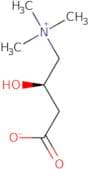
CAS:<p>L-Carnitine is a naturally occurring amino acid that is involved in the metabolism of fatty acids. L-Carnitine has been shown to have antioxidant properties and can protect tissues against oxidative injury. It also plays an important role in energy metabolism, as well as the maintenance of mitochondrial functions. L-Carnitine has been used to treat atherosclerotic lesions in humans, kidney fibrosis, and blood sampling. L-Carnitine can be used to reduce the symptoms of hypoglycemia and has also been shown to inhibit the growth of infectious diseases such as Helicobacter pylori and Salmonella typhi, through scavenging of reactive oxygen radicals.</p>Formel:C7H15NO3Farbe und Form:White PowderMolekulargewicht:161.2 g/mol