CAS 5418-51-9
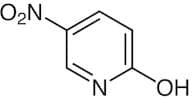
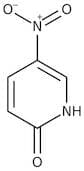
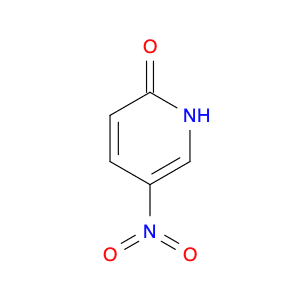
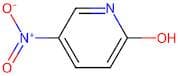
:5-Nitro-2(1H)-pyridinon
Beschreibung:
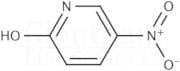
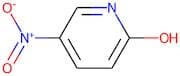
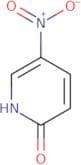
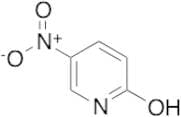
5-Nitro-2(1H)-pyridinon, mit der CAS-Nummer 5418-51-9, ist eine heterocyclische organische Verbindung, die durch einen mit einer Nitrogruppe und einer Ketogruppe substituierten Pyridinring gekennzeichnet ist. Diese Verbindung erscheint typischerweise als gelb bis orangefarbener kristalliner Feststoff und ist in polaren Lösungsmitteln wie Wasser und Alkoholen löslich. Ihre molekulare Struktur weist ein Stickstoffatom im Pyridinring auf, was zu ihrer Basizität und potenziellen Reaktivität beiträgt. Die Anwesenheit der Nitrogruppe verstärkt ihren elektrophilen Charakter, was sie in verschiedenen chemischen Reaktionen nützlich macht, einschließlich nucleophiler Substitutionen und als Vorläufer in der Synthese anderer stickstoffhaltiger Verbindungen. 5-Nitro-2(1H)-pyridinon ist in der medizinischen Chemie von Interesse wegen seiner potenziellen biologischen Aktivitäten, einschließlich antimikrobieller und entzündungshemmender Eigenschaften. Wie viele Nitroverbindungen kann es jedoch Umwelt- und Gesundheitsrisiken darstellen, was eine sorgfältige Handhabung und Entsorgung erforderlich macht. Insgesamt machen seine einzigartigen strukturellen Merkmale und Reaktivität es zu einer wertvollen Verbindung sowohl in der Forschung als auch in industriellen Anwendungen.
Formel:C5H4N2O3
InChl:InChI=1S/C5H4N2O3/c8-5-2-1-4(3-6-5)7(9)10/h1-3H,(H,6,8)
InChI Key:InChIKey=XKWSQIMYNVLGBO-UHFFFAOYSA-N
SMILES:N(=O)(=O)C=1C=CC(=O)NC1
Synonyme:- 2(1H)-Pyridinone, 5-nitro-
- 2-Hydroxy-5-Nitro Pyridine
- 2-Pyridinol, 5-nitro-
- 2-Pyridol, 5-nitro-
- 5-Nitro-2(1H)-pyridinone
- 5-Nitro-2(1H)-pyridone
- 5-Nitro-2-hydroxypyridine
- 5-Nitro-2-pyridinol
- 5-Nitro-2-pyridinone
- 5-Nitro-2-pyridone
- 5-nitropyridin-2(1H)-one
- 5-nitropyridin-2(3H)-one
- NSC 10478
- NSC 165495
- NSC 165496
- Weitere Synonyme anzeigen
Sortieren nach
Reinheit (%)
0
100
|
0
|
50
|
90
|
95
|
100
10 Produkte.
2-Hydroxy-5-nitropyridine
CAS:Formel:C5H4N2O3Reinheit:>97.0%(GC)(T)Farbe und Form:White to Gray to Brown powder to crystalMolekulargewicht:140.102-Hydroxy-5-nitropyridine, 98+%
CAS:A comparison of catalysts promotes imidazolide couplings including the identification of 2-hydroxy-5-nitropyridine as a new, safe, and effective catalyst. This Thermo Scientific Chemicals brand product was originally part of the Alfa Aesar product portfolio. Some documentation and label informationFormel:C5H4N2O3Reinheit:98+%Farbe und Form:White to cream or pale yellow, Powder or crystalline powderMolekulargewicht:140.102-Hydroxy-5-nitropyridine
CAS:Formel:C5H4N2O3Reinheit:98%Farbe und Form:SolidMolekulargewicht:140.09695-Nitropyridin-2(1H)-one
CAS:5-Nitropyridin-2(1H)-oneFormel:C5H4N2O3Reinheit:98%Farbe und Form: yellow solidMolekulargewicht:140.10g/mol2-Hydroxy-5-nitropyridine
CAS:2-Hydroxy-5-nitropyridineFormel:C5H4N2O3Reinheit:98%Farbe und Form: brown powderMolekulargewicht:140.10g/mol2-Hydroxy-5-nitropyridine
CAS:2-Hydroxy-5-nitropyridine is a chemical compound that is used in the synthesis of other compounds. It can be used to synthesize nicotinic acetylcholine, which is an amine that binds to nicotinic acetylcholine receptors. 2-Hydroxy-5-nitropyridine has been shown to react with halides and hydroxy groups to form new compounds. 2-Hydroxypyridine can also be used to synthesize trifluoroacetic acid from chloroacetic acid and nitrous acid. This chemical has been used in the study of replicon cells, which are cells that contain a circular piece of DNA called a plasmid. Replicon cells are often found in bacteria, such as Trichomonas vaginalis, and viruses such as HPV. 2-Hydroxypyridine has been shown to cause high blood levels in humans when ingested orally or injected intravenously.Formel:C5H4N2O3Reinheit:Min. 98 Area-%Farbe und Form:Brown PowderMolekulargewicht:140.1 g/mol2-Hydroxy-5-nitropyridine
CAS:Formel:C5H4N2O3Reinheit:98%Farbe und Form:SolidMolekulargewicht:140.0985-Nitropyridin-2(1H)-one
CAS:Kontrolliertes ProduktApplications 5-Nitropyridin-2(1H)-one can be used for molecular crystal optical materials.
References Uemya, T., et.al., Jpn. Kokai Tokkyo Koho, 22, (1995);Formel:C5H4N2O3Farbe und Form:NeatMolekulargewicht:140.1