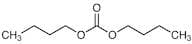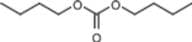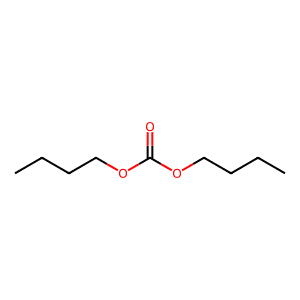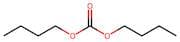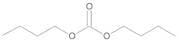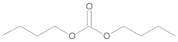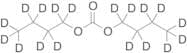
CAS 542-52-9
:Dibutylcarbonat
- Ai3-30046
- Carbonic acid, dibutyl ester
- Di-n-butyl carbonate
- Jeffsol AG 1560
- Nsc 8462
- n-Butyl carbonate
- Dibutyl carbonate
Dibutyl Carbonate
CAS:Formel:C9H18O3Reinheit:>98.0%(GC)Farbe und Form:Colorless to Almost colorless clear liquidMolekulargewicht:174.24Dibutyl carbonate
CAS:Dibutyl carbonate is a useful organic compound for research related to life sciences. The catalog number is T2152 and the CAS number is 542-52-9.Formel:C9H18O3Reinheit:≥95%Farbe und Form:LiquidMolekulargewicht:174.24Dibutyl carbonate
CAS:Dibutyl carbonate is a solid catalyst for the preparation of polyesters and polyurethanes. Dibutyl carbonate is a reactive component in the synthesis of many organic compounds. It reacts with trifluoroacetic acid to produce a film-forming polymer, which can be used as a coating on paper or textiles. The hydroxyl group on dibutyl carbonate forms hydrogen bonds with other molecules, which helps form the matrix of the polymer. Electrochemical impedance spectroscopy has been used to measure the affinity of fatty acids for dibutyl carbonate films.
Dibutyl carbonate is also used in gravimetric analysis, where it is mixed with an inert material such as sand and weighed to determine its mass.Formel:C9H18O3Reinheit:Min. 95%Farbe und Form:Clear LiquidMolekulargewicht:174.24 g/molDibutyl Carbonate
CAS:Kontrolliertes ProduktApplications Dibutyl Carbonate is a potential fuel substitute due to the observed decrease in CO2 emissions. Also used in CO2 catalytic activation.
References Hellier, P. et al.: Energy Fuel, 27, 5222 (2013); Shang, J. et al.: Green Che,., 14, 2899 (2012);Formel:C9H18O3Farbe und Form:NeatMolekulargewicht:174.2374Dibutyl Carbonate-d18
CAS:Kontrolliertes ProduktApplications Dibutyl Carbonate-d18 is the deuterated form of Dibutyl Carbonate (D427995), which is a potential fuel substitute due to the observed decrease in CO2 emissions. Also used in CO2 catalytic activation.
References Hellier, P. et al.: Energy Fuel, 27, 5222 (2013); Shang, J. et al.: Green Che,., 14, 2899 (2012);Formel:C9D18O3Farbe und Form:NeatMolekulargewicht:192.348