CAS 542-75-6
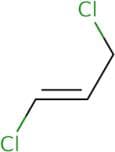
:1,3-Dichlorpropen
Beschreibung:
1,3-Dichlorpropen ist eine organische Verbindung mit der chemischen Formel C3H4Cl2. Es handelt sich um eine farblose bis gelbliche Flüssigkeit mit einem süßen, stechenden Geruch, der oft als ähnlich dem von Chloroform beschrieben wird. Diese Verbindung wird als chloriertes Kohlenwasserstoff eingestuft und hauptsächlich als Bodenfumigant und Pestizid in der Landwirtschaft verwendet, insbesondere zur Bekämpfung von Nematoden und anderen Schädlingen. Sie hat einen relativ niedrigen Siedepunkt und ist flüchtig, was zu ihrer Wirksamkeit bei Bodenanwendungen beiträgt. 1,3-Dichlorpropen ist auch für seine Reaktivität bekannt und nimmt an verschiedenen chemischen Reaktionen teil, einschließlich Polymerisations- und Substitutionsreaktionen. Aufgrund ihrer potenziellen Gesundheitsrisiken, einschließlich Atemwegsreizungen und möglicher krebserzeugender Wirkungen, unterliegt sie in vielen Ländern regulatorischen Kontrollen. Ein ordnungsgemäßer Umgang und Sicherheitsmaßnahmen sind beim Arbeiten mit dieser Substanz unerlässlich, um das Risiko einer Exposition zu minimieren. Darüber hinaus ist ihre Umweltwirkung, insbesondere in Bezug auf die Kontamination von Boden und Wasser, ein Aspekt bei ihrer Verwendung und Regulierung.
Formel:C3H4Cl2
InChl:InChI=1S/C3H4Cl2/c4-2-1-3-5/h1-2H,3H2
InChI Key:InChIKey=UOORRWUZONOOLO-UHFFFAOYSA-N
SMILES:C(CCl)=CCl
Synonyme:- (1E)-1,3-Dichloro-1-propene
- (1E)-1,3-dichloroprop-1-ene-(1Z)-1,3-dichloroprop-1-ene (1:1)
- 1,3-D
- 1,3-Dichloro-1-propene
- 1,3-Dichloro-2-propene
- 1,3-Dichloroprop-1-Ene
- 1,3-Dichloropropene cis/trans-mix
- 1,3-Dichloropropylene
- 1,3-Dichlorpropen
- 1,3-Dicloropropeno
- 1-Propene, 1,3-dichloro-
- 3-Chloroallyl chloride
- 3-Chloropropenyl chloride
- D-D 92
- Dd 95
- Dichloropropene
- Dorlane II
- Nematox
- Nsc 6202
- Propene, 1,3-Dichloro-
- Telone
- Telone 92
- Telone II
- Telone II-B
- Telone(R)
- Trans-1,3-Dichloro-1-Propene
- Trans-1,3-Dichloropene
- α,γ-Dichloropropylene
- γ-Chloroallyl chloride
- Weitere Synonyme anzeigen
Sortieren nach
Reinheit (%)
0
100
|
0
|
50
|
90
|
95
|
100
11 Produkte gefunden.
1,3-Dichloropropene (cis- and trans- mixture)
CAS:Formel:C3H4Cl2Reinheit:>92.0%(GC)Farbe und Form:Colorless to Light yellow to Light orange clear liquidMolekulargewicht:110.97EPA Method 624 Purgeable Calibration Mixture 9 2000 µg/mL in Methanol
CAS:Kontrolliertes Produkt- 100-41-4
- 106-46-7
- 107-06-2
- 108-88-3
- 108-90-7
- 124-48-1
- 127-18-4
- 156-60-5
- 541-73-1
- 542-75-6
- 56-23-5
- 67-66-3
- 71-43-2
- 71-55-6
- 75-09-2
- 75-25-2
- 75-27-4
- 75-34-3
- 75-35-4
- 78-87-5
- 79-00-5
- 79-01-6
- 79-34-5
- 95-50-1
Formel:C2H3Cl3Farbe und Form:MixtureMolekulargewicht:133.40cis-/trans-1,3-Dichloropropene
CAS:Kontrolliertes ProduktFormel:C3H4Cl2Farbe und Form:NeatMolekulargewicht:110.97VOC-Mix 20 200 µg/mL in Methanol
CAS:Kontrolliertes Produkt- 100-41-4
- 100-42-5
- 103-65-1
- 104-51-8
- 106-42-3
- 106-43-4
- 106-46-7
- 106-93-4
- 107-06-2
- 108-38-3
- 108-86-1
- 108-88-3
- 108-90-7
- 120-82-1
- 124-48-1
- 127-18-4
- 135-98-8
- 142-28-9
- 156-59-2
- 156-60-5
- 541-73-1
- 542-75-6
- 56-23-5
- 563-58-6
- 594-20-7
- 630-20-6
- 67-66-3
- 71-43-2
- 71-55-6
- 74-83-9
- 74-87-3
- 74-95-3
- 74-97-5
- 75-00-3
- 75-09-2
- 75-25-2
- 75-27-4
- 75-34-3
- 75-35-4
- 75-69-4
- 75-71-8
- 78-87-5
- 79-00-5
- 79-01-6
- 79-34-5
- 87-61-6
- 87-68-3
- 91-20-3
- 95-47-6
- 95-49-8
- 95-50-1
- 95-63-6
- 96-12-8
- 96-18-4
- 98-06-6
- 98-82-8
- 99-87-6
Formel:C2H2Cl4Farbe und Form:MixtureMolekulargewicht:167.851,3-Dichloropropene (E/Z Mixture)
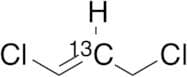
CAS:Kontrolliertes ProduktFormel:C3H4Cl2Farbe und Form:NeatMolekulargewicht:110.971,3-Dichloropropylene-13C
CAS:Kontrolliertes ProduktFormel:CC2H4Cl2Farbe und Form:NeatMolekulargewicht:111.9631,3-Dichloropropene
CAS:1,3-Dichloropropene is a fumigant that inhibits the production of malonic acid by inhibiting the enzyme malonate semialdehyde dehydrogenase. 1,3-Dichloropropene has been shown to be toxic in vitro, but not in vivo. In addition, this compound has been shown to inhibit the activity of enzymes such as quillaja saponaria and polymerase chain reaction (PCR) in vitro. 1,3-Dichloropropene has been found to cause chronic exposure and site specific toxicity in rats. Chronic exposure was associated with an increased incidence of lymphomas and leukemias. The mechanism for these effects is unknown, but may be due to damage to DNA or inhibition of RNA synthesis.
Formel:C3H4Cl2Reinheit:Min. 95%Farbe und Form:Clear Colourless To Yellow To Dark Brown LiquidMolekulargewicht:110.97 g/mol