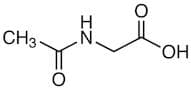
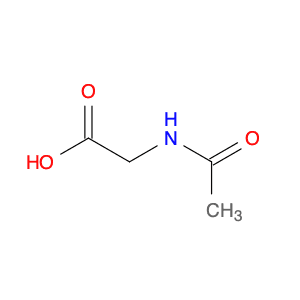
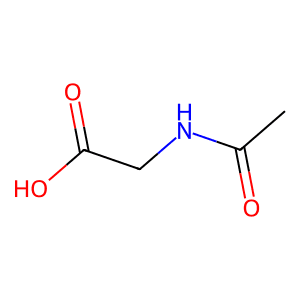
CAS 543-24-8
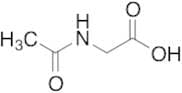
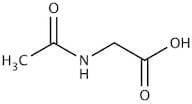
:Acetylglycin
- (Acetylamino)Acetate
- 2-(Acetylamino)acetic acid
- 2-Acetamidoacetic acid
- 86: PN: WO2006125227 FIGURE: 1 claimed protein
- Ac-Gly-OH
- Acetamidoacetic acid
- Aceturic acid
- Acetyl-glycin
- Acetylaminoacetic acid
- Acetylglycine
- Acetylglycocoll
- Ethanoylaminoethanoic acid
- Glycine, N-acetyl-
- N-Acetyl-L-Glycine
- N-Acetylglycin
- N-Acetylglycine,(Acetamidoacetic acid
- N-acetilglicina
- Nsc 7605
- N-Acetylglycine
- ACETYL GLYCOCOLL
- ACETAMIDOACETIC ACID, ACETURIC ACID
- AC GLY
- AC-GLYCINE
- N-ALPHA-ACETYL-GLYCINE
- CH3CONHCH2COOH
- RARECHEM AL BO 2320
- (ACETYLAMINO)ACETIC ACID
- ACETYL-GLYCINE
- ACETAMINOACETIC ACID
- Ethanoylaminoethanoicacid
- Weitere Synonyme anzeigen
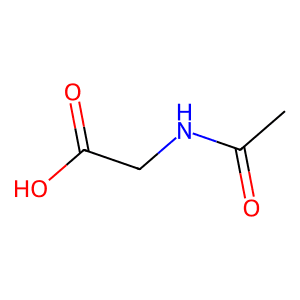
N-Acetylglycine
CAS:Formel:C4H7NO3Reinheit:>99.0%(T)Farbe und Form:White to Almost white powder to crystalMolekulargewicht:117.10N-Acetylglycine, 99%
CAS:This Thermo Scientific Chemicals brand product was originally part of the Alfa Aesar product portfolio. Some documentation and label information may refer to the legacy brand. The original Alfa Aesar product / item code or SKU reference has not changed as a part of the brand transition to Thermo SciFormel:C4H7NO3Reinheit:99%Farbe und Form:White, Crystals or powder or crystalline powderMolekulargewicht:117.10N-Acetylglycine, 10mM (in DMSO)
CAS:N-Acetylglycine, 10mM (in DMSO)Reinheit:≥98%Molekulargewicht:117.1g/molN-Acetylglycine
CAS:Formel:C4H7NO3Reinheit:(Titration) 98.0 - 102.0 %Farbe und Form:White to almost white crystalline powderMolekulargewicht:117.10N-Acetylglycine
CAS:N-Acetylglycine, non-toxic, found in foods, used in peptidomimetic research.Formel:C4H7NO3Reinheit:99.82%Farbe und Form:SolidMolekulargewicht:117.1N-Acetylglycine
CAS:N-Acetylglycine is an amide, which is a molecule with both a carboxylate and hydroxyl group. It belongs to the class of antimicrobial agents and has been shown to inhibit the growth of bacteria by inhibiting synthesis of folic acid and other metabolites. N-Acetylglycine also inhibits the formation of terminal residues from amino acids. The analytical method for this compound is based on the reaction between n-acetylglycine and hydrogen chloride in methanol. This produces picolinic acid, which can be detected using ultraviolet spectroscopy at a wavelength of 325 nm.
Formel:C4H7NO3Reinheit:Min. 95%Farbe und Form:White PowderMolekulargewicht:117.1 g/molN-Acetylglycine extrapure, 99%
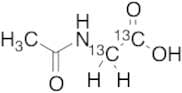
CAS:Formel:C4H8NO3Reinheit:min. 99%Farbe und Form:White, Crystalline powder, Clear, ColourlessMolekulargewicht:117.10N-Acetylglycine-13C2
CAS:Kontrolliertes ProduktApplications N-Acetylglycine-13C2 is an intermediate in the synthesis of Vanillactic Acid-13C3 (>85%) (V097354) which is an isotope labelled compound of Vanillactic Acid (V097350). Vanillactic Acid is a metabolite of dihydroxyphenylalanine (DOPA) (D533751, L-DOPA), which is a natural isomer of the immediate precursor of dopamine.
References Tabar, et al.: Pharmacol. Biochem. Behav., 33, 139 (1989), De Souza Silva, et al.: J. Neurochem., 68, 233 (1997), Feigin, A., et al.: Neurology, 57, 2083 (2001),Formel:C2C2H7NO3Farbe und Form:NeatMolekulargewicht:119.089N-Acetylglycine
CAS:N-Acetylglycine is a versatile building block for the synthesis of complex organic compounds. It is used as a reagent in research, as an intermediate in chemical reactions, or as a speciality chemical. N-Acetylglycine has been found to be useful as a building block in organic synthesis and can be reacted with other chemicals to form new compounds. N-Acetylglycine has also been shown to have anti-inflammatory properties and is used as an analgesic for pain relief.
Formel:C4H7NO3Molekulargewicht:117.11 g/mol