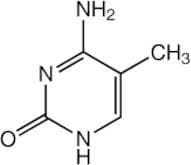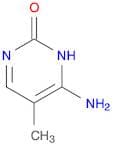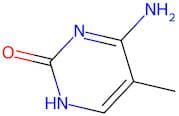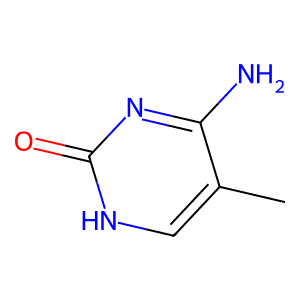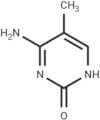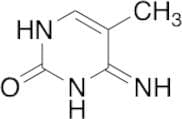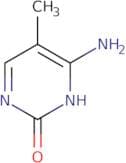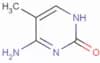
CAS 554-01-8
:5-Methylcytosin
- 2(1H)-Pyrimidinone, 4-amino-5-methyl-
- 2(1H)-Pyrimidinone, 6-amino-5-methyl-
- 4-Amino-2-hydroxy-5-methylpyrimidine
- 4-Amino-5-methyl-2(1H)-pyrimidinone
- 5-Methylcytosin
- 5-Metilcitosina
- 6-Amino-5-methyl-2(1H)-pyrimidinone
- 6-amino-5-methylpyrimidin-2(1H)-one
- 6-amino-5-methylpyrimidin-2(1H)-one hydrochloride (1:1)
- Cytosine, 5-methyl-
- Nsc 137776
- Weitere Synonyme anzeigen
5-Methylcytosine, 97%
CAS:5-Methylcytosine is used as a marker to protect DNA from being cut by native methylation-sensitive restriction enzymes. It is also employed in the production of 4-amino-5-hydroxy-5-methyl-2-oxo-2,5-dihydro-imidazole-1-carbaldehyde. This Thermo Scientific Chemicals brand product was originally part oFormel:C5H7N3OReinheit:97%Farbe und Form:White to cream, PowderMolekulargewicht:125.132(1H)-Pyrimidinone, 4-amino-5-methyl-
CAS:Formel:C5H7N3OReinheit:97%Farbe und Form:SolidMolekulargewicht:125.1286Ref: IN-DA00I9VR
1kgNachfragen5kgNachfragen500gNachfragen1g20,00€5g34,00€10g55,00€25g98,00€100g155,00€250g595,00€5-Methylcytosine
CAS:5-Methylcytosine is a methylated nucleotide base found in eukaryotic DNA.Formel:C5H7N3OReinheit:99.17%Farbe und Form:SolidMolekulargewicht:125.135-Methylcytosine (~90%)
CAS:Kontrolliertes ProduktApplications 5-Methylcytosine (cas# 554-01-8) is a useful research chemical.
Formel:C5H7N3OReinheit:~90%Farbe und Form:NeatMolekulargewicht:125.135-Methylcytosine
CAS:5-Methylcytosine is a nucleic acid that is found in the DNA and RNA of the cell. It is an important component of methylation, which is the process by which a methyl group is added to a molecule. This process can lead to cellular transformation, a process that can cause cancer. 5-Methylcytosine has also been shown as a molecular pathogenesis factor in infectious diseases such as HIV and herpes simplex virus type 1. The presence of 5-methylcytosine in nuclear DNA has been detected by analytical techniques such as gas chromatography/mass spectrometry (GC/MS). There are many analytical methods, including GC/MS, that can be used to detect 5-methylcytosine in cellular nuclei.
Formel:C5H7N3OReinheit:Min. 95%Farbe und Form:PowderMolekulargewicht:125.13 g/mol