

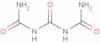
CAS 556-99-0
:Triuret
- Carbonyldiurea
- Dicarbamylurea
- Diimidotricarbonic diamide
- Nsc 29081
- Tricarbonodiimidic Diamide
- Urea, N,N''-carbonylbis-
- Urea, N,N'-bis(aminocarbonyl)-
- [(Carbamoylamino)carbonyl]urea
- Triuret
- (carbonylbis(azanediyl))bis(aminomethanone)
- 1,3-Dicarbamylurea
- 1,1'-Carbonylbisurea
- riure
- 1,3-Dicarbamoylurea
- Weitere Synonyme anzeigen
Triuret (Tricarbonodiimidic diamide)
CAS:Acyclic amides (including acyclic carbamates) and their derivatives and salts thereof, nesoiFormel:C3H6N4O3Farbe und Form:White PowderMolekulargewicht:146.04399(Carbonylbis(Azanediyl))Bis(Aminomethanone)
CAS:(Carbonylbis(Azanediyl))Bis(Aminomethanone)Reinheit:98%Molekulargewicht:146.1g/molTriuret
CAS:Applications Triuret is a byproduct of purine degradation in living organisms. It is a product from the pyrolsis of urea.
References Sergiu P. P., et al:. HHS Public Access, (2010);Formel:C3H6N4O3Farbe und Form:NeatMolekulargewicht:146.1[(Carbamoylamino)carbonyl]urea
CAS:Formel:C3H6N4O3Reinheit:98%Farbe und Form:SolidMolekulargewicht:146.106[(Carbamoylamino)carbonyl]urea
CAS:[(Carbamoylamino)carbonyl]urea (Urea) is a reactive compound that can be found in urine, saliva, and sweat. Urea is used as an active methylene group in the synthesis of polyurethane. It can be synthesized by reacting hydrochloric acid with calcium carbonate and carbonyl oxygens. The chemical formula for urea is NH2CONH2. The molecular weight of urea is 60.06 g/mol. Hydrolysis of urea produces ammonia and carbon dioxide, which are both gases at room temperature. Reaction products include ammonia, carbon dioxide, water, and hydrogen cyanide. The pH of urea ranges from 6 to 9 when in solution or solid form, depending on the concentration of the compound. Urea has been shown to produce fatty acids when heated above 300 degrees Celsius.
Formel:C3H6N4O3Reinheit:Min. 95%Molekulargewicht:146.11 g/mol


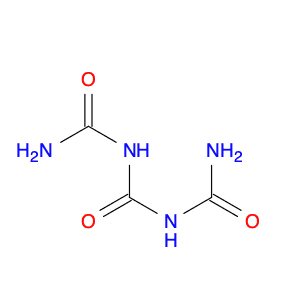


![[(Carbamoylamino)carbonyl]urea](/_next/image/?url=https%3A%2Fstatic.cymitquimica.com%2Fproducts%2F10%2Fthumb%2FF510583.jpg&w=3840&q=75)

![[(Carbamoylamino)carbonyl]urea](/_next/image/?url=https%3A%2Fstatic.cymitquimica.com%2Fproducts%2F3D%2Fthumb%2FAAA55699.jpg&w=3840&q=75)
