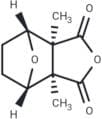
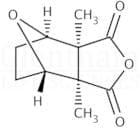
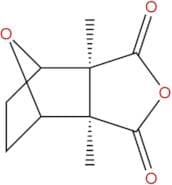
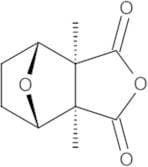
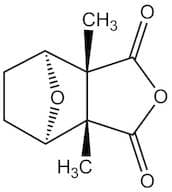
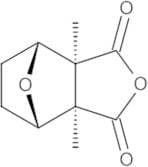
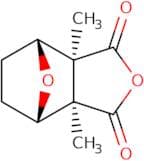
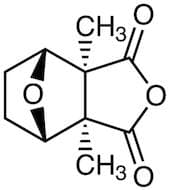
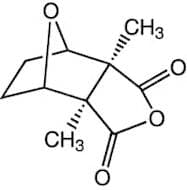
CAS 56-25-7
:Kantharidin
Beschreibung:
Kantharidin ist eine natürlich vorkommende chemische Verbindung, die als Terpenoid klassifiziert wird und hauptsächlich aus Arten von Blasenkäfern, insbesondere aus der Gattung Lytta, gewonnen wird. Es ist eine farb- und geruchlose, viskose Flüssigkeit bei Raumtemperatur, mit einem hohen Siedepunkt und geringer Löslichkeit in Wasser, aber es ist in organischen Lösungsmitteln löslich. Kantharidin ist bekannt für seine starken vesikanten Eigenschaften, was bedeutet, dass es bei Kontakt Blasen auf der Haut verursachen kann. Diese Verbindung wurde historisch in der traditionellen Medizin wegen ihrer angeblichen therapeutischen Wirkungen verwendet, einschließlich als Behandlung für Warzen und andere Hauterkrankungen. Es wird jedoch auch für seine Toxizität anerkannt, die zu ernsthaften Gesundheitsproblemen führen kann, wenn es eingenommen oder unsachgemäß gehandhabt wird. Der Wirkmechanismus umfasst die Hemmung von Proteinphosphatasen, was die zellulären Prozesse stört. Aufgrund seiner toxischen Natur ist Kantharidin in vielen Rechtsordnungen reguliert, und seine Verwendung ist auf spezifische medizinische Anwendungen unter professioneller Aufsicht beschränkt.
Formel:C10H12O4
InChl:InChI=1/C10H12O4/c1-9-5-3-4-6(13-5)10(9,2)8(12)14-7(9)11/h5-6H,3-4H2,1-2H3/t5?,6?,9-,10+
InChI Key:InChIKey=DHZBEENLJMYSHQ-XCVPVQRUNA-N
SMILES:C[C@@]12[C@@](C)([C@@]3(O[C@]1(CC3)[H])[H])C(=O)OC2=O
Synonyme:- (1R,2S,3R,6S)-1,2-Dimethyl-3,6-epoxycyclohexane-1,2-dicarboxylic anhydride
- (3aR,4R,7S,7aR)-3a,7a-dimethylhexahydro-4,7-epoxy-2-benzofuran-1,3-dione
- (3aR,4S,7R,7aS)-3a,7a-dimethylhexahydro-4,7-epoxy-2-benzofuran-1,3-dione
- (3aR,7aS)-3a,7a-dimethylhexahydro-4,7-epoxy-2-benzofuran-1,3-dione
- 1,2-Dimethyl-3,6-epoxyperhydrophthalic anhydride
- 3A,7A-Dimethylhexahydro-4,7-Epoxy-2-Benzofuran-1,3-Dione
- 4,7-Epoxyisobenzofuran-1,3-dione, hexahydro-3a,7a-dimethyl-, (3aR,4S,7R,7aS)-rel-
- 4,7-Epoxyisobenzofuran-1,3-dione, hexahydro-3a,7a-dimethyl-, (3aα,4β,7β,7aα)-
- 7-Oxabicyclo[2.2.1]heptane-2,3-dicarboxylic anhydride, 2,3-dimethyl-
- Canthacur
- Cantharides camphor
- Cantharidine
- Cantharone
- Dimethyl-3,6-epoxyperhydrophthalic anhydride
- Kantaridin
- NSC 61805
- exo-1,2-cis-Dimethyl-3,6-epoxyhexahydrophthalic anhydride
- rel-(3aR,4S,7R,7aS)-Hexahydro-3a,7a-dimethyl-4,7-epoxyisobenzofuran-1,3-dione
- Cantharidin
- (3A-ALPHA,4B,7B,7A-ALPHA)-HEXAHYDRO-3A,7A-DIMETHYL-4,7-EPOXYISOBENZOFURAN-1,3-DIONE
- 2,3-Dimethyl-7-oxabicyclo[2.2.1]heptane-2,3-dicarboxylicacidanhydride
- 2,3-Dimethyl-7-oxabicyclo(2.2.1)heptane-2,3-dicarboxylic anhydride
- 4,7-EPOXYISOBENZOFURAN-1,3-DIONE,HEXAHYDRO-3A,7A-DIMETHYL-, (3A,4,7,7A)-
- 1,2-dimethyl-3,6-epoxyperhydrophthalicanhydride
- (3AA,4B,7B,7AA)-HEXAHYDRO-3A,7A-DIMETHYL-4,7-EPOXYISOBENZOFURAN-1,3-DIONE
- 2,3-dimethyl-7-oxabicyclo(2.2.1)heptane-3-dicarboxylicanhydride
- 4,7-epoxyisobenzofuran-1,3-dione,hexahydro-3a,7a-dimethyl-,(3a-alpha,4-beta
- 4,7-epoxyisobenzofuran-1,3-dione,hexahydro-3a,7a-dimethyl-,(3aalpha,4beta,7be
- 4,7-Epoxyisobenzofuran-1,3-dione, hexahydro-3a,7a-dimethyl-
- 4,7-Epoxyisobenzofuran-1,3-dione, hexahydro-3a,7a-dimethyl-, (3aalpha,4beta,7beta,7aalpha)-
- HEXAHYDRO-3A,7A-DIMETHYL-4,7-EPOXYISOBENZO-FURAN-1,3-DIONE
- 7aalpha)-bet
- 2,3-dimethyl-7-oxabicyclo(2.2.1)heptane-2,3-dicarboxylicanhydride
- ,7-beta,7a-alpha)
- Weitere Synonyme anzeigen
Sortieren nach
Reinheit (%)
0
100
|
0
|
50
|
90
|
95
|
100
12 Produkte.
Cantharidin
CAS:Cantharidin, a natural toxin found in beetles in the families Meloidae and Oedemeridae, has been reported to be toxic to some pests, including the diamondback moth.Formel:C10H12O4Reinheit:99.46%Farbe und Form:SolidMolekulargewicht:196.20Cantharidin
CAS:Formel:C10H12O4Reinheit:≥ 98.0%Farbe und Form:Colourless crystalsMolekulargewicht:196.20Cantharidin
CAS:Cantharidin, a natural toxicant of blister beetles, is a strong inhibitor of protein phosphatases types 1 (PP1) and 2A (PP2A), and is a novel and potent multidrug resistance (MDR) reversal agent. Cantharidin has anti-tumor activity, it causes oxidative stress that provokes DNA damage and p53-dependent apoptosis, it impairs cell migration and invasion by suppressing MMP-2 and -9 through PI3K/NF-κB signaling pathways.Formel:C10H12O4Reinheit:95%~99%Molekulargewicht:196.202Cantharidin
CAS:LactoneFormel:C10H12O4Reinheit:≥ 98.0 % (GC)Farbe und Form:PowderMolekulargewicht:196.2Cantharidin
CAS:Stability Hygroscopic
Applications Cantharidin is a well known natural compound produced by beetles of the Meloidae and Oedemeridae families. Insecticidal toxin. Apoptosis inducer in human H460 human lung cancer cells.
Not a dangerous good if item is equal to or less than 1g/ml and there is less than 100g/ml in the package
References Khan, R. et al.: GMR. Gen. Mol. Res., 12, 4393 (2013); Hsia, T. et al.: Int. J. Onc., 45, 245 (2014);Formel:C10H12O4Farbe und Form:NeatMolekulargewicht:196.2Cantharidin
CAS:Natural toxin; protein phosphatase inhibitorFormel:C10H12O4Reinheit:Min. 98 Area-%Farbe und Form:White/Off-White SolidMolekulargewicht:196.2 g/molCantharidin
CAS:Formel:C10H12O4Reinheit:>98.0%(GC)Farbe und Form:White to Almost white powder to crystalMolekulargewicht:196.20Cantharidin, 98%
CAS:Inhibitor of protein phosphatase 2A
Formel:C10H12O4Reinheit:98%Farbe und Form:PowderMolekulargewicht:196.20