CAS 56-84-8
:L-Asparaginsäure
Beschreibung:
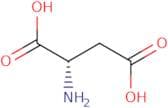
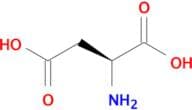
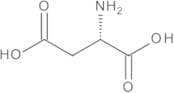
L-Asparaginsäure, mit der CAS-Nummer 56-84-8, ist eine nicht essentielle Aminosäure, die eine entscheidende Rolle bei der Biosynthese von Proteinen spielt. Sie wird als polare, hydrophile Aminosäure klassifiziert, aufgrund ihrer Carbonsäure-Funktionalgruppen, die Protonen spenden können, wodurch sie bei physiologischem pH negativ geladen ist. L-Asparaginsäure ist an verschiedenen Stoffwechselprozessen beteiligt, einschließlich des Harnstoffzyklus und der Synthese anderer Aminosäuren und Neurotransmitter. Sie kommt in vielen Proteinen vor und ist besonders reichlich in pflanzlichen und tierischen Geweben vorhanden. Die Substanz ist in Wasser löslich, was ihre Rolle in biologischen Systemen erleichtert. L-Asparaginsäure kann sowohl in D- als auch in L-Formen existieren, wobei die L-Form das biologisch aktive Isomer ist. Darüber hinaus wird sie in der Lebensmittelindustrie als Geschmacksverstärker und in Nahrungsergänzungsmitteln aufgrund ihrer potenziellen Rolle bei der Energieproduktion und der kognitiven Funktion verwendet. Insgesamt ist L-Asparaginsäure für zahlreiche physiologische Funktionen unerlässlich und ein Schlüsselbestandteil der Struktur von Proteinen.
Formel:C4H7NO4
InChl:InChI=1S/C4H7NO4/c5-2(4(8)9)1-3(6)7/h2H,1,5H2,(H,6,7)(H,8,9)/t2-/m0/s1
InChI Key:InChIKey=CKLJMWTZIZZHCS-REOHCLBHSA-N
SMILES:[C@H](CC(O)=O)(C(O)=O)N
Synonyme:- (+)-<span class="text-smallcaps">L</span>-Aspartic acid
- (+)-Aspartic acid
- (S)-2-Aminobutanedioic acid
- (S)-Aminobutanedioic acid
- (S)-Aspartic acid
- 2-Aminobutanedioic acid
- 75: PN: WO2005016244 PAGE: 71 claimed protein
- 7: PN: US20050014160 SEQID: 7 claimed protein
- <span class="text-smallcaps">L</span>-Aminosuccinic acid
- <span class="text-smallcaps">L</span>-Asparagic acid
- <span class="text-smallcaps">L</span>-Asparaginic acid
- Acide aspartique
- Acido Aspartico
- Asparagic acid
- Asparaginic acid
- Asparaginsaure
- Aspartic acid, <span class="text-smallcaps">L</span>-
- Aspartic acid, L-
- Butanedioic acid, amino-, (S)-
- H-Asp-OH
- L-2-Aminobutanedioic acid
- L-Aminosuccinic acid
- L-Aspantic acid
- L-Asparagic acid
- L-Asparaginic acid
- Nsc 3973
- Nsc 79553
- L-(+)-Aspartic acid
- L-Aspartic acid
- L-Aspartic acid
- Weitere Synonyme anzeigen
Sortieren nach
Reinheit (%)
0
100
|
0
|
50
|
90
|
95
|
100
L-Aspartic acid
CAS:<p>L-Aspartic acid is an amino acid that plays a role in the biochemical reactions of energy metabolism. This amino acid is also important for the synthesis of proteins, such as enzymes and structural proteins. L-Aspartic acid is synthesized from oxaloacetate by transamination. It can also be synthesized from glutamate by the action of aspartate aminotransferase using pyridoxal phosphate as a cofactor. L-Aspartic acid has been shown to play a role in neuronal death, particularly in primary sclerosing cholangitis, and may have potential therapeutic use for this condition. L-Aspartic acid has been used as a model system to study polymerase chain reaction (PCR) methods and analytical methods in biochemistry research.</p>Formel:C4H7NO4Reinheit:Min. 95%Farbe und Form:White Off-White PowderMolekulargewicht:133.1 g/molH-Asp-OH
CAS:<p>M03000 - H-Asp-OH</p>Formel:C4H7NO4Reinheit:97%Farbe und Form:SolidMolekulargewicht:133.103L-Aspartic Acid ExiPlus, Multi-Compendial, 99%
CAS:Formel:C4H7NO4Reinheit:min. 99%Farbe und Form:White, Crystalline powder, Clear, ColourlessMolekulargewicht:133.10L-Aspartic Acid PrimeDx, 99%
CAS:Formel:C4H7NO4Reinheit:min. 99.0%Farbe und Form:White to off-white, Crystalline powder, Clear, Colourless to plae yellowMolekulargewicht:133.10L-Aspartic Acid extrapure CHR, 99%
CAS:Formel:C4H7NO4Reinheit:min. 99%Farbe und Form:White, Crystalline powder, Clear, ColourlessMolekulargewicht:133.10L-Aspartic acid
CAS:<p>L-Aspartic acid is an amino acid that plays a crucial role in protein synthesis and DNA repair. It has been shown to activate the TRPV1 receptor, which is involved in pain sensation and thermoregulation. L-Aspartic acid has also been studied for its potential therapeutic effects on Alzheimer's disease, as it may inhibit the formation of amyloid beta plaques in the brain. Additionally, L-Aspartic acid has been used as a substrate for DNA ligase, an enzyme that joins together two strands of DNA. This amino acid is also found in plants such as broccoli and Brussels sprouts, where it contributes to the formation of glucosinolates. Studies have shown that L-Aspartic acid can enhance neuronal imaging and improve cognitive function when combined with compounds such as capsaicin or cycloastragenol. Furthermore, polygodial, a compound found in certain plants, has been shown to interact with L-Aspartic acid</p>Formel:C4H7NO4Molekulargewicht:133.11 g/mol