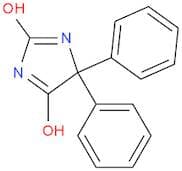
CAS 57-41-0
:Phenytoin
Beschreibung:
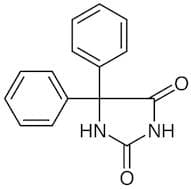
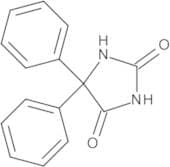
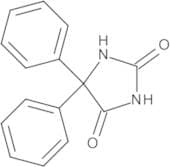
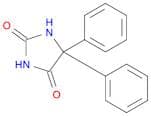
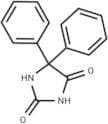
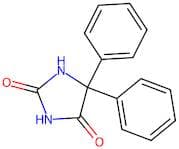
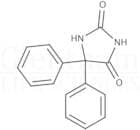
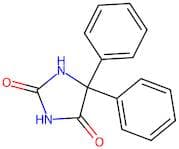
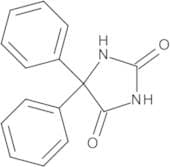
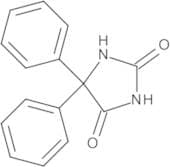
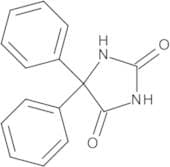
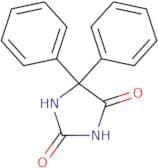
Phenytoin, mit der CAS-Nummer 57-41-0, ist ein Antikonvulsivum, das hauptsächlich zur Behandlung von Epilepsie und zur Vorbeugung von Anfällen eingesetzt wird. Es wird als Derivat der Hydantoine klassifiziert und ist bekannt für seine Fähigkeit, neuronale Membranen zu stabilisieren und die Erregbarkeit von Neuronen zu reduzieren. Die chemische Formel von Phenytoin ist C15H12N2O2, und es weist eine phenylgruppe auf, die an eine Hydantoingruppe gebunden ist. Phenytoin ist typischerweise ein weißes bis leicht offenes kristallines Pulver, das in Wasser leicht löslich, aber in organischen Lösungsmitteln wie Ethanol und Aceton besser löslich ist. Sein Wirkmechanismus umfasst die Modulation von Natriumkanälen, was hilft, die Ausbreitung von Anfallsaktivität im Gehirn zu verhindern. Phenytoin wird häufig oral oder intravenös verabreicht und ist bekannt für seine potenziellen Nebenwirkungen, darunter Schwindel, Schläfrigkeit und Zahnfleischhyperplasie. Aufgrund seines engen therapeutischen Index ist eine sorgfältige Überwachung der Blutspiegel unerlässlich, um Toxizität zu vermeiden und eine effektive Behandlung sicherzustellen.
Formel:C15H12N2O2
InChl:InChI=1S/C15H12N2O2/c18-13-15(17-14(19)16-13,11-7-3-1-4-8-11)12-9-5-2-6-10-12/h1-10H,(H2,16,17,18,19)
InChI Key:InChIKey=CXOFVDLJLONNDW-UHFFFAOYSA-N
SMILES:O=C1C(NC(=O)N1)(C2=CC=CC=C2)C3=CC=CC=C3
Synonyme:- 2,4-Imidazolidinedione, 5,5-diphenyl-
- 5,5-Diphenyl-1H-imidazolidine-2,4-dione
- 5,5-Diphenyl-2,4-imidazolidinedione
- 5,5-Diphenylimidazoline-2,4-dione
- Aleviatin
- DPH
- Denyl
- Di-Hydan
- Di-Lan
- Dihycon
- Dilabid
- Dintoina
- Diphantoin
- Diphedan
- Diphenat
- Diphenylan
- Diphenylhydantoin
- Ekko
- Fenitoina
- Hidantal
- Hydantoin, 5,5-Diphenyl-
- Hydantol
- Ipanten
- Lehydan
- Lepitoin
- Nsc 8722
- Phenytek
- Phenytin
- Phenytoin
- Phenytoine
- Phenytoinum
- Sodanton
- Zentropil
- Weitere Synonyme anzeigen
Sortieren nach
Reinheit (%)
0
100
|
0
|
50
|
90
|
95
|
100
23 Produkte.
Phenytoin
CAS:Formel:C15H12N2O2Reinheit:>99.0%(T)Farbe und Form:White to Almost white powder to crystalMolekulargewicht:252.275,5-Diphenylhydantoin, 99%
CAS:<p>This Thermo Scientific Chemicals brand product was originally part of the Alfa Aesar product portfolio. Some documentation and label information may refer to the legacy brand. The original Alfa Aesar product / item code or SKU reference has not changed as a part of the brand transition to Thermo Sci</p>Formel:C15H12N2O2Reinheit:99%Farbe und Form:Powder, White to pale creamMolekulargewicht:252.27PHENYTOIN FOR SYSTEM SUITABILITY CRS
CAS:PHENYTOIN FOR SYSTEM SUITABILITY CRSFormel:C15H12N2O2Farbe und Form:PowderMolekulargewicht:252.268Phenytoin
CAS:Diagnostic or lab reagents on a backing, prepared diagnostic or lab reagents whether or not on a backing, whether or not in the form of kits, nesoiFormel:C15H12N2O2Farbe und Form:White Off-White Powder CrystallineMolekulargewicht:252.08988Phenytoin
CAS:Phenytoin: a non-sedative hydantoin, antiepileptic with anticonvulsant effects, stabilizes neurons, prevents seizure spread, and relaxes muscles.Formel:C15H12N2O2Reinheit:99.95%Farbe und Form:Needles (Alcohol) Tasteless (Ntp 1992)Molekulargewicht:252.275,5-Diphenylhydantoin
CAS:Formel:C15H12N2O2Reinheit:≥ 99.0%Farbe und Form:White powderMolekulargewicht:252.27Phenytoin 1000 µg/mL in Methanol
CAS:Kontrolliertes ProduktFormel:C15H12N2O2Farbe und Form:Single SolutionMolekulargewicht:252.275,5-Diphenyl Hydantoin
CAS:<p>Applications Diphenyl Hydantoin is an anticonvulsant agent that suppresses abnormal brain activity associated with seizure. It is used to treat ulcers, epidermolysis bullosa, chorea, Parkinson’s syndrome, trigeminal neuralgia, acute alcoholism, and inflammatory conditions (1,2).<br>References (1) Kim, S. H., et al.: Birth Defects Res B Dev Reprod Toxicol. 95, 337 (2012)(2) Younes, N., et al.: Dermatol Online J. 12, 5 (2006)<br></p>Formel:C15H12N2O2Farbe und Form:WhiteMolekulargewicht:252.275,5-Diphenylhydantoin
CAS:Kontrolliertes Produkt<p>5,5-Diphenylhydantoin (DPD) is an amide with the chemical formula CHC(O)NH. It is a sodium citrate salt that has been used in chemotherapy for the treatment of cancer. DPD has been shown to be carcinogenic in animals and humans. This drug binds to DNA and inhibits RNA synthesis, thereby inhibiting protein synthesis. DPD also has toxic effects on the skin and may cause hypersensitivity syndrome. The drug is not absorbed orally and must be given intravenously or intramuscularly. DPD has also been used as a model for experimental allergic encephalomyelitis, eosinophilic fasciitis, and chronic fatigue syndrome.</p>Formel:C15H12N2O2Reinheit:Min. 95%Farbe und Form:White PowderMolekulargewicht:252.27 g/mol5,5-Diphenylhydantoin (Phenytoin) pure, 98%
CAS:Formel:C15H12N2O2Reinheit:min. 98%Farbe und Form:White or almost white, Crystalline powderMolekulargewicht:252.285,5-Diphenylimidazolidine-2,4-dione
CAS:Formel:C15H12N2O2Reinheit:99+%Farbe und Form:Solid, White to pale yellow powderMolekulargewicht:252.273