CAS 5781-53-3
:Methyloxalylchlorid
Beschreibung:
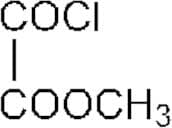
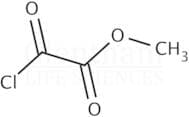
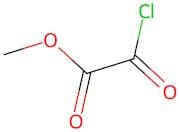
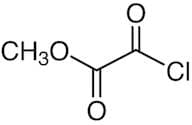
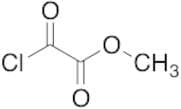
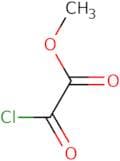
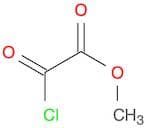
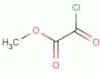
Methyloxalylchlorid, mit der CAS-Nummer 5781-53-3, ist eine organische Verbindung, die durch ihre Struktur gekennzeichnet ist, die eine Methylgruppe und zwei Oxalylchlorid-Funktionsgruppen umfasst. Es handelt sich um eine farblose bis blassgelbe Flüssigkeit, die für ihre starke Reaktivität bekannt ist, insbesondere als chlorierendes Mittel. Diese Verbindung hat einen stechenden Geruch und ist hochgradig korrosiv, was eine sorgfältige Handhabung und Lagerung in einem gut belüfteten Bereich mit geeigneter persönlicher Schutzausrüstung erforderlich macht. Methyloxalylchlorid ist in organischen Lösungsmitteln löslich, reagiert jedoch heftig mit Wasser, wobei Salzsäure freigesetzt wird und Methyloxalat entsteht. Es wird hauptsächlich in der organischen Synthese verwendet, insbesondere bei der Herstellung verschiedener chemischer Zwischenprodukte und in der Produktion von Arzneimitteln und Agrochemikalien. Aufgrund seiner Reaktivität birgt es erhebliche Gesundheitsrisiken, einschließlich Atemwegsreizungen und potenziellen Hautverbrennungen, weshalb es unerlässlich ist, die Sicherheitsprotokolle beim Arbeiten mit dieser Substanz zu befolgen.
Formel:C3H3ClO3
InChl:InChI=1S/C3H3ClO3/c1-7-3(6)2(4)5/h1H3
InChI Key:InChIKey=ZXUQEPZWVQIOJE-UHFFFAOYSA-N
SMILES:C(C(Cl)=O)(OC)=O
Synonyme:- (Chloro)(oxo)acetic acid methyl ester
- Acetic acid, 2-chloro-2-oxo-, methyl ester
- Acetic acid, chlorooxo-, methyl ester
- Chloroglyoxylic acid methyl ester
- Glyoxylic acid, chloro-, methyl ester
- Methoxalyl chloride
- Methoxyoxalyl chloride
- Methyl (chlorocarbonyl)formate
- Methyl (chloroformyl)formate
- Methyl 2-chloro-2-oxoacetate
- Methyl Chlorooxoacetate
- Methyl chloroglyoxylate
- Methyl chlorooxalate
- Monomethyl oxalate chloride
- Monomethyl oxalate monochloride
- Monomethyl oxalyl chloride
- Oxalic acid methyl ester chloride
- Oxalic acid monomethyl ester chloride
- Weitere Synonyme anzeigen
Sortieren nach
Reinheit (%)
0
100
|
0
|
50
|
90
|
95
|
100
8 Produkte.
Methyl oxalyl chloride, 97%
CAS:Methyl oxalyl chloride is used as a synthetic reagent. It serves as a reagent in the synthesis of fused coumarins, substituted isoxazoles and heterocycles. Further, it is used in intramolecular Wittig reactions, and iron-mediated cleavage of C-C bonds. This Thermo Scientific Chemicals brand productFormel:C3H3ClO3Reinheit:97%Farbe und Form:Liquid, Clear colorlessMolekulargewicht:122.50Methyl oxalyl chloride
CAS:Formel:C3H3ClO3Reinheit:≥ 98.0%Farbe und Form:Colourless to light-yellow liquidMolekulargewicht:122.51Methyl Chloroglyoxylate
CAS:Formel:C3H3ClO3Reinheit:>98.0%(GC)(T)Farbe und Form:Colorless to Light yellow clear liquidMolekulargewicht:122.50METHYL (CHLOROCARBONYL)FORMATE
CAS:Formel:C3H3ClO3Reinheit:97.0%Farbe und Form:LiquidMolekulargewicht:122.5Methyl Chlorooxoacetate
CAS:Kontrolliertes ProduktApplications Methyl Chlorooxoacetate is used as a reagent in organic synthesis of several compounds including that of coumarin-based probes which fluoresce in response to detection of Pi in cell culture and Caenorhabditis elegans. Also used in the synthesis of phenanthrene β-diketo acids which is being studied as potential HIV-1 integrase inhibitors.
Not a dangerous good if item is equal to or less than 1g/ml and there is less than 100g/ml in the package
References Wang, H., et al.: Dyes Pigments, 120, 293 (2015); Sharma, H., et al.: Bioorg. Med. Chem. Lett., 23, 6146 (2013);Formel:C3H3ClO3Farbe und Form:NeatMolekulargewicht:122.51Methyl chlorooxoacetate
CAS:Methyl chlorooxoacetate is an oxalyl ester that has been used for the synthesis of glycol esters. Methyl chlorooxoacetate has been shown to have a high solubility in water and organic solvents, which is desirable for industrial processes. This molecule also has the ability to be acylated with various organic groups and can act as a process-optimization agent in plant physiology. Methyl chlorooxoacetate binds as a receptor to growth factors and HIV infection, which leads to amide formation and carbonyl group formation.Formel:C3H3ClO3Reinheit:Min. 95%Farbe und Form:Clear LiquidMolekulargewicht:122.51 g/molMethyl chlorooxoacetate
CAS:Formel:C3H3ClO3Reinheit:98%Farbe und Form:LiquidMolekulargewicht:122.5071