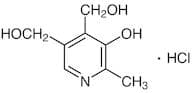
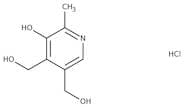
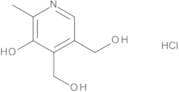
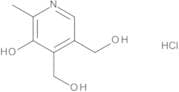
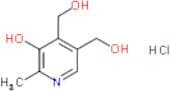
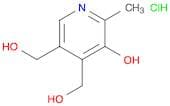
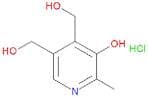
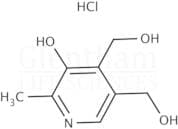
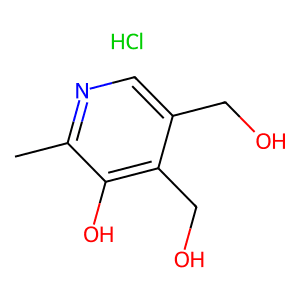
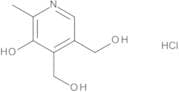
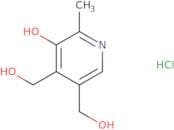
CAS 58-56-0
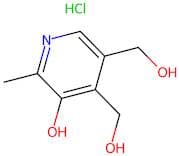
:Pyridoxinhydrochlorid
- 2-Methyl-3-hydroxy-4,5-bis(hydroxymethyl)pyridine hydrochloride
- 2-Methyl-3-hydroxy-4,5-di(hydroxymethyl)pyridine hydrochloride
- 3,4-Pyridinedimethanol, 5-hydroxy-6-methyl-, hydrochloride (1:1)
- 3-Hydroxy-4,5-bis(hydroxymethyl)-2-methylpyridine hydrochloride
- 3-Hydroxy-4,5-dimethylol-α-picoline hydrochloride
- 4,5-Bis(hydroxymethyl)-2-methylpyridin-3-ol hydrochloride
- 4,5-Bis(hydroxymethyl)-3-hydroxy-2-methylpyridine hydrochloride
- 4,5-Di(hydroxymethyl)-3-hydroxy-2-methylpyridine hydrochloride
- 4,5-Dimethylol-3-hydroxy-2-methylpyridine hydrochloride
- 5-Hydroxy-6-methyl-3,4-pyridinedicarbinol hydrochloride
- 5-Hydroxy-6-methyl-3,4-pyridinedimethanol hydrochloride
- Aderomine hydrochloride
- Aderoxin
- Aderoxine
- Becilan
- Beesix
- Benadon
- Bonasanit
- Campoviton 6
- Hexabetalin
- Hexabione hydrochloride
- Hexavibex
- Hexermin
- Hexobion
- Piridoxinio, Clorhidrato
- Pyridipca
- Pyridox
- Pyridoxin hydrochloride
- Pyridoxine Hydrochloride
- Pyridoxine chloride
- Pyridoxine hydrogen chloride
- Pyridoxine monohydrochloride
- Pyridoxine, chlorhydrate
- Pyridoxinhydrochlorid
- Pyridoxinium chloride
- Pyridoxol, hydrochloride
- Vitamin B6 hydrochloride
- Vitamin B<sub>6</sub> hydrochloride
- Weitere Synonyme anzeigen
Pyridoxine Hydrochloride
CAS:Formel:C8H11NO3·HClReinheit:>98.0%(T)(HPLC)Farbe und Form:White to Light yellow powder to crystalineMolekulargewicht:205.64Pyridoxine hydrochloride, 99%
CAS:Pyridoxol hydrochlroride is a salt of pyridoxine free base which is used to treat low levels of vitamin B6. It is essential to maintain the health of nerves, skin and red blood cells. It is also used to treat nerve disorder and hereditary disorders like xanthurenic aciduria, cystathioninuria, hypero
Formel:C8H12ClNO3Reinheit:99%Farbe und Form:Powder or crystals or crystalline powder, White to pale creamMolekulargewicht:205.64Pyridoxine hydrochloride
CAS:Pyridoxine hydrochlorideFormel:C8H11NO3HClReinheit:100.0%Farbe und Form:White Crystalline PowderMolekulargewicht:205.05057Pyridoxine Hydrochloride
CAS:Vitamin b6 (pyridoxine and related compounds with vitamin b6 activity) and its derivativesFormel:C8H11NO3·HClFarbe und Form:White Off-White Crystalline PowderMolekulargewicht:205.050573,4-Pyridinedimethanol, 5-hydroxy-6-methyl-, hydrochloride
CAS:Formel:C8H12ClNO3Reinheit:95%Farbe und Form:SolidMolekulargewicht:205.6388Pyridoxine hydrochloride
CAS:Pyridoxine hydrochloride (Vitamin B6) is the 4-methanol form of vitaminB6 which is converted to pyridoxal phosphate which is a coenzyme for synthesis of aminoFormel:C8H11NO3·HClReinheit:99.48%Farbe und Form:White Solid PowderMolekulargewicht:205.64Pyridoxine Hydrochloride (Ph. Eur., USP) pure, pharma grade
CAS:Pyridoxine Hydrochloride (Ph. Eur., USP) pure, pharma gradeReinheit:95%Farbe und Form:SolidMolekulargewicht:205.64g/molPyridoxine hydrochloride, EP, USP grade
CAS:Formel:C8H11NO3·HClReinheit:(non-aqueous titration) 99.0 - 101.0 % (dried basis)Farbe und Form:White to almost white crystalline powderMolekulargewicht:205.64Pyridoxine hydrochloride, 98%
CAS:Formel:C8H11NO3·HClReinheit:(Titration) 98.0 - 102.0 % (dried basis)Farbe und Form:White to off-white powderMolekulargewicht:205.64Pyridoxin hydrochloride (Vitamin B6 hydrochloride)
CAS:Formel:C8H11NO3·ClHFarbe und Form:NeatMolekulargewicht:205.64Pyridoxine hydrochloride
CAS:Pyridoxine hydrochlorideFormel:C8H11NO3·ClHReinheit:>99.5%Farbe und Form: white to off-white powderMolekulargewicht:205.64g/molPyridoxine Hydrochloride
CAS:Stability Hygroscopic
Applications Pyridoxine is one of the vitamins of the B6 complex; present in many foodstuffs (yeast, liver and cereals). Pyridoxine has a role in transporting protein Bsu1, Pyridoxine contributes to thiamine uptake; characterization of thiamine (vitamin B1) transporter Thi9 from Schizosaccharomyces pombe.
References Williams, R., et al.: J. Biol. Chem., 87, 581 (1930), Rodionov, D., et al.: J. Biol. Chem., 277, 48949 (2002),Nosaka, K., et al.: Mol. Microbiol., 58, 467 (2005),Formel:C8H11NO3·ClHFarbe und Form:WhiteMolekulargewicht:205.64Pyridoxine hydrochloride
CAS:Pyridoxine HCl is a water-soluble vitamin that belongs to the group of natural compounds. It is used in the treatment of a number of diseases, including bowel disease. Pyridoxine HCl has been shown to bind to calcium pantothenate and picolinic acid, which are both coenzymes for the enzyme pyruvate carboxylase. This binding prevents the formation of an enzyme-coenzyme complex with pyridoxal phosphate, which is required for protein synthesis and cell division. The analytical method for measuring pyridoxine HCl involves synchronous fluorescence spectroscopy, chromatographic analysis, and plate test.
Formel:C8H11NO3•HClReinheit:Min. 98 Area-%Farbe und Form:PowderMolekulargewicht:205.64 g/mol