CAS 58-61-7
:Adenosin
Beschreibung:
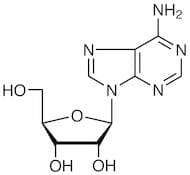
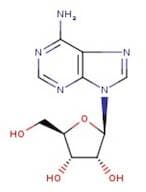
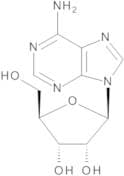
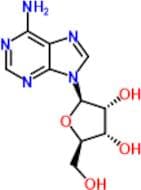
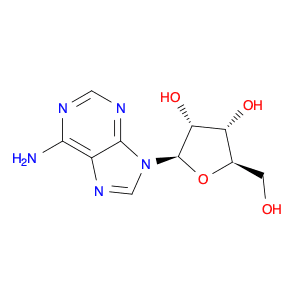
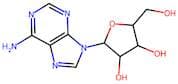
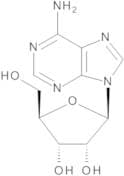
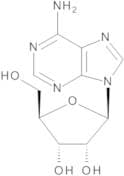
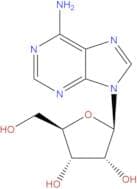
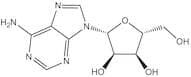
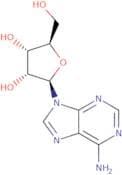
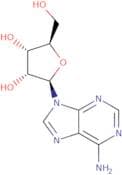
Adenosin ist ein Nukleosid, das aus der stickstoffhaltigen Base Adenin besteht, die an einen Ribosezucker gebunden ist. Es spielt eine entscheidende Rolle in der Biochemie, insbesondere beim Energietransfer und der Signalübertragung innerhalb der Zellen. Adenosin ist an der Bildung von Adenosin Triphosphat (ATP) beteiligt, dem primären Energieträger in biologischen Systemen. Es wirkt auch als Signalmolekül in verschiedenen physiologischen Prozessen, einschließlich Vasodilatation, Neurotransmission und Schlafregulation. Chemisch ist Adenosin durch seine molekulare Formel C10H13N5O4 und ein relativ niedriges Molekulargewicht gekennzeichnet. Es ist in Wasser löslich und zeigt einen neutralen pH-Wert in Lösung. Adenosin kann in verschiedenen Formen existieren, einschließlich phosphorylierter Derivate wie AMP, ADP und ATP, die für den Zellstoffwechsel von entscheidender Bedeutung sind. Darüber hinaus hat es therapeutische Anwendungen, wie z.B. bei der Behandlung bestimmter Herzrhythmusstörungen und als potenzieller Wirkstoff in der Krebstherapie. Seine biologische Bedeutung und Vielseitigkeit machen Adenosin zu einem wichtigen Forschungsschwerpunkt in der Pharmakologie und Biochemie.
Formel:C10H13N5O4
InChl:InChI=1S/C10H13N5O4/c11-8-5-9(13-2-12-8)15(3-14-5)10-7(18)6(17)4(1-16)19-10/h2-4,6-7,10,16-18H,1H2,(H2,11,12,13)/t4-,6-,7-,10-/m1/s1
InChI Key:InChIKey=OIRDTQYFTABQOQ-KQYNXXCUSA-N
SMILES:O[C@H]1[C@H](N2C=3C(N=C2)=C(N)N=CN3)O[C@H](CO)[C@H]1O
Synonyme:- 6-Amino-9-(beta-D-ribofuranosyl)9H-purine
- 9-alpha-D-lyxofuranosyl-9H-purin-6-amine
- 9-β-<span class="text-smallcaps">D</span>-Ribofuranosyl-9H-purin-6-amine
- 9-β-<span class="text-smallcaps">D</span>-Ribofuranosyladenine
- 9-β-D-Ribofuranosyl-9H-purin-6-amine
- 9-β-D-Ribofuranosyladenine
- 9H-Purin-6-amine, 9-β-<span class="text-smallcaps">D</span>-ribofuranosyl-
- 9H-Purin-6-amine, 9-β-D-ribofuranosyl-
- <span class="text-smallcaps">D</span>-Adenosine
- A
- AR
- Adenine riboside
- Adenocard
- Adenocor
- Adenogesic
- Adenoscan
- Adenosin
- Adenosina
- Adenosine Free Base
- Adrekar
- Boniton
- D-Adenosine
- Myocol
- Nqz-012
- Nsc 7652
- Nucleocardyl
- Riboadenosine
- Sandesin
- β-<span class="text-smallcaps">D</span>-Adenosine
- β-<span class="text-smallcaps">D</span>-Ribofuranose, 1-(6-amino-9H-purin-9-yl)-1-deoxy-
- β-<span class="text-smallcaps">D</span>-Ribofuranoside, adenine-9
- β-Adenosine
- β-D-Adenosine
- β-D-Ribofuranose, 1-(6-amino-9H-purin-9-yl)-1-deoxy-
- β-D-Ribofuranoside, adenine-9
- Weitere Synonyme anzeigen
Sortieren nach
Reinheit (%)
0
100
|
0
|
50
|
90
|
95
|
100
Adenosine
CAS:Formel:C10H13N5O4Reinheit:>99.0%(T)(HPLC)Farbe und Form:White to Almost white powder to crystalMolekulargewicht:267.25Adenosine, 99%
CAS:Adenosine serves as a nucleotide. It also plays an important role in the regulation of blood flow to various organs through vasodilation. It is actively involved in biochemical processes, such as energy transfer as adenosine triphosphate and adenosine diphosphate. Further, it is used in medicationFormel:C10H13N5O4Reinheit:99%Farbe und Form:White to pale cream, Powder or crystalline powderMolekulargewicht:267.25Adenosine
CAS:Nucleic acids and their salts, whether or not chemically defined; other heterocyclic compounds, nesoiFormel:C10H13N5O4Farbe und Form:White PowderMolekulargewicht:267.09675(2R,3R,4S,5R)-2-(6-amino-9H-purin-9-yl)-5-(hydroxymethyl)oxolane-3,4-diol
CAS:Formel:C10H13N5O4Reinheit:98%Farbe und Form:SolidMolekulargewicht:267.2413Ref: IN-DA0034FP
25kgNachfragen50kgNachfragen10g20,00€25g20,00€50g25,00€100g29,00€250g38,00€500g56,00€1kg67,00€5kg173,00€10kg334,00€Adenosine
CAS:Adenosine (D-Adenosine) is a ribonucleoside. Adenosine has vasodilatory, antiarrhythmic and analgesic effects. Cost-effective and quality-assured.Formel:C10H13N5O4Reinheit:98.76% - 99.86%Farbe und Form:Needles (From Water +3/2) Physical Description White To Off-White Crystalline Powder (Ntp 1992)Molekulargewicht:267.24Adenosine
CAS:AdenosineFormel:C10H13N5O4Reinheit:99%Farbe und Form: white powderMolekulargewicht:267.24g/molAdenosine (Standard)
CAS:Adenosine (Standard) is a reference standard for quantitative analysis. Adenosine is a ribonucleoside, vasodilatory, antiarrhythmic, and analgesic.Formel:C10H13N5O4Molekulargewicht:267.24Adenosine
CAS:Natural glycosideFormel:C10H13N5O4Reinheit:≥ 98.0 % (HPLC)Farbe und Form:PowderMolekulargewicht:267.24Adenosine
CAS:Applications Adenosine is a nucleotide.
References Long, X., et al.: J. Pharmacol. Exper. Ther., 335, 781 (2010); Ham, M., et al.: J. Pharmacol. Exper. Ther., 335, 607 (2010);Formel:C10H13N5O4Farbe und Form:NeatMolekulargewicht:267.24Adenosine - Endotoxin level below 100 EU/g
CAS:Adenosine is a nucleoside that interacts with adenosine receptors in the central nervous system. It is found in most body tissues and fluids, including blood, cerebrospinal fluid, and synovial fluid. Adenosine has been shown to inhibit uptake of glucose and other substances in the brain. The uptake of adenosine by neurons is inhibited by solute transport inhibitors such as nevirapine, which prevents the accumulation of toxic levels of adenosine during excitotoxic injury. Adenosine also has thermodynamic properties that promote its removal from solution by binding to water molecules and forming crystals or precipitates. This property may be useful in the treatment of cerebral edema following traumatic brain injury.Formel:C10H13N5O4Reinheit:Min. 99.0 Area-%Farbe und Form:White PowderMolekulargewicht:267.24 g/molAdenosine
CAS:Endogenous adenosine receptor ligand; regulator of innate immunityFormel:C10H13N5O4Reinheit:(Titration) 99.0 To 101.0%Farbe und Form:White PowderMolekulargewicht:267.25 g/mol