CAS 58-73-1
:Diphenhydramin
Beschreibung:
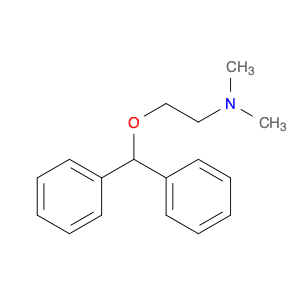
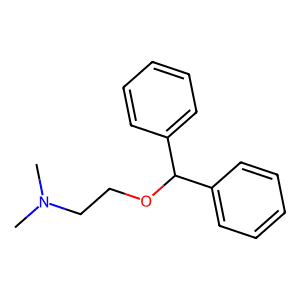
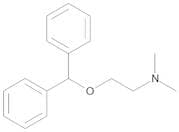
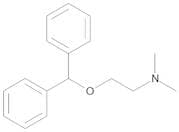
Diphenhydramin ist ein Antihistaminikum, das häufig zur Linderung von Allergiesymptomen, Heuschnupfen und Erkältungen eingesetzt wird. Es wird als Antagonist des H1-Rezeptors der ersten Generation klassifiziert, was bedeutet, dass es die Wirkung von Histamin blockiert, einer Substanz im Körper, die allergische Symptome verursacht. Chemisch zeichnet sich Diphenhydramin durch seine Struktur aus, die zwei Phenylringe umfasst, die durch eine Ethylamin-Kette verbunden sind. Diese Struktur trägt zu seiner Fähigkeit bei, die Blut-Hirn-Schranke zu überwinden, was zu sedierenden Effekten führt, weshalb es auch als kurzfristige Behandlung von Schlaflosigkeit eingesetzt wird. Diphenhydramin hat eine relativ geringe Löslichkeit in Wasser, ist jedoch in organischen Lösungsmitteln löslich. Zu seinen pharmakologischen Wirkungen können Schläfrigkeit, trockener Mund, Schwindel und in einigen Fällen paradoxe Reaktionen wie Erregbarkeit gehören, insbesondere bei Kindern. Aufgrund seiner sedierenden Eigenschaften ist Vorsicht geboten, wenn man Maschinen bedient oder nach dem Konsum fährt. Darüber hinaus kann es mit anderen Medikamenten interagieren, daher ist es wichtig, vor der Anwendung Gesundheitsfachleute zu konsultieren.
Formel:C17H21NO
InChl:InChI=1/C17H21NO/c1-18(2)13-14-19-17(15-9-5-3-6-10-15)16-11-7-4-8-12-16/h3-12,17H,13-14H2,1-2H3
InChI Key:InChIKey=ZZVUWRFHKOJYTH-UHFFFAOYSA-N
SMILES:C(OCCN(C)C)(C1=CC=CC=C1)C2=CC=CC=C2
Synonyme:- 2-(Benzhydryloxy)-N,N-dimethylethanamine
- 2-(Benzhydryloxy)-N,N-dimethylethylamine
- 2-(Diphenylmethoxy)-N,N-dimethylethanamine
- 2-(Diphenylmethoxy)-N,N-dimethylethylamine
- 2-Benzhydryloxyethyldimethylamine
- Benzhydramine
- DPH
- Difenhidramina
- Dimedrol base
- Diphenhydramin
- Ethanamine, 2-(diphenylmethoxy)-N,N-dimethyl-
- Ethylamine, 2-(diphenylmethoxy)-N,N-dimethyl-
- Far 90X2
- N,N-Dimethyl-2-(diphenylmethoxy)ethylamine
- N-[2-(Diphenylmethoxy)ethyl]-N,N-dimethylamine
- Nsc 665800
- O-Benzhydryldimethylaminoethanol
- Probedryl
- Restamin
- α-(2-Dimethylaminoethoxy)diphenylmethane
- β-Dimethylaminoethanol diphenylmethyl ether
- β-Dimethylaminoethyl benzhydryl ether
- β-Dimethylaminoethylbenzhydrylether
- Diphenylhydramine
- Allergeval
- 2-(Diphenylmethoxy)-N,N-dimethylethanam-ine
- Allergical
- Aleryl
- Allergival
- Allergan B
- 2-(diphenylmethoxy)-n,n-dimethyl-ethanamin
- DIPHENHYDRAMINE BASE
- 2-(Benzohydryloxy)-N,N-dimethylethylamine
- AURORA KA-7664
- 2-(diphenylmethoxy)-n,n-dimethyl-ethylamin
- Alledryl
- DIPHENHYDRAMINE
- Weitere Synonyme anzeigen
Sortieren nach
Reinheit (%)
0
100
|
0
|
50
|
90
|
95
|
100
11 Produkte.
Diphenhydramine
CAS:Formel:C17H21NOReinheit:>98.0%(GC)(T)Farbe und Form:Colorless to Yellow clear liquidMolekulargewicht:255.36Ethanamine, 2-(diphenylmethoxy)-N,N-dimethyl-
CAS:Formel:C17H21NOReinheit:98%Farbe und Form:LiquidMolekulargewicht:255.3547Orphenadrine EP Impurity D (Diphenhydramine)
CAS:Formel:C17H21NOFarbe und Form:Yellow LiquidMolekulargewicht:255.36Diphenhydramine Hydrochloride
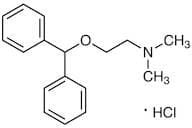
CAS:Formel:C17H21NO·HClReinheit:>98.0%(T)(HPLC)Farbe und Form:White powder to crystalMolekulargewicht:291.82Diphenhydramine
CAS:Diphenhydramine (Syntedril): first-gen antihistamine for allergies, antiemetic, antitussive, anticholinergic, sedative, treats drug-induced parkinsonism.Formel:C17H21NOReinheit:98.07%Farbe und Form:SolidMolekulargewicht:255.35Diphenhydramine
CAS:Kontrolliertes ProduktApplications Diphenhydramine can be used for improving dry skin with itching.
References Takeshima, H., et.al.: Jpn. Kokai Tokkyo Koho, 12, (2021);Formel:C17H21NOFarbe und Form:NeatMolekulargewicht:255.3612-(Benzhydryloxy)-N,N-dimethylethanamine
CAS:Formel:C17H21NOReinheit:95%Farbe und Form:LiquidMolekulargewicht:255.361Diphenhydramine
CAS:Kontrolliertes ProduktDiphenhydramine is a drug that belongs to the class of antihistamines, and is used to treat allergic symptoms such as hay fever, urticaria, and other allergic reactions. It has been shown to inhibit the production of hydrogen fluoride in analytical methods for measuring this compound. Diphenhydramine is also known to have potential interactions with other drugs, including α1-adrenergic antagonists (i.e., h1-antagonists), cyclic peptides, and surfactants. In addition, it has been shown to bind to the α1 subunit of G protein receptors within the gastrointestinal tract in a reaction mechanism that is not yet fully understood. This binding inhibits the response of these receptors to certain stimuli from neurotransmitters and hormones, which can lead to bowel disease.Formel:C9H18CINOReinheit:Min. 95%Molekulargewicht:295.16 g/mol