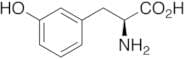
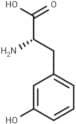
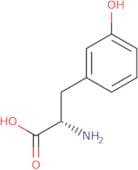
CAS 587-33-7
:L-Tyrosin
Beschreibung:
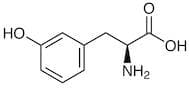
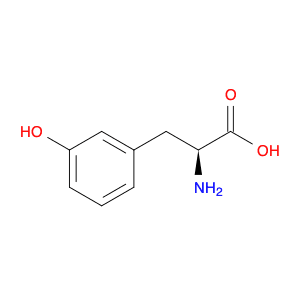
L-Tyrosin, mit der CAS-Nummer 587-33-7, ist eine nicht essentielle Aminosäure, die eine entscheidende Rolle bei der Synthese von Proteinen und Neurotransmittern spielt. Sie wird als polare, aromatische Aminosäure klassifiziert, da sie in ihrer Seitenkette eine phenolische Hydroxylgruppe enthält, die zu ihrer Löslichkeit in Wasser beiträgt. L-Tyrosin ist an der Produktion wichtiger Biomoleküle beteiligt, einschließlich Dopamin, Noradrenalin und Adrenalin, die für verschiedene physiologische Funktionen, einschließlich der Regulierung der Stimmung und der Stressreaktion, von entscheidender Bedeutung sind. Diese Aminosäure kann aus Nahrungsquellen wie Milchprodukten, Fleisch, Fisch, Eiern, Nüssen und Bohnen gewonnen werden und kann auch im Körper aus einer anderen Aminosäure, Phenylalanin, synthetisiert werden. L-Tyrosin wird häufig als Nahrungsergänzungsmittel verwendet, um die kognitive Leistung, insbesondere unter Stress, zu verbessern. In Bezug auf die Sicherheit wird es allgemein als sicher angesehen, wenn es in angemessenen Mengen konsumiert wird, obwohl eine übermäßige Aufnahme zu Nebenwirkungen führen kann. Insgesamt ist L-Tyrosin eine wichtige Verbindung in der Biochemie und Ernährung.
Formel:C9H11NO3
InChl:InChI=1S/C9H11NO3/c10-8(9(12)13)5-6-2-1-3-7(11)4-6/h1-4,8,11H,5,10H2,(H,12,13)/t8-/m0/s1
InChI Key:InChIKey=JZKXXXDKRQWDET-QMMMGPOBSA-N
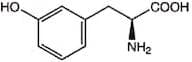
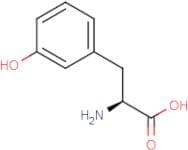
SMILES:C([C@@H](C(O)=O)N)C1=CC(O)=CC=C1
Synonyme:- (2S)-2-Amino-3-(3-hydroxyphenyl)propanoic acid
- (2S)-2-ammonio-3-(3-hydroxyphenyl)propanoate
- (S)-2-Amino-3-(3-hydroxyphenyl)propanoic acid
- 3-(m-Hydroxyphenyl)alanine
- 3-Hydroxy-<span class="text-smallcaps">L</span>-phenylalanine
- 3-Hydroxy-L-phenylalanine
- 3-Hydroxyphenylalanine
- <span class="text-smallcaps">L</span>-3-Hydroxyphenylalanine
- <span class="text-smallcaps">L</span>-Phenylalanine, 3-hydroxy-
- <span class="text-smallcaps">L</span>-m-Tyrosine
- <span class="text-smallcaps">L</span>-meta-Tyrosine
- L-Phenylalanine, 3-hydroxy-
- L-meta-Tyrosine
- m-<span class="text-smallcaps">L</span>-Tyrosine
- m-L-Tyrosine
- m-Tyrosine, <span class="text-smallcaps">L</span>-
- m-Tyrosine, L-
- Weitere Synonyme anzeigen
Sortieren nach
Reinheit (%)
0
100
|
0
|
50
|
90
|
95
|
100
11 Produkte.
L-m-Tyrosine
CAS:Formel:C9H11NO3Reinheit:>98.0%(T)(HPLC)Farbe und Form:White to Light yellow powder to crystalMolekulargewicht:181.19L-m-Tyrosine, 97+%
CAS:An unnatural amino acid, that has demonstrated potential in treating Parkinsons disease, Alzheimers disease, and arthritis. This Thermo Scientific Chemicals brand product was originally part of the Alfa Aesar product portfolio. Some documentation and label information may refer to the legacy brand.Formel:C9H11NO3Reinheit:97+%Farbe und Form:White to cream to brown, PowderMolekulargewicht:181.19(S)-2-Amino-3-(3-hydroxyphenyl)propanoic acid
CAS:Formel:C9H11NO3Reinheit:95%Farbe und Form:SolidMolekulargewicht:181.191L-m-Tyrosine
CAS:L-m-Tyrosine (3-Hydroxy-L-Phenylalanine) is a non-natural amino acid.Formel:C9H11NO3Reinheit:99.8%Farbe und Form:SolidMolekulargewicht:181.19L-m-Tyrosine
CAS:L-m-Tyrosine is a nonessential amino acid that is synthesized from phenylalanine. It has been shown to have antioxidant properties and protects against oxidative injury by scavenging reactive oxygen species such as hydrogen fluoride. L-m-Tyrosine has also been shown to modulate dopamine levels in the brain and may be used in the treatment of Parkinson's disease. The biological effects of L-m-Tyrosine are mediated through the transcriptional regulation of genes encoding proteins involved in dopamine β-hydroxylase and hydrogen fluoride detoxification. L-m-Tyrosine is also an experimental model for studying drug resistance in bacteria, including methicillin resistant Staphylococcus aureus (MRSA).Formel:C9H11NO3Reinheit:Min. 98 Area-%Farbe und Form:PowderMolekulargewicht:181.19 g/mol