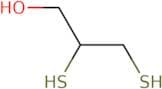
CAS 59-52-9
:Dimercaprol
Beschreibung:
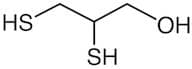
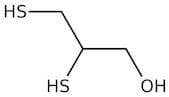
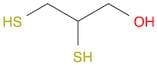
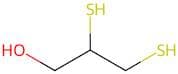
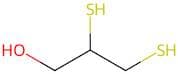
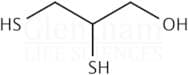
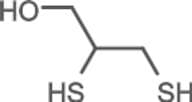
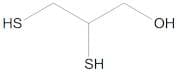
Dimercaprol, auch bekannt als British Anti-Lewisite (BAL), ist ein Chelatbildner, der hauptsächlich zur Behandlung von Vergiftungen mit Schwermetallen, insbesondere Arsen, Quecksilber und Blei, eingesetzt wird. Es handelt sich um eine farblose bis blassgelbe Flüssigkeit mit einem charakteristischen Geruch, der an Knoblauch erinnert. Die chemische Struktur von Dimercaprol weist zwei Thiolgruppen (-SH) auf, die es ihm ermöglichen, stabile Komplexe mit Metallionen zu bilden, was deren Ausscheidung aus dem Körper erleichtert. Dimercaprol ist in Wasser und organischen Lösungsmitteln löslich, was es vielseitig für verschiedene Anwendungen macht. Es wird durch intramuskuläre Injektion verabreicht und ist bekannt für seine potenziellen Nebenwirkungen, einschließlich Bluthochdruck, Tachykardie und allergischen Reaktionen. Aufgrund seiner Reaktivität muss es mit Vorsicht behandelt werden, und seine Anwendung ist typischerweise auf spezifische klinische Szenarien beschränkt. Die Wirksamkeit von Dimercaprol in der Chelattherapie hat es zu einer wichtigen Verbindung in der Toxikologie und Notfallmedizin gemacht, obwohl seine Verwendung zugunsten anderer Chelatbildner mit weniger Nebenwirkungen zurückgegangen ist.
Formel:C3H8OS2
InChl:InChI=1/C3H8OS2/c4-1-3(6)2-5/h3-6H,1-2H2/t3-/m1/s1
InChI Key:InChIKey=WQABCVAJNWAXTE-UHFFFAOYSA-N
SMILES:C(CO)(CS)S
Synonyme:- (2R)-2,3-disulfanylpropan-1-ol
- (2S)-2,3-disulfanylpropan-1-ol
- 1,2-Dimercapto-3-propanol
- 1,2-Dithioglycerol
- 1-Propanol, 2,3-dimercapto-
- 2,3-Bis(sulfanyl)propan-1-ol
- 2,3-Dimercaptopropanol
- 2,3-Disulfanylpropan-1-ol
- 2,3-Dithiopropan-1-ol
- 2,3-Dithiopropanol
- 3-Hydroxy-1,2-propanedithiol
- Antoxol
- BAL
- British antilewisite
- DMP
- Dicaptol
- Dimercaprol
- Dimersol
- Dithioglycerine
- Dithioglycerol
- Nsc 39515
- Nsc 4646
- Panobal
- Propanol, 2,3-Dimercapto-
- Sulfactin
- α,β-Dithioglycerol
- 2,3-Dimercapto-1-propanol
- 2,3-Disulfanyl-1-propanol
- DITHIOPROPANOL
- 1,2-dithio-glycero
- 2,3-dimercapto-1-propano
- BRITISH ANTI-LEWISITE
- Dimercaptopropanol
- 2,3-DIMERCAPTOPROPAN-1-OL
- 2,3-Dimercaptol-1-propanol
- Weitere Synonyme anzeigen
Sortieren nach
Reinheit (%)
0
100
|
0
|
50
|
90
|
95
|
100
10 Produkte.
2,3-Dimercapto-1-propanol
CAS:Formel:C3H8OS2Reinheit:>95.0%(GC)(T)Farbe und Form:Colorless to Light yellow to Light orange clear liquidMolekulargewicht:124.222,3-Dimercaptopropanol, 97%
CAS:British Anti-Lewisite. A chelator that inhibits sugar nucleotide degradation.2,3-Dimercaptopropanol is used as a chelating agent involved in the treatment of arsenic, antimony, lead, gold and mercury poisoning. It is also used as an antidote to the warfare agent Lewisite. Further, it is used for theFormel:C3H8OS2Reinheit:97%Farbe und Form:Clear colorless to pale yellow, LiquidMolekulargewicht:124.222,3-Dimercapto-1-propanol
CAS:Formel:C3H8OS2Reinheit:96%Farbe und Form:LiquidMolekulargewicht:124.2250Dimercaprol
CAS:Formel:C3H8OS2Reinheit:(GC) ≥ 95.0%Farbe und Form:Clear, colourless to light yellow liquidMolekulargewicht:124.22Dimercaprol
CAS:Dimercaprol (Dicaptol) is an anti-gas warfare agent that is effective against Lewisite (dichloro(2-chlorovinyl)arsine) and formerly known as British Anti-Formel:C3H8OS2Reinheit:98.91% - 99.64%Farbe und Form:Viscous Oily LiquidMolekulargewicht:124.222,3-Dimercapto-1-propanol
CAS:Kontrolliertes ProduktApplications 2,3-Dimercapto-1-propanol is known as an anti-heavy metal-poisoning drug and is used as an effective antidote in acute arsenic poisoning.
Not a dangerous good if item is equal to or less than 1g/ml and there is less than 100g/ml in the package
References Kubota, S., et al.: AIDS Res. Hum. Retrov., 6, 919 (1990); Mazumder, G., et al.: Clin. Toxicol., 39, 665 (2001)Formel:C3H8OS2Farbe und Form:NeatMolekulargewicht:124.222,3-Dimercapto-1-propanol
CAS:2,3-Dimercapto-1-propanol (DMPC) is an antibiotic that has been shown to have a potent synergistic effect when used in combination with other antibiotics. DMPC inhibits the enzyme fatty acid synthase and prevents the synthesis of long-chain fatty acids. It also inhibits the uptake of long-chain fatty acids by tissues such as liver, muscle, and fat cells. DMPC is also a reactive chemical that reacts with oxygen from the air to form 2,3-dimercapto-1-propanol peroxyl radicals and hydrogen peroxide. These reactive species are toxic to cells exposed to DMPC in tissue culture or in vivo. This chemical is also a potent inducer of all-trans retinoic acid and dehydroascorbic acid production.Formel:C3H8OS2Reinheit:Min. 95%Farbe und Form:Clear LiquidMolekulargewicht:124.23 g/mol