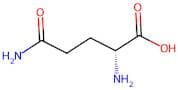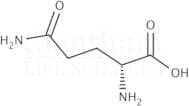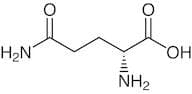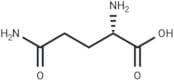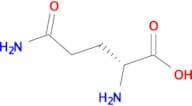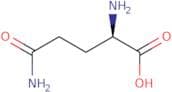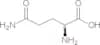
CAS 5959-95-5
:D(-)-Glutamin
Beschreibung:
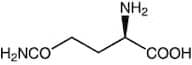
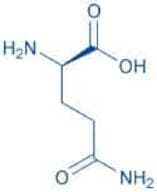
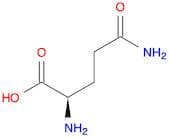
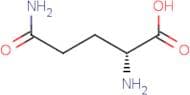
D(-)-Glutamin, mit der CAS-Nummer 5959-95-5, ist eine Aminosäure, die als Baustein für Proteine dient und eine entscheidende Rolle in verschiedenen Stoffwechselprozessen spielt. Es ist der D-Enantiomer von Glutamin, einer nicht-essentiellen Aminosäure, die häufig im Körper vorkommt. D(-)-Glutamin zeichnet sich durch seine Fähigkeit aus, am Stickstoffstoffwechsel teilzunehmen, und ist an der Synthese von Nukleotiden und Neurotransmittern beteiligt. Es ist in Wasser löslich und weist einen neutralen pH-Wert in Lösung auf. Diese Aminosäure ist wichtig für zelluläre Funktionen, insbesondere im Immunsystem und zur Aufrechterhaltung der Integrität der Darmschleimhaut. D(-)-Glutamin wird häufig in der Forschung und in klinischen Umgebungen verwendet, insbesondere in Studien, die sich mit Stoffwechsel, Zellkommunikation und Ernährung befassen. Seine Stabilität und Reaktivität machen es zu einer wertvollen Verbindung in biochemischen Anwendungen. Es ist jedoch wichtig zu beachten, dass die L-Form von Glutamin in biologischen Systemen häufiger vorkommt und die D-Form in der Natur seltener anzutreffen ist.
Formel:C5H10N2O3
InChl:InChI=1/C5H10N2O3/c6-3(5(9)10)1-2-4(7)8/h3H,1-2,6H2,(H2,7,8)(H,9,10)/t3-/m1/s1
InChI Key:InChIKey=ZDXPYRJPNDTMRX-GSVOUGTGSA-N
SMILES:[C@@H](CCC(N)=O)(C(O)=O)N
Synonyme:- (2R)-2-Amino-4-carbamoylbutanoic acid
- (2R)-5-Amino-2-azaniumyl-5-oxopentanoate
- (R)-2,5-Diamino-5-oxopentanoic acid
- <span class="text-smallcaps">D</span>-Glutamine
- D(-)-Glutamic acid-5-amide
- D-Gln-OH
- Glutamine, <span class="text-smallcaps">D</span>-
- H-D-Gln-OH
- Glutamine, D-
- D-Glutamine
- D-2-Aminoglutaramic acid, D-Glutamic acid 5-amide
- D-Glutamine (9CI)
- D-Gln
- Glutamine,D-(8Cl)
- D-2-AMINOGLUTARAMIC ACID
- (2R)-2-amino-4-carbamoyl-butanoic acid
- Citric Acid, Monohydrate, Crystal, Reagent
- (R)-2-AMINO-4-CARBAMOYL-BUTYRIC ACID
- D-GLUTAMINE extrapure
- Weitere Synonyme anzeigen
Sortieren nach
Reinheit (%)
0
100
|
0
|
50
|
90
|
95
|
100
13 Produkte.
D-Glutamine, 99+%
CAS:Kinase inhibitor; has antivasospastic propertiesFormel:C5H10N2O3Reinheit:99+%Farbe und Form:White, Powder or crystals or crystalline powderMolekulargewicht:146.15H-D-Gln-OH
CAS:Bachem ID: 4007503.
Formel:C5H10N2O3Reinheit:> 99%Farbe und Form:White PowderMolekulargewicht:146.15(2R)-2,5-diamino-5-oxo-pentanoic acid
CAS:(2R)-2,5-diamino-5-oxo-pentanoic acidReinheit:98%Molekulargewicht:146.14g/molD-Glutamine
CAS:Formel:C5H10N2O3Reinheit:≥ 98.0%Farbe und Form:White or almost white crystalline powderMolekulargewicht:146.14D-Glutamine
CAS:Formel:C5H10N2O3Reinheit:>98.0%(T)Farbe und Form:White to Almost white powder to crystalMolekulargewicht:146.15D-glutamine
CAS:D-glutamine, an D type stereoisomer of glutamine, is one of the 20 amino acids which is encoded by the standard genetic code.Formel:C5H10N2O3Reinheit:99.99%Farbe und Form:White Or Off-White PowderMolekulargewicht:146.14H-D-Gln-OH
CAS:M02933 - H-D-Gln-OH
Formel:C5H10N2O3Reinheit:97%Farbe und Form:SolidMolekulargewicht:146.146D-Glutamine extrapure, 99%
CAS:Formel:C5H10N2O3Reinheit:min. 99%Farbe und Form:White, Crystalline powder, Clear, ColourlessMolekulargewicht:146.2D-Glutamine
CAS:D-Glutamine is the most abundant amino acid in the body and is important for protein synthesis. It is used to activate transcription and as a source of energy for cells, especially in times of oxidative stress. D-Glutamine can be used to treat diseases caused by infectious agents, such as listeriosis, bacterial sepsis, and viral encephalitis. D-Glutamine also has been shown to reduce neuronal death and improve memory function in animal models. D-Glutamine can be synthesized from l-glutamine by an enzyme called glutaminase. This reaction requires ATP hydrolysis and produces glutamate, which then reacts with ammonia to form glutamine. In this way, it is possible to bypass the need for dietary intake of glutamine. Glutamines are also classified as biocompatible polymers because they do not elicit a strong immune response or cause inflammation when introduced into the body.Formel:C5H10N2O3Reinheit:Min. 95%Farbe und Form:White PowderMolekulargewicht:146.14 g/mol