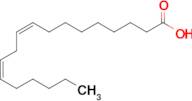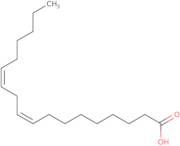
CAS 60-33-3
:Linolsäure
- (9Z,12Z)-9,12-Octadecadienoic acid
- (9Z,12Z)-Octadec-9,12-dienoic acid
- (9Z,12Z)-octadeca-9,12-dienoic acid
- (Z)-9,12-octadecadienoic acid
- (Z,Z)-9,12-Octadecadienoic acid
- (Z,Z)-9,12-Octadecandienoic acid
- 9,12-Linoleic Acid
- 9,12-Octadecadieneoic acid, (Z,Z)-
- 9,12-Octadecadienoic acid (9Z,12Z)-
- 9,12-Octadecadienoic acid (Z,Z)-
- 9,12-Octadecadienoic acid, 9,12-Octadecadienoic acid
- 9,12-Octadecanoic acid
- 9-cis,12-cis-Linoleic acid
- 9-cis,12-cis-Octadecadienoate
- 9Z,12Z-Linoleic acid
- 9Z,12Z-Octadecadienoic acid
- Acide linoleique
- Acido Linoleico, Puro
- C18:2
- Ca 1726
- Cis,Cis-9,12-Octadecadienoic Acid
- Cis-9,Cis-12-Octadecadienoic Acid
- Emersol 310
- Emersol 315
- Extra Linoleic 90
- Linoleic Fatty Acid
- Linoleic acid
- Linoleoate
- Linolsaeure
- Linolsaure
- Octadeca-9,12-Dienoic Acid
- Polyin No.515
- Polylin 515
- Ronacare ASC 3
- Telfairic Acid
- Unifac 6550
- all-cis-9,12-Octadecadienoic acid
- cis,cis-Delta-9,12-octadecadienoate
- cis,cis-Linoleic acid
- cis-Δ9,12-Octadecadienoic acid
- cis-Δ<sup>9,12</sup>-Octadecadienoic acid
- Weitere Synonyme anzeigen
Ref: 10-F046840
500mg9,00€1g13,00€5g13,00€10g14,00€25g14,00€25ml14,00€100g50,00€500g216,00€1kg387,00€Linoleic Acid (Free Acid) extrapure, 98%
CAS:Formel:C18H32O2Reinheit:min.98.0%Farbe und Form:Colourless to light yellow, Liquid, ClearMolekulargewicht:280.45Linoleic Acid (Free Acid) Reference Standard, 99%(GC)
CAS:Formel:C18H32O2Reinheit:min. 99%Farbe und Form:Clear, Colourless to pale yellow, LiquidMolekulargewicht:280.45Linoleic Acid
CAS:Oleic, linoleic or linolenic acidsFormel:C18H32O2Farbe und Form:LiquidMolekulargewicht:280.24023Linoleic acid- 99%
CAS:Purity min. 99%Formel:C18H32O2Reinheit:(%) Min. 99%Farbe und Form:Clear LiquidMolekulargewicht:280.4 g/molLinoleic acid
CAS:Linoleic acid is an organic compound that is a polyunsaturated omega-6 fatty acid. It is a common lipid and reaction component in the chemical industry. Linoleic acid has been shown to be useful as a building block in organic synthesis, as well as in the production of speciality chemicals, such as surfactants. Linoleic acid can be used to prepare many types of products, including pharmaceuticals, pesticides, and plastics. The CAS number for linoleic acid is 60-33-3.
Formel:C18H32O2Molekulargewicht:280.45 g/molLinoleic acid - powder
CAS:Linoleic acid is a polyunsaturated fatty acid that is an important component of cell membranes. It has been shown to inhibit oxidative injury and improve mitochondrial functions. Linoleic acid also has a role in energy metabolism, as it is the precursor for biosynthesis of eicosanoids and arachidonic acid. The physiological effects of linoleic acid have been studied using a model system consisting of isolated rat adipose tissue and mitochondria. This model system has been used to investigate the inhibitory properties of linoleic acid on caproic acid-induced lipid peroxidation. Linoleic acid has also been shown to have anion radical scavenging activity when in the presence of iron. This compound can be analyzed using gas chromatography-mass spectrometry (GC-MS) based on its chemical composition, which consists mainly of linear 18-carbon chains with two double bonds at positions 9 and 12.
Formel:C18H32O2Reinheit:Min. 95%Farbe und Form:PowderMolekulargewicht:280.45 g/mol