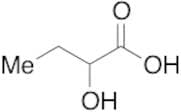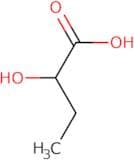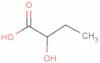
CAS 600-15-7
:2-Hydroxybuttersäure
Beschreibung:
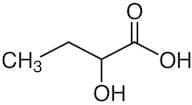
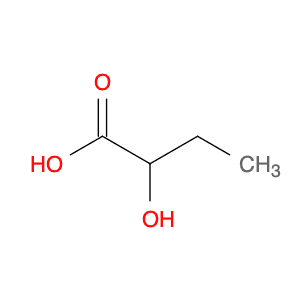
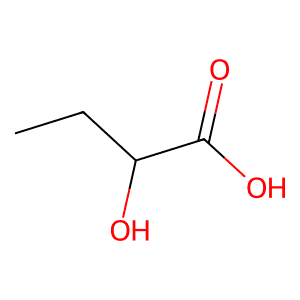
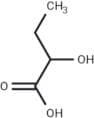
2-Hydroxybuttersäure, auch bekannt als Beta-Hydroxybuttersäure, ist eine Carbonsäure, die durch das Vorhandensein sowohl einer Hydroxylgruppe (-OH) als auch einer Carboxylgruppe (-COOH) in ihrer molekularen Struktur gekennzeichnet ist. Es ist eine farblose, viskose Flüssigkeit, die in Wasser löslich ist und eine leicht saure Natur aufweist. Die Verbindung wird häufig in der biochemischen Forschung verwendet und hat potenzielle Anwendungen in den Bereichen Medizin und Ernährung, insbesondere in Studien, die sich mit dem Stoffwechsel und der Energieproduktion befassen. 2-Hydroxybuttersäure kann durch verschiedene Stoffwechselwege produziert werden, einschließlich des Abbaus bestimmter Aminosäuren und Fettsäuren. Seine Rolle als Metabolit im menschlichen Körper hat Interesse geweckt, insbesondere in Bezug auf seine potenziellen Auswirkungen auf die Energiehomöostase und seine Implikationen bei Erkrankungen wie Diabetes und Fettleibigkeit. Darüber hinaus kann es als Vorläufer für die Synthese anderer organischer Verbindungen dienen, was es in der chemischen Synthese und in industriellen Anwendungen wertvoll macht.
Formel:C4H8O3
InChl:InChI=1S/C4H8O3/c1-2-3(5)4(6)7/h3,5H,2H2,1H3,(H,6,7)
InChI Key:InChIKey=AFENDNXGAFYKQO-UHFFFAOYSA-N
SMILES:C(C(O)=O)(CC)O
Synonyme:- (1)-2-Hydroxybutyric acid
- (RS)-2-Hydroxybutyric acid
- (±)-2-Hydroxy-n-butyric acid
- (±)-2-Hydroxybutanoic acid
- (±)-2-Hydroxybutyric acid
- (±)-α-Hydroxybutyric acid
- <span class="text-smallcaps">DL</span>-2-Hydroxybutanoic acid
- <span class="text-smallcaps">DL</span>-2-Hydroxybutyric acid
- <span class="text-smallcaps">DL</span>-α-Hydroxybutyric acid
- Butanoic acid, 2-hydroxy-
- Butyric acid, 2-hydroxy-, <span class="text-smallcaps">DL</span>-
- NSC 6495
- α-Hydroxy-n-butyric acid
- α-Hydroxybutanoic acid
- DL-α-Hydroxybutyric acid
- Weitere Synonyme anzeigen
Sortieren nach
Reinheit (%)
0
100
|
0
|
50
|
90
|
95
|
100
9 Produkte.
DL-2-Hydroxybutyric Acid (contains Polymolecular esterification product)
CAS:Formel:C4H8O3Reinheit:>95.0%(T)Farbe und Form:White to Almost white powder to crystalMolekulargewicht:104.11DL-2-Hydroxy-n-Butyric Acid
CAS:Formel:C4H8O3Reinheit:95%Farbe und Form:SolidMolekulargewicht:104.1045DL-2-hydroxybutyric acid
CAS:DL-2-hydroxybutyric acidFormel:C4H8O3Reinheit:98%Farbe und Form: yellow crystalsMolekulargewicht:104.10g/mol2-Hydroxybutyric acid
CAS:2-Hydroxybutyric acid (α-Hydroxybutyric acid) is a product of protein metabolism and a biomarker for type 2 diabetes and pre-eclampsia.Formel:C4H8O3Reinheit:97.01% - 98.00%Farbe und Form:SolidMolekulargewicht:104.12-Hydroxybutanoic Acid
CAS:Kontrolliertes ProduktApplications 2-Hydroxybutanoic Acid is an analyte used in the diagnoses of colorectal cancer as well as Type II diabetes. It is also used in the purification of the major Vibrio autoinducer and the study of its role in virulence factor production for cholera.
References Qiu, Y. et al.: J. Proteome Res., 8, 4844 (2009); Salek, R.. et al.: Phys. Genom., 29, 99, (2007); Higgins, D. et al.: Nature, 450, 883 (2007);Formel:C4H8O3Farbe und Form:NeatMolekulargewicht:104.12-hydroxybutanoic acid
CAS:2-Hydroxybutanoic acid is a metabolite of the amino acid leucine and is involved in many biological processes. It has been shown to have a potential role as a biomarker for coronary heart disease. 2-hydroxybutanoic acid is produced by human serum and other tissues, such as the heart, liver, and kidney. It has been shown to have an activity index of 0.062 in plasma mass spectrometry experiments on human serum samples. This compound has been shown to inhibit the growth of bacteria by inhibiting protein synthesis via enzyme activities that are specific for bacteria. This process leads to disease activity reduction and improved energy metabolism in patients with coronary heart disease. Sample preparation techniques for this compound include enzyme digestion followed by liquid-liquid extraction or solid-phase extraction with silica gel cartridges.Formel:C4H8O3Reinheit:Min. 95%Molekulargewicht:104.1 g/mol