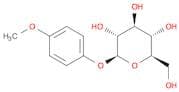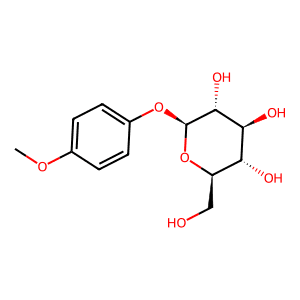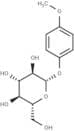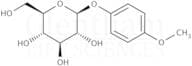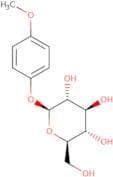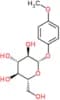
CAS 6032-32-2
:Methylarbutin
- 4-Methoxyphenyl β-<span class="text-smallcaps">D</span>-glucopyranoside
- 4-Methoxyphenyl-b-D-glucopyranoside
- Glucopyranoside, p-methoxyphenyl, β-<span class="text-smallcaps">D</span>-
- Methylarbutin
- Methylarbutoside
- Methylhydroquinone glucoside
- p-Methoxyphenyl beta-D-glucopyranoside
- p-Methoxyphenyl β-<span class="text-smallcaps">D</span>-glucopyranoside
- p-Methoxyphenyl β-<span class="text-smallcaps">D</span>-glucoside
- β-<span class="text-smallcaps">D</span>-Glucopyranoside, 4-methoxyphenyl
- Glucopyranoside, p-methoxyphenyl, β-D-
- p-Methoxyphenyl β-D-glucoside
- Weitere Synonyme anzeigen
p-Methoxyphenyl b-D-glucoside
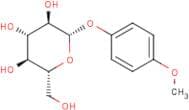
CAS:Formel:C13H18O7Reinheit:97%Farbe und Form:SolidMolekulargewicht:286.27784-Methoxyphenyl β-D-Glucopyranoside
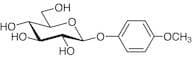
CAS:Formel:C13H18O7Reinheit:>97.0%(HPLC)Farbe und Form:White to Almost white powder to crystalMolekulargewicht:286.284-Methoxyphenyl β-D-glucopyranoside
CAS:4-Methoxyphenyl β-D-glucopyranosideReinheit:>99%Farbe und Form:SolidMolekulargewicht:286.28g/molMethylarbutin
CAS:Methylarbutin (ß-PMP-Glc;4-Methoxyphenyl β-D-Glucopyranoside) is an ice recrystallization inhibitor (IRI)Formel:C13H18O7Reinheit:99.21%Farbe und Form:White To Light Yellow Crystal PowdeMolekulargewicht:286.284-Methoxyphenyl β-D-glucopyranoside
CAS:Bearberry has been used for centuries to treat various disorders of the urinary tract and prostate. The active ingredient in bearberry is a flavonol glycoside called arbutin, which is converted to hydroquinone during metabolism. As an antioxidant, hydroquinone inhibits the oxidation of LDL cholesterol and may reduce the risk of atherosclerosis. Hydroquinone has also been shown to have anti-inflammatory properties in rat liver microsomes and tissue culture, inhibiting prostaglandin synthesis by blocking cyclooxygenase activity. In vitro, bearberry extracts have been shown to inhibit bacterial growth on agar plates with pH levels from 4-7 and at concentrations between 0.1-1%. It was found that bearberry extracts were most effective against Pseudomonas aeruginosa strains, with MIC values ranging from 2-4 mg/mL. Bearberry extract was observed to be more effective than ampicillin against these strains in a chromatographic assay.
Formel:C13H18O7Reinheit:Min. 95%Farbe und Form:PowderMolekulargewicht:286.28 g/mol