CAS 613-19-4
:2-Methylchinolin-3-ol
Beschreibung:
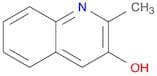
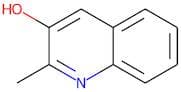
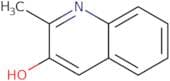
2-Methylchinolin-3-ol, mit der CAS-Nummer 613-19-4, ist eine organische Verbindung, die zur Klasse der Chinoline gehört, die bicyclische aromatische Verbindungen sind. Diese Substanz weist ein Chinolin-Rückgrat mit einer Hydroxylgruppe (-OH) und einer Methylgruppe (-CH3) auf, die an den aromatischen Ring gebunden sind. Die Anwesenheit der Hydroxylgruppe verleiht phenolische Eigenschaften, wodurch sie eine schwache Säure ist und an Wasserstoffbrückenbindungen teilnehmen kann. 2-Methylchinolin-3-ol ist typischerweise ein Feststoff bei Raumtemperatur und zeigt aufgrund seiner Hydroxylgruppe eine moderate Löslichkeit in polaren Lösungsmitteln. Es ist bekannt für seine potenziellen biologischen Aktivitäten, einschließlich antimikrobieller und antioxidativer Eigenschaften, die es in der medizinischen Chemie von Interesse machen. Darüber hinaus ermöglicht seine Struktur verschiedene chemische Modifikationen, die sein pharmakologisches Profil verbessern können. Sicherheitsdaten sollten für den Umgang und die Exposition konsultiert werden, wie bei jeder chemischen Substanz, um angemessene Laborpraktiken sicherzustellen.
Formel:C10H9NO
InChl:InChI=1/C10H9NO/c1-7-10(12)6-8-4-2-3-5-9(8)11-7/h2-6,12H,1H3
SMILES:Cc1c(cc2ccccc2n1)O
Synonyme:- 3-Quinolinol, 2-methyl-
- 2-Methylquinolin-3-ol
- 2-Methyl-3-puinolinol
- 3-Hydroxy-2-methylquinoline
- 2-methy-3-Hydroxyquinoline
- 3-Hydroxyquinaldine
Sortieren nach
Reinheit (%)
0
100
|
0
|
50
|
90
|
95
|
100
4 Produkte.
2-Methylquinolin-3-ol
CAS:2-Methylquinolin-3-ol is a peroxide with the chemical formula C9H7O2. It has been shown to have antibacterial activity against Gram-positive and Gram-negative bacteria, although it is less potent than sodium hypochlorite. 2-Methylquinolin-3-ol is most effective when in stoichiometric amounts of hydrogen peroxide. It has been shown to be more efficient in the presence of glycols such as ethylene glycol and propylene glycol, which increase its rate of reaction. The mechanism for 2-methylquinolin-3-ol's antibacterial activity is thought to be due to oxidation of bacterial cell membranes. This chemical compound reacts with the cell membrane and causes lipid peroxidation, leading to the death of the bacteria by leakage of cellular contents. 2Mqo also absorbs ultraviolet radiation from sunlight, forming an excited state that can undergo photochemical reactions with oxygen or other molecules in its environment,Formel:C10H9NOReinheit:Min. 95%Molekulargewicht:159.18 g/mol