CAS 6138-23-4
:Trehalose, Dihydrat
Beschreibung:
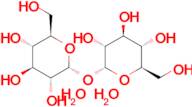
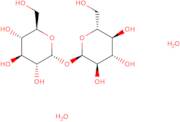
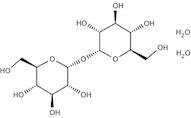
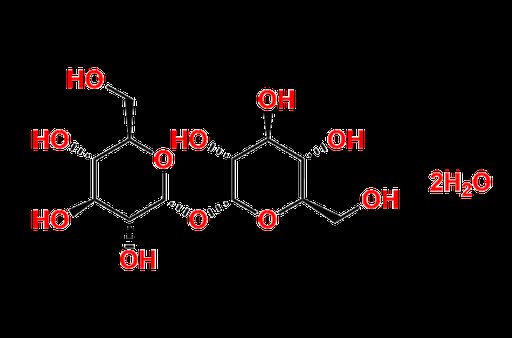
Trehalose-Dihydrat ist ein Disaccharid, das aus zwei Glukosemolekülen besteht, die durch eine α,α-1,1-glykosidische Bindung verbunden sind. Es zeichnet sich durch seine Fähigkeit aus, Proteine und Zellstrukturen zu stabilisieren, was es in verschiedenen biotechnologischen und pharmazeutischen Anwendungen wertvoll macht. Trehalose ist bekannt für seine geringe Hygroskopizität und hohe Löslichkeit in Wasser, was zu seiner Wirksamkeit als Kryoprotektor und Stabilisator in Gefriertrocknungsprozessen beiträgt. Die Dihydratform zeigt an, dass es zwei Wassermoleküle pro Trehalose-Molekül enthält, was seine physikalischen Eigenschaften wie Schmelzpunkt und Löslichkeit beeinflusst. Trehalose ist nicht reduzierend, was es von anderen Zuckern unterscheidet, und hat einen relativ niedrigen Kalorienwert, was es zu einem interessanten Thema in der Lebensmittelwissenschaft und Ernährung macht. Darüber hinaus zeigt es antioxidative Eigenschaften und wurde auf seine potenziellen gesundheitlichen Vorteile, einschließlich neuroprotektiver Effekte, untersucht. Insgesamt ist Trehalose-Dihydrat eine vielseitige Verbindung mit bedeutenden Anwendungen in verschiedenen Bereichen, einschließlich Lebensmitteltechnologie, Pharmazie und Biotechnologie.
Formel:C12H22O11·2H2O
InChl:InChI=1S/C12H22O11.2H2O/c13-1-3-5(15)7(17)9(19)11(21-3)23-12-10(20)8(18)6(16)4(2-14)22-12;;/h3-20H,1-2H2;2*1H2/t3-,4-,5-,6-,7+,8+,9-,10-,11-,12-;;/m1../s1
InChI Key:InChIKey=DPVHGFAJLZWDOC-PVXXTIHASA-N
SMILES:O([C@H]1O[C@H](CO)[C@@H](O)[C@H](O)[C@H]1O)[C@H]2O[C@H](CO)[C@@H](O)[C@H](O)[C@H]2O.O
Synonyme:- <span class="text-smallcaps">D</span>-(+)-Trehalose dihydrate
- D(+)trehalose dihydrate cell*culture tested
- D(+)trehalose reduced metal ion content dihydrate
- L-Trehalose Dihydrate
- Trehalose, dihydrate
- alpha,alpha-D-Trehalose dihydrate
- alpha-D-Glucopyranosyl-alpha-D-glucopyranoside dihydrate
- α,α-Trehalose dihydrate
- α-<span class="text-smallcaps">D</smallcap>-Glucopyranoside, α-<smallcap>D</span>-glucopyranosyl, dihydrate
- α-<span class="text-smallcaps">D</smallcap>-Glucopyranoside, α-<smallcap>D</span>-glucopyranosyl, hydrate (1:2)
- α-<span class="text-smallcaps">D</smallcap>-Glucopyranosyl α-<smallcap>D</span>-glucopyranoside dihydrate
- α-D-Glucopyranoside, α-D-glucopyranosyl, dihydrate
- D-Trehalose, dihydrate
- α-D-Glucopyranosyl α-D-glucopyranoside dihydrate
- D-(+)-Trehalose dihydrate
- α-D-Glucopyranoside, α-D-glucopyranosyl, hydrate (1:2)
- D(+)-Trehalose Dihydrate
- Weitere Synonyme anzeigen
Sortieren nach
Reinheit (%)
0
100
|
0
|
50
|
90
|
95
|
100
D-(+)-Trehalose dihydrate
CAS:Formel:C12H26O13Reinheit:95.0%Farbe und Form:Crystalline Powder,PowderMolekulargewicht:378.327a,a-D-Trehalose dihydrate - high purity
CAS:Non-reducing disaccharide; mildly sweet energy source; protein stabilizerFormel:C12H22O11·2H2OReinheit:Min. 99 Area-%Farbe und Form:PowderMolekulargewicht:378.33 g/mola,a-D-Trehalose dihydrate
CAS:Trehalose is a naturally occurring disaccharide found in many organisms. Its role in nature is as versatile as its applications in the laboratory. Trehalose is synthesised by cells in response to stress and helps retaining the cellular integrity under tough conditions. An important function of trehalose is to stabilise protein structures and to prevent proteins from their degradation. Researchers use trehalose for instance as a carbon source in selective microbiological media, as desiccation protectant and for cryoprotection.Formel:C12H22O11·2H2OReinheit:(%) Min. 98%Farbe und Form:White PowderMolekulargewicht:378.33 g/mola,a-D-Trehalose dihydrate endotoxin free
CAS:Trehalose is a non-reducing sugar that is naturally found in some plants and animals. It is a disaccharide formed by two glucose molecules linked together with an alpha,alpha glycosidic bond. Trehalose has been shown to inhibit the growth of bacteria through the inhibition of fatty acid biosynthesis and the production of lactic acid. Trehalose has also been shown to have excipients that are used as lubricants or suspending agents in pharmaceuticals, cosmetics, food products, and animal feed. Trehalose can be used as a substitute for propionate in order to create endotoxin-free aqueous solutions.Formel:C12H22O11·2H2OReinheit:Min. 98 Area-%Farbe und Form:White PowderMolekulargewicht:378.33 g/molD-Trehalose Dihydrate for tissue culture
CAS:Formel:C12H22O11·2H2OFarbe und Form:White to off - white, Crystalline powder, Clear, ColorlessMolekulargewicht:378.33D-Trehalose Dihydrate ExiPlus Multi-Compendial
CAS:Formel:C12H22O11·2H2OReinheit:97 - 102%Farbe und Form:White to off white, Crystalline powder, Clear, max. 0.05Molekulargewicht:378.33D-Trehalose Dihydrate extrapure CHR
CAS:Formel:C12H22O11·2H2OFarbe und Form:White to off-white, Crystalline powder, ClearMolekulargewicht:378.33a,a-D-Trehalose dihydrate
CAS:Please enquire for more information about a,a-D-Trehalose dihydrate including the price, delivery time and more detailed product information at the technical inquiry form on this page
Formel:C12H26O13Reinheit:Min. 98 Area-%Molekulargewicht:378.33 g/mol