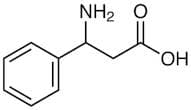
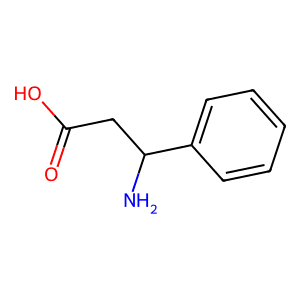
CAS 614-19-7
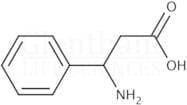
:DL-β-Phenylalanin
- (±)-β-Phenyl-β-alanine
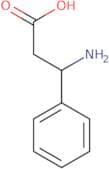
- 3-Amino-3-phenylpropanoic acid
- 3-Phenyl-β-alanine
- <span class="text-smallcaps">D</smallcap><smallcap>L</span>-β-Phenylalanine
- <span class="text-smallcaps">DL</span>-3-Amino-3-phenylpropionic acid
- <span class="text-smallcaps">DL</span>-β-Phenyl-β-alanine
- <span class="text-smallcaps">DL</span>-β-Phenylalanine
- Benzenepropanoic acid, β-amino-
- DL-3-Amino-3-phenylpropionic acid
- DL-beta-Phe-OH
- DL-beta-Phenylalanine
- H-DL-β-Phe-OH
- Hydrocinnamic acid, β-amino-
- NSC 122793
- NSC 132827
- NSC 1979
- NSC 32026
- Phenyl-β-alanine
- beta-Aminohydrocinnamic acid
- β-Alanine, 3-phenyl-
- Weitere Synonyme anzeigen
3-Amino-3-phenylpropionic Acid
CAS:Formel:C9H11NO2Reinheit:>98.0%(T)(HPLC)Farbe und Form:White to Almost white powder to crystalMolekulargewicht:165.193-Amino-3-phenylpropionic acid, 99%
CAS:This Thermo Scientific Chemicals brand product was originally part of the Alfa Aesar product portfolio. Some documentation and label information may refer to the legacy brand. The original Alfa Aesar product / item code or SKU reference has not changed as a part of the brand transition to Thermo Sci
Formel:C9H11NO2Reinheit:99%Farbe und Form:White, PowderMolekulargewicht:165.193-Amino-3-phenylpropanoic acid
CAS:3-Amino-3-phenylpropanoic acidFormel:C9H11NO2Reinheit:98%Farbe und Form: white to off white solidMolekulargewicht:165.19g/molDL-β-Phenylalanine
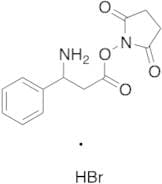
CAS:Formel:C9H11NO2Reinheit:≥ 98.0%Farbe und Form:White to off-white powderMolekulargewicht:165.19DL-β-Phenylalanine N-Hydroxysuccinimide Ester
CAS:Kontrolliertes ProduktFormel:C9H11NO2Farbe und Form:NeatMolekulargewicht:165.189DL-3-Amino-3-phenylpropionic acid
CAS:DL-3-Amino-3-phenylpropionic acid is an amino acid that is synthesized by the reaction of malonic acid and ethyl ester. This compound is a competitive inhibitor of the enzyme pyruvate carboxylase and inhibits this enzyme in the conversion of pyruvic acid to acetyl CoA, which plays a key role in metabolism. DL-3-Amino-3-phenylpropionic acid has been shown to inhibit the growth of bacteria such as Escherichia coli, Salmonella typhimurium and Staphylococcus aureus. The inhibition of pyruvate carboxylase by DL-3-Amino-3-phenylpropionic acid prevents the production of acetaldehyde from pyruvate, which is toxic to cells.
Formel:C9H11NO2Reinheit:Min. 95%Molekulargewicht:165.19 g/mol