CAS 614-29-9
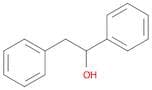
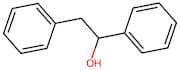
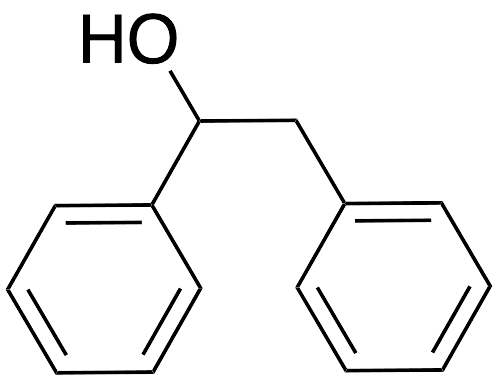
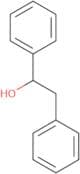
:1,2-Diphenylethanol
Beschreibung:
1,2-Diphenylethanol, mit der CAS-Nummer 614-29-9, ist eine organische Verbindung, die durch ihre Struktur gekennzeichnet ist, die zwei Phenylgruppen enthält, die an ein zentrales Ethanol-Moiety gebunden sind. Diese Verbindung erscheint typischerweise als farbloser bis blassgelber Feststoff und ist bekannt für ihre aromatischen Eigenschaften aufgrund der Anwesenheit der Phenylringe. Sie hat einen relativ hohen Schmelzpunkt und ist in organischen Lösungsmitteln wie Ethanol und Ether löslich, hat jedoch eine begrenzte Löslichkeit in Wasser. 1,2-Diphenylethanol weist chirale Eigenschaften auf, was zur Existenz von zwei Enantiomeren führt, die unterschiedliche biologische Aktivitäten haben können. Sie wird häufig in der organischen Synthese und als Baustein bei der Herstellung verschiedener Arzneimittel und feiner Chemikalien verwendet. Darüber hinaus kann sie als Ligand in der Koordinationschemie dienen und hat Anwendungen in der Untersuchung der Stereochemie. Sicherheitsdaten zeigen, dass sie zwar einige Gesundheitsrisiken bei Exposition darstellen kann, jedoch im Allgemeinen mit den üblichen Laborvorkehrungen gehandhabt wird.
Formel:C14H14O
InChl:InChI=1S/C14H14O/c15-14(13-9-5-2-6-10-13)11-12-7-3-1-4-8-12/h1-10,14-15H,11H2
InChI Key:InChIKey=GBGXVCNOKWAMIP-UHFFFAOYSA-N
SMILES:C(CC1=CC=CC=C1)(O)C2=CC=CC=C2
Synonyme:- 1,2-Diphenyl-1-hydroxyethane
- 1,2-Diphenylethan-1-ol
- Benzeneethanol, alpha-phenyl-
- Benzeneethanol, α-phenyl-
- Benzylphenylcarbinol
- Ethanol, 1,2-diphenyl-
- Ethanol, 1,2-diphenyl- (8CI)
- Nsc 227194
- Nsc 39
- alpha-Hydroxydibenzyl
- α-Hydroxydibenzyl
- α-Phenylbenzeneethanol
- 1,2-Diphenylethanol
- 1,2-Diphenylethanol
- α-Benzylbenzyl alcohol
- Weitere Synonyme anzeigen
Sortieren nach
Reinheit (%)
0
100
|
0
|
50
|
90
|
95
|
100
5 Produkte.
1,2-Diphenylethanol
CAS:Kontrolliertes ProduktFormel:C14H14OFarbe und Form:NeatMolekulargewicht:198.261,2-Diphenylethan-1-ol
CAS:Styrene is an organic compound that has a wide range of applications, including in the manufacture of plastics and polystyrene. Styrene is used as a solvent for paints, coatings, sealants, and adhesives. This chemical is also used to make other chemicals. Styrene can be found in many products we use every day, such as baby bottles, food containers, and plastic utensils. Styrene is released into the air from car exhausts and cigarette smoke. It can also be found in drinking water at low levels. Even though styrene may not seem harmful to us on its own, it does have serious health effects when exposed to humans over time or in large quantities. Styrene can cause depression in women and infants if they are exposed to high levels of styrene over a long period of time. It can also cause death by interfering with the central nervous system. Styrenes are known to have anti-inflammatory activity in animals and pain control properties in humans.Formel:C14H14OReinheit:Min. 95%Molekulargewicht:198.26 g/mol