CAS 6149-45-7
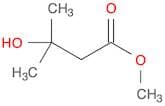
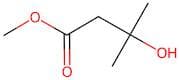
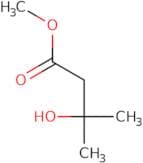
:Butansäure, 3-hydroxy-3-methyl-, Methylester
Beschreibung:
Butansäure, 3-hydroxy-3-methyl-, Methylester, auch bekannt als Methyl 3-Hydroxy-3-methylbutanoat, ist eine organische Verbindung, die durch ihre Esterfunktionalgruppe, die vom Butansäure abgeleitet ist, gekennzeichnet ist. Sie weist eine verzweigte Struktur mit einer Hydroxylgruppe und einer Methylgruppe auf, die am dritten Kohlenstoffgerüst der Butansäure angebracht sind. Diese Verbindung erscheint typischerweise als farblose bis blassgelbe Flüssigkeit mit einem fruchtigen Geruch, was sie in Anwendungen für Geschmack und Duft relevant macht. Sie ist in organischen Lösungsmitteln löslich und zeigt aufgrund der Anwesenheit der Hydroxylgruppe eine moderate Löslichkeit in Wasser. Die Verbindung ist bekannt für ihre potenzielle Verwendung in der Synthese verschiedener Chemikalien und als Zwischenprodukt in organischen Reaktionen. Darüber hinaus kann sie Anwendungen in der Herstellung von biologisch abbaubaren Polymeren und als Aromastoff in der Lebensmittelindustrie haben. Sicherheitsdaten zeigen, dass sie, wie viele Ester, mit Vorsicht behandelt werden sollte, da sie bei Kontakt mit Haut oder Augen Reizungen verursachen kann.
Formel:C6H12O3
Synonyme:- 4-Bromo-2,18-diaminopyridine
- Methyl 3-hydroxy-3-methylbutanoate
- 3-Hydroxy-3-methylbutanoic acid methyl ester
- Butanoic acid, 3-hydroxy-3-methyl-, methyl ester
- methyl β-hydroxy-β-methylbutyrate
Sortieren nach
Reinheit (%)
0
100
|
0
|
50
|
90
|
95
|
100
4 Produkte.
3-Hydroxy-3-methylbutanoic acid methyl ester
CAS:Formel:C6H12O3Reinheit:95%Farbe und Form:LiquidMolekulargewicht:132.1577Methyl 3-Hydroxy-3-Methylbutanoate
CAS:Methyl 3-Hydroxy-3-MethylbutanoateReinheit:98%Molekulargewicht:132.15g/molMethyl 3-hydroxy-3-methylbutanoate
CAS:Methyl 3-hydroxy-3-methylbutanoate is a reactive compound that can be used as a building block in organic synthesis. It is used to synthesize a variety of compounds, including pharmaceuticals and agrochemicals. Methyl 3-hydroxy-3-methylbutanoate has been shown to react with methoxy groups to form methyl hydroxy groups. This reaction is catalyzed by the protonation of the oxygen atom on the reactant's oxygen atom, which leads to a cyclic transition state. Kinetic studies have been performed and show that the rate of this reaction increases with an increase in temperature. The kinetic parameters for this reaction are not currently known, but it has been shown that the nucleophilic attack on the carbon atom adjacent to the leaving group occurs from primary alcohols and alkyl halides.Formel:C6H12O3Reinheit:Min. 95%Molekulargewicht:132.16 g/mol