CAS 61563-28-8
:2-Chlor-3-methylbenzaldehyd
Beschreibung:
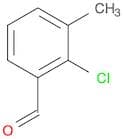
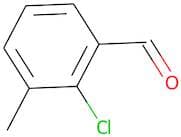
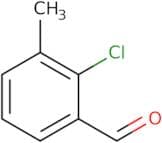
2-Chlor-3-methylbenzaldehyd, mit der CAS-Nummer 61563-28-8, ist ein aromatisches Aldehyd, das durch das Vorhandensein sowohl einer Chlorguppe als auch einer Methylgruppe an einem Benzolring, spezifisch an den Positionen 2 und 3, gekennzeichnet ist. Diese Verbindung erscheint typischerweise als farblose bis blassgelbe Flüssigkeit mit einem ausgeprägten aromatischen Geruch. Sie ist in organischen Lösungsmitteln wie Ethanol und Ether löslich, hat jedoch eine begrenzte Löslichkeit in Wasser aufgrund ihrer hydrophoben aromatischen Struktur. Das Vorhandensein der Aldehydfunktion (-CHO) macht sie reaktiv, insbesondere in nucleophilen Additionsreaktionen. Darüber hinaus kann das Chlorsubstituent ihre Reaktivität und Stabilität beeinflussen, was sie zu einem nützlichen Zwischenprodukt in der organischen Synthese macht, insbesondere bei der Herstellung von Arzneimitteln und Agrochemikalien. Sicherheitsvorkehrungen sollten beim Umgang mit dieser Verbindung beachtet werden, da sie Gesundheitsrisiken durch Inhalation oder Hautkontakt darstellen kann. Insgesamt ist 2-Chlor-3-methylbenzaldehyd eine wertvolle Verbindung in der synthetischen organischen Chemie.
Formel:C8H7ClO
InChl:InChI=1/C8H7ClO/c1-6-3-2-4-7(5-10)8(6)9/h2-5H,1H3
SMILES:Cc1cccc(C=O)c1Cl
Synonyme:- Benzaldehyde, 2-chloro-3-methyl-
- 2-Chloro-3-methylbenzaldehyde 95+%
- 2-CHLORO-3-METHYLBENZAL DEHYDE
Sortieren nach
Reinheit (%)
0
100
|
0
|
50
|
90
|
95
|
100
4 Produkte.
2-CHLORO-3-METHYLBENZAL DEHYDE
CAS:Formel:C8H7ClOReinheit:95%Farbe und Form:SolidMolekulargewicht:154.59362-Chloro-3-methylbenzaldehyde
CAS:2-Chloro-3-methylbenzaldehydeReinheit:95%Farbe und Form:SolidMolekulargewicht:154.59g/mol2-Chloro-3-methylbenzaldehyde
CAS:Formel:C8H7ClOReinheit:98%Farbe und Form:Solid, Low Melting SolidMolekulargewicht:154.592-Chloro-3-methylbenzaldehyde
CAS:2-Chloro-3-methylbenzaldehyde is a reagent that is used in organic synthesis. It is an isomeric form of 2-chlorobenzaldehyde. 2-Chloro-3-methylbenzaldehyde can be prepared by the reaction of benzaldehyde with magnesium, which produces chloral and methyl alcohol. The chloride ion then reacts with the methyl alcohol to produce 2-chloro-3-methylbenzaldehyde. It has been shown that it can be used as a grignard reagent to make substituted ketones or esters. This compound also exhibits dihedral symmetry and has two planar forms, one of which is more stable than the other in solution.
Formel:C8H7ClOReinheit:Min. 95%Molekulargewicht:154.6 g/mol