CAS 62-22-6
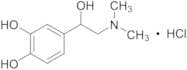
:1,2-Benzendiol, 4-[2-(dimethylamino)-1-hydroxyethyl]-, hydrochlorid (1:1)
- dl-N-Methylepinephrine hydrochloride
- 1,2-Benzenediol, 4-[2-(dimethylamino)-1-hydroxyethyl]-, hydrochloride, (±)-
- 1,2-Benzenediol, 4-[2-(dimethylamino)-1-hydroxyethyl]-, hydrochloride
- Benzyl alcohol, α-[(dimethylamino)methyl]-3,4-dihydroxy-, hydrochloride, (±)-
- 1,2-Benzenediol, 4-[2-(dimethylamino)-1-hydroxyethyl]-, hydrochloride (1:1)
rac-N-Methyl Epinephrine HCl
CAS:Formel:C10H15NO3·HClFarbe und Form:Off-White Semi-SolidMolekulargewicht:197.24 36.46rac N-Methyl Epinephrine Hydrochloride Salt
CAS:Kontrolliertes ProduktApplications N-Methylepinephrine Hydrochloride Salt is the N-methylated analogue of the sympathomimetic hormone Epinephrine (E588585). Recent studies suggest that N-Methylepinephrine may be synthesized from Epinephrine by phenylethanolamine N-methyltransferase present in the brain.
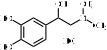
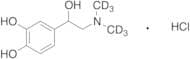
References Kajita, M. et al.: Nip. Iyo Masu Sup. Gak. Kon., 19, 107 (1994); Plummer, C.J. et al.: Eur. J. Med. Chem., 148, 481 (1988);Formel:C10H15NO3·HClFarbe und Form:Off-WhiteMolekulargewicht:233.692rac N-Methyl Epinephrine-d6
CAS:Kontrolliertes ProduktApplications Labelled N-Methylepinephrine, the N-methylated analogue of the sympathomimetic hormone Epinephrine (E588585). Recent studies suggest that N-Methylepinephrine may be synthesized from Epinephrine by phenylethanolamine N-methyltransferase present in the brain.
References Kajita, M. et al.: Nip. Iyo Masu Sup. Gak. Kon., 19, 107 (1994); Plummer, C.J. et al.: Eur. J. Med. Chem., 148, 481 (1988);Formel:C10H9D6NO3•HClReinheit:>90%Farbe und Form:Off-White To Light GreenMolekulargewicht:203.273646rac N-Methyl epinephrine hydrochloride salt
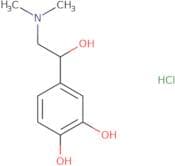
CAS:Rac N-Methyl epinephrine hydrochloride salt is a potential anti-cancer agent that has been used in Chinese medicine for its apoptotic effects on cancer cells. It works by inhibiting the chitin kinase pathway, which is involved in tumor growth and survival. Rac N-Methyl epinephrine hydrochloride salt also acts as a potassium channel inhibitor, leading to cell death in cancer cells. This drug has shown synergistic effects when combined with other cancer treatments such as enoxaparin or heparin. Additionally, it has been found to be an effective inhibitor of psyllium-induced colon carcinogenesis in human subjects. Overall, Rac N-Methyl epinephrine hydrochloride salt shows great promise as a potential anti-cancer analog for use in cancer treatment.
Formel:C10H16ClNO3Reinheit:Min. 95%Molekulargewicht:233.69 g/mol