CAS 62-59-9
:Cevadin
Beschreibung:
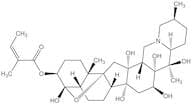
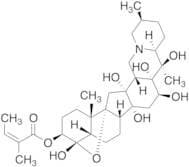
Cevadin, mit der CAS-Nummer 62-59-9, ist ein natürlich vorkommendes Alkaloid, das hauptsächlich aus Pflanzenarten der Gattung *Cevadilla* gewonnen wird. Es zeichnet sich durch seine komplexe molekulare Struktur aus, die ein bicyclisches Gerüst umfasst. Cevadin zeigt eine Reihe von biologischen Aktivitäten, einschließlich schmerzlindernder und entzündungshemmender Eigenschaften, was es für die pharmakologische Forschung von Interesse macht. Es ist bekannt, dass die Verbindung mit verschiedenen Neurotransmittersystemen interagiert, was zu ihren Wirkungen beitragen kann. Cevadin kommt typischerweise in niedrigen Konzentrationen in seinen natürlichen Quellen vor und kann für Studien oder Anwendungen eine Extraktion und Reinigung erfordern. Wie bei vielen Alkaloiden ist es wichtig, Cevadin mit Vorsicht zu behandeln, da es potenziell toxisch ist und eine angemessene Dosierung in therapeutischen Kontexten erforderlich ist. Seine chemischen Eigenschaften, wie Löslichkeit und Stabilität, können je nach Umweltbedingungen variieren, was für seine Anwendung in der medizinischen Chemie und der Arzneimittelherstellung entscheidend ist.
Formel:C32H49NO9
InChl:InChI=1/C32H49NO9/c1-6-18(3)25(35)41-24-11-12-26(4)19-8-9-20-28(37)13-23(34)31(39)21(29(28,38)16-30(20,26)42-32(19,24)40)15-33-14-17(2)7-10-22(33)27(31,5)36/h6,17,19-24,34,36-40H,7-16H2,1-5H3/b18-6-/t17-,19-,20-,21-,22-,23-,24-,26-,27+,28+,29+,30+,31-,32?/m0/s1
InChI Key:InChIKey=DBUCFOVFALNEOO-HWBIYQLFSA-N
SMILES:C[C@@]12[C@]34[C@]([C@@]5(O)[C@@](O)(C3)[C@]6([C@](O)([C@@H](O)C5)[C@](C)(O)[C@]7(N(C6)C[C@@H](C)CC7)[H])[H])(CC[C@@]1([C@](O)(O4)[C@@H](OC(/C(=C\C)/C)=O)CC2)[H])[H]
Synonyme:- (3Beta,4Alpha,9Beta,16Beta)-4,12,14,16,17,20-Hexahydroxy-4,9-Epoxycevan-3-Yl 2-Methylbut-2-Enoate
- (3beta,4alpha,9beta,16beta)-4,12,14,16,17,20-hexahydroxy-4,9-epoxycevan-3-yl (2Z)-2-methylbut-2-enoate
- (3beta,4alpha,9beta,16beta)-4,12,14,16,17,20-hexahydroxy-4,9-epoxycevan-3-yl (2Z)-2-methylbut-2-enoate sulfate (salt)
- (3beta,9beta,16beta)-4,12,14,16,17,20-hexahydroxy-4,9-epoxycevan-3-yl (2Z)-2-methylbut-2-enoate
- (Z)-4-alpha,9-Epoxycevane-3-beta,4,12,14,16-beta,17,20-heptol 3-(2-methyl-2-butenoate)
- Brn 0072445
- Cevadene
- Cevadin
- Cevane-3,4,12,14,16,17,20-heptol, 4,9-epoxy-, 3-((2Z)-2-methyl-2-butenoate), (3beta,4alpha,16beta)-
- Cevane-3,4,12,14,16,17,20-heptol, 4,9-epoxy-, 3-(2-methyl-2-butenoate), (3beta(Z),4alpha,16beta)-
- Cevane-3,4,12,14,16,17,20-heptol, 4,9-epoxy-, 3-(2-methyl-2-butenoate), [3β(Z),4α,16β]-
- Cevane-3,4,12,14,16,17,20-heptol, 4,9-epoxy-, 3-[(2Z)-2-methyl-2-butenoate], (3β,4α,16β)-
- Cevane-3-beta,4-beta,12,14,16-beta,17,20-heptol, 4,9-epoxy-, 3-(2-methylcrotonate), (Z)-
- Cevane-3beta,4beta,12,14,16beta,17,20-heptol, 4,9-epoxy-, 3-(2-methylcrotonate), (Z)- (8CI)
- Cevane-3β,4β,12,14,16β,17,20-heptol, 4,9-epoxy-, 3-(2-methylcrotonate), (Z)-
- Nsc 93767
- Veratrine (crystallized)
- Veratrine (crystallized) (VAN)
- 4-21-00-06820 (Beilstein Handbook Reference)
- Cevadine
- Cevadine
- .alpha.-Veratrine
- Cevane-3.beta.,4.beta.,12,14,16.beta.,17,20-heptol, 4,9-epoxy-, 3-((Z)-2-methylcrotonate), (Z)-
- Nsc93767
- VERATRINE(RG)
- (z)-te
- 4-beta,12,14,16-beta,17,20-heptol,4,9-epoxy-cevane-3-bet3-(2-methylcrotona
- VERATRINE
- (z)-4-alpha,9-epoxycevane-3-beta,4,12,14,16-beta,17,20-heptol3-(2-methyl-2-b
- Cevane-3,4,12,14,16,17,20-heptol, 4,9-epoxy-, 3-(2-methyl-2-butenoate), [3.beta.(Z),4.alpha.,16.beta.]-
- 4α,9-Epoxycevane-3β,4,12,14,16β,17,20-heptol 3-[(Z)-2-methyl-2-butenoate]
- Weitere Synonyme anzeigen
Sortieren nach
Reinheit (%)
0
100
|
0
|
50
|
90
|
95
|
100
4 Produkte.
Cevadine
CAS:Natural alkaloidFormel:C32H49NO9Reinheit:≥ 95.0 % (HPLC)Farbe und Form:PowderMolekulargewicht:591.74Cevadine
CAS:Kontrolliertes ProduktApplications Cevadine is a biopesticide used in the agriculture industry. Insecticide.
References Prestes, O. et al.: J. Sep. Sci., 35, 861 (2012);Formel:C32H49NO9Farbe und Form:NeatMolekulargewicht:591.733Veratrine
CAS:Veratrine is an alkaloid derivative, which is extracted from the seeds of various plants belonging to the Veratrum genus. This compound primarily acts as a neurotoxic agent that modifies the normal functioning of sodium ion channels in nerve and muscle cells. By prolonging the opening of these channels, Veratrine disrupts the action potentials, leading to sustained depolarization of the nerve membranes and subsequent muscle contractions.Formel:C32H49NO9Reinheit:Min. 95%Molekulargewicht:591.7 g/mol