CAS 62010-37-1
:Gangliosid GD3
- Disialosyllactosylceramide
- G(D3) Ganglioside
- G<sub>D3</sub>
- GD3
- GD3 Ganglioside
- Ganglioside D3
- Ganglioside D<sub>3</sub>
- Ganglioside G<sub>D3</sub>
- Ganglioside, GD3
- Gd(3)
- N-Acetylneuraminyl N-acetylneuraminylgalactosylglucosylceramide
- Weitere Synonyme anzeigen
Ganglioside GD3 Mixture (sodium salt)
CAS:Ganglioside GD3, precursor to complex gangliosides, induces apoptosis and alters mitochondrial potential; affects cell growth, invasion, and neurogenesis.Formel:C70H123N3Na2O29Farbe und Form:SolidMolekulargewicht:1516.726GD3-Ganglioside
CAS:Formel:C70H123N3O29·2NaReinheit:≥ 95%Farbe und Form:White to faint yellow powderMolekulargewicht:1516.80GD3-Ganglioside sodium
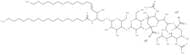
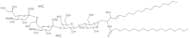
CAS:GD3 (shown as sodium salt) has a core disaccharide structure (Galβ1,4Glc) with two sialic acids linked α2,3/α2,8 to the non-reducing galactose residue and ceramide linked β to position 1 on the reducing terminal glucose residue (Ledeen, 2009). GD3 is a minor ganglioside in most normal tissues but plays a crucial role in the development of the brain; it is significantly reduced in adults. However, expression of GD3 is increased in pathological conditions, such as, cancers and neurodegenerative disorders (Malisan, 2002). GD3 was the first cancer-associated ganglioside discovered that promotes adhesion and invasion of cancers. GD3 and GD2 are highly expressed in a various malignant tumours and have become potential targets for next-generation cancer therapy (Liu, 2018).Formel:C70H125N3O29·xNaReinheit:One SpotFarbe und Form:White/Off-White SolidMolekulargewicht:1,472.74 g/molGD3-Ganglioside ammonium
CAS:GD3 ganglioside (shown as sodium salt) has a core disaccharide structure (Gal-1,4-Glc) with two sialic acids linked to the non-reducing galactose residue, and ceramide linked to position 1 on the reducing terminal glucose residue (Ledeen, 2009). GD3 ganglioside is a minor ganglioside in most normal tissues but plays a crucial role in the development of the brain; its presence is significantly reduced in adults. However, expression of GD3 ganglioside is increased in pathological conditions, such as, cancers and neurodegenerative disorders (Malisan, 2002). GD3 ganglioside was the first cancer-associated ganglioside discovered, that promotes adhesion and invasion of cancers. GD3 ganglioside and GD2 ganglioside are highly expressed in a various malignant cancers and have become potential targets for next-generation cancer therapy (Liu, 2018).
Formel:C70H125N3O29·xNH4Reinheit:Min. 95%Farbe und Form:Powder