CAS 623-12-1
:4-Chloranisol
Beschreibung:
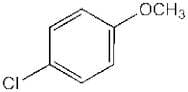
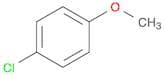
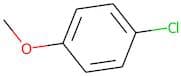
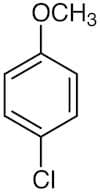
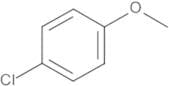
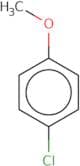
4-Chloranisol, mit der CAS-Nummer 623-12-1, ist eine organische Verbindung, die durch eine Chlorgruppe gekennzeichnet ist, die an der Para-Position eines Anisolmoleküls angebracht ist. Seine chemische Formel ist C7H7ClO, was die Anwesenheit von sieben Kohlenstoffatomen, sieben Wasserstoffatomen, einem Chloratom und einem Sauerstoffatom anzeigt. Diese Verbindung erscheint typischerweise als farblose bis blassgelbe Flüssigkeit mit einem charakteristischen süßen, aromatischen Geruch. Sie ist leicht in Wasser löslich, aber besser in organischen Lösungsmitteln wie Ethanol und Ether. 4-Chloranisol wird hauptsächlich in der Synthese verschiedener chemischer Verbindungen und als Zwischenprodukt in der Herstellung von Agrochemikalien und Pharmazeutika verwendet. Sie ist auch bekannt für ihre Rolle bei der Beeinflussung von Fehlgeschmäckern im Wein, insbesondere im Zusammenhang mit Korkschmeckern. Die Verbindung weist eine moderate Toxizität auf, und es sollten geeignete Sicherheitsmaßnahmen getroffen werden, wenn sie gehandhabt wird, einschließlich der Verwendung von persönlicher Schutzausrüstung, um das Einatmen oder den Hautkontakt zu vermeiden.
Formel:C7H7ClO
InChl:InChI=1S/C7H7ClO/c1-9-7-4-2-6(8)3-5-7/h2-5H,1H3
InChI Key:InChIKey=YRGAYAGBVIXNAQ-UHFFFAOYSA-N
SMILES:O(C)C1=CC=C(Cl)C=C1
Synonyme:- 1-Methoxy-4-chlorobenzene
- 4-Chloranisol
- 4-Chloro-1-methoxybenzene
- 4-Chloroanisole
- 4-Chlorophenol methyl ether
- 4-Chlorophenyl methyl ether
- 4-Cloroanisol
- 4-Methoxy-1-chlorobenzene
- 4-Methoxychlorobenzene
- 4-Methoxyphenyl chloride
- Anisole, 4-Chloro-
- Anisole, p-chloro-
- Anisyl chloride
- Benzene, 1-chloro-4-methoxy-
- Nsc 4129
- p-Chloroanisole
- p-Chloromethoxybenzene
- p-Chlorophenyl methyl ether
- p-Methoxychlorobenzene
- p-Methoxyphenyl chloride
- Weitere Synonyme anzeigen
Sortieren nach
Reinheit (%)
0
100
|
0
|
50
|
90
|
95
|
100
7 Produkte.
4-Chloroanisole, 99%
CAS:4-Chloroanisole was found to react with Cu (II)-smectite forming a blue clay-organic complex. 4-Chloroanisole was chosen as the main test substrate for the optimisation studies as it is electronically deactivated and thus resistant to oxidative addition and consequently very reluctant to enter a catFormel:C7H7ClOReinheit:99%Farbe und Form:Clear colorless, LiquidMolekulargewicht:142.581-Chloro-4-methoxybenzene
CAS:Formel:C7H7ClOReinheit:98%Farbe und Form:LiquidMolekulargewicht:142.58294-Chloroanisole
CAS:4-ChloroanisoleFormel:C7H7ClOReinheit:95%Farbe und Form: clear. almost colourless liquidMolekulargewicht:142.58g/mol4-Chloroanisole
CAS:Formel:C7H7ClOReinheit:>98.0%(GC)Farbe und Form:Colorless to Almost colorless clear liquidMolekulargewicht:142.584-Chloroanisole
CAS:4-Chloroanisole is a chlorinated aromatic compound that is used as an industrial solvent. It has been shown to have fungicidal activity and can be used in the production of polyurethanes. 4-Chloroanisole reacts with chlorine atoms, forming diphenyl ethers. It also reacts with argon gas to form isotopomers, which are important in the study of steric interactions. The hydroxyl ions present in water cause the formation of a solid catalyst from 4-chloroanisole and potassium chloride. This solid catalyst is then used for reactions such as Suzuki coupling reactions and cationic polymerization reactions. 4-Chloroanisole also has the ability to react with an aryl halide, forming an aromatic molecule or halides.Formel:C7H7ClOReinheit:Min. 95%Farbe und Form:PowderMolekulargewicht:142.58 g/mol