CAS 623-95-0
:N,N'-Dipropropylharnstoff
Beschreibung:
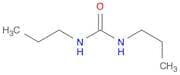
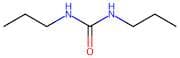
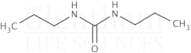
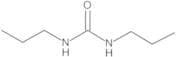
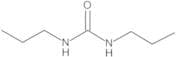
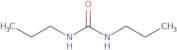
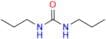
N,N'-Dipropropylharnstoff ist eine organische Verbindung, die durch ihre Harnstofffunktionalgruppe gekennzeichnet ist, an der zwei Propylgruppen an die Stickstoffatome gebunden sind. Sie hat die chemische Formel C₇H₁₄N₂O und ist typischerweise ein weißes kristallines Feststoff bei Raumtemperatur. Diese Verbindung ist in Wasser und organischen Lösungsmitteln löslich, was sie vielseitig für verschiedene Anwendungen in der chemischen Synthese und Forschung macht. N,N'-Dipropropylharnstoff ist bekannt für seine Rolle als Reagenz in der organischen Chemie, insbesondere bei der Synthese anderer Verbindungen und als potenzieller Stabilisator in bestimmten Formulierungen. Sie weist eine moderate Toxizität auf, was angemessene Sicherheitsvorkehrungen beim Umgang erfordert. Darüber hinaus kann sie aufgrund der Anwesenheit der Harnstoffgruppe an Wasserstoffbrückenbindungen teilnehmen, was ihre Wechselwirkungen in biologischen Systemen und chemischen Reaktionen beeinflusst. Insgesamt ist N,N'-Dipropropylharnstoff eine bedeutende Verbindung sowohl in industriellen als auch in Laborumgebungen, die für ihre chemischen Eigenschaften und Reaktivität geschätzt wird.
Formel:C7H16N2O
InChl:InChI=1S/C7H16N2O/c1-3-5-8-7(10)9-6-4-2/h3-6H2,1-2H3,(H2,8,9,10)
InChI Key:InChIKey=AWHORBWDEKTQAX-UHFFFAOYSA-N
SMILES:C(NCCC)(NCCC)=O
Synonyme:- 1,3-Di-n-propylurea
- 1,3-Dipropylurea
- Urea, 1,3-dipropyl-
- Urea, N,N′-dipropyl-
- N,N′-Dipropylurea
Sortieren nach
Reinheit (%)
0
100
|
0
|
50
|
90
|
95
|
100
10 Produkte.
N,N''-Dipropylurea
CAS:Formel:C7H16N2OReinheit:≥ 97%Farbe und Form:White to off-white powderMolekulargewicht:144.21Chlorpropamide EP Impurity B
CAS:Kontrolliertes ProduktFormel:C7H16N2OFarbe und Form:NeatMolekulargewicht:144.215N,N’-Dipropylurea
CAS:Kontrolliertes ProduktFormel:C7H16N2OFarbe und Form:WhiteMolekulargewicht:144.2151,3-Dipropylurea
CAS:1,3-Dipropylurea is a nucleophilic organic compound. It is soluble in organic solvents such as benzyl alcohol, nitrous oxide, and ethylene glycol. It also has a constant boiling point of 215°C at atmospheric pressure. The reaction rate for the formation of 1,3-dipropylurea from benzaldehyde and propylene oxide is dependent on the solvent used. The yields are higher in polar solvents such as nitrous oxide or ethylene glycol than in nonpolar solvents like benzene or hexane. This reaction can be catalyzed by cyanoborohydride and the use of a base such as sodium hydroxide or potassium tert-butoxide speeds up the reaction rate considerably.
Formel:C7H16N2OReinheit:Min. 97 Area-%Farbe und Form:PowderMolekulargewicht:144.21 g/mol