CAS 6244-92-4
:Lauroyl-CoA
Beschreibung:
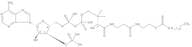
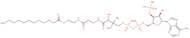
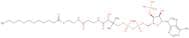
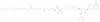
Lauroyl-CoA, auch bekannt als Lauroyl-Coenzym A, ist ein Fettsäure-Acil-CoA-Derivat, das eine entscheidende Rolle im Lipidstoffwechsel und in der Biosynthese spielt. Es ist durch eine langkettige Fettsäure, insbesondere Laurinsäure, gekennzeichnet, die aus 12 Kohlenstoffatomen besteht. Die Struktur von Lauroyl-CoA umfasst eine Coenzym A-Gruppe, die seine Beteiligung an verschiedenen biochemischen Reaktionen, insbesondere bei der Synthese und dem Abbau von Fettsäuren, erleichtert. Diese Verbindung wird typischerweise in zellulären Kompartimenten wie den Mitochondrien und dem Zytoplasma gefunden, wo sie an Stoffwechselwegen beteiligt ist, einschließlich der Oxidation von Fettsäuren und der Synthese komplexer Lipide. Lauroyl-CoA ist auch wichtig für die Bildung von Membranlipiden und Signalmolekülen. Seine Aktivität wird von verschiedenen Enzymen reguliert, einschließlich Acyl-CoA-Synthetasen und Acyltransferasen, die seine Verfügbarkeit und Funktion in Stoffwechselprozessen modulieren. Insgesamt ist Lauroyl-CoA entscheidend für die Aufrechterhaltung des zellulären Energiehaushalts und der Lipid-Homöostase.
Formel:C33H58N7O17P3S
InChl:InChI=1S/C33H58N7O17P3S/c1-4-5-6-7-8-9-10-11-12-13-24(42)61-17-16-35-23(41)14-15-36-31(45)28(44)33(2,3)19-54-60(51,52)57-59(49,50)53-18-22-27(56-58(46,47)48)26(43)32(55-22)40-21-39-25-29(34)37-20-38-30(25)40/h20-22,26-28,32,43-44H,4-19H2,1-3H3,(H,35,41)(H,36,45)(H,49,50)(H,51,52)(H2,34,37,38)(H2,46,47,48)/t22-,26-,27-,28+,32-/m1/s1
InChI Key:InChIKey=YMCXGHLSVALICC-GMHMEAMDSA-N
SMILES:O[C@H]1[C@H](N2C=3C(N=C2)=C(N)N=CN3)O[C@H](COP(OP(OCC([C@H](C(NCCC(NCCSC(CCCCCCCCCCC)=O)=O)=O)O)(C)C)(=O)O)(=O)O)[C@H]1OP(=O)(O)O
Synonyme:- Coenzyme A, S-dodecanoate
- Coenzyme A, S-laurate
- Coenzyme A, lauroyl-
- Dodecanethioic acid, S-ester with coenzyme A
- Dodecanoyl-coa
- Dodecanoyl-coenzyme A
- Lauroyl-coa
- Lauroyl-coenzyme A
- Lauryl coenzyme A
- Lauryl-CoA
- S-{(9R)-1-[(2R,3S,4R,5R)-5-(6-amino-9H-purin-9-yl)-4-hydroxy-3-(phosphonooxy)tetrahydrofuran-2-yl]-3,5,9-trihydroxy-8,8-dimethyl-3,5-dioxido-10,14-dioxo-2,4,6-trioxa-11,15-diaza-3lambda~5~,5lambda~5~-diphosphaheptadecan-17-yl} dodecanethioate (non-preferred name)
Sortieren nach
Reinheit (%)
0
100
|
0
|
50
|
90
|
95
|
100
5 Produkte.
Lauroyl-coenzyme A
CAS:Lauroyl-coenzyme A acts as an acyl carrier, involved in lipid metabolism, biosynthesis, and fatty acid transport.Formel:C33H58N7O17P3SFarbe und Form:SolidMolekulargewicht:949.84Dodecanoyl Coenzyme A free acid
CAS:Formel:C33H58N7O17P3SReinheit:>95%Farbe und Form:SolidMolekulargewicht:949.84Lauroyl coenzyme A potassium salt
CAS:Lauroyl coenzyme A potassium salt is a potent inhibitor of fatty acid synthase. It has the ability to inhibit the enzyme activity of fatty acid synthase in vitro, which belongs to the class of irreversible inhibitors. Lauroyl coenzyme A potassium salt inhibits the synthesis of fatty acids by inhibiting the enzyme activity of fatty acid synthase. This inhibitor also reversibly inhibits other enzymes with a similar mechanism, such as acetyl-coenzyme A carboxylase and phosphatidate phosphohydrolase. The reaction mechanism can be understood through titration calorimetry studies, demonstrating that lauroyl coenzyme A potassium salt binds to the active site of these enzymes and blocks access to substrates. The binding affinity is higher for wild type strains than for mutant strains, which may be due to differences in protein structure or other factors. Lauroyl coenzyme A potassium salt has been shown to have no effect on wild-type strains but inhibits polymerFormel:C33H55N7O17P3SK3Reinheit:Min. 95%Farbe und Form:PowderMolekulargewicht:1,064.11 g/molLauroyl coenzyme A
CAS:Lauroyl CoA is a body-fat molecule that can be formed from acetyl-coenzyme A, which is an intermediate in the metabolism of fatty acids. It is used in analysis as a standard for enzyme activities and as a substrate for reactions involving enzymes with coenzyme A. Reaction mechanisms are determined using titration calorimetry and structural analyses are performed using analytical methods such as infrared spectroscopy and nuclear magnetic resonance spectroscopy. Lauroyl CoA is also used to study the effects of the protein toll-like receptor 4 on hepatic steatosis. The wild-type strain of Escherichia coli was used to measure the activity of bacterial synthetases containing lauroyl CoA.
Formel:C33H58N7O17P3SReinheit:Min. 95%Farbe und Form:PowderMolekulargewicht:949.84 g/molRef: 3D-NL47197
Ausgelaufenes produkt