CAS 628-03-5
:3-Methylbutylisothiocyanat
Beschreibung:
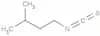
3-Methylbutylisothiocyanat, mit der CAS-Nummer 628-03-5, ist eine organische Verbindung, die zur Klasse der Isothiocyanate gehört, die durch die Anwesenheit der isothiocyanatischen funktionellen Gruppe (-N=C=S) gekennzeichnet sind. Diese Verbindung ist typischerweise eine farblose bis blassgelbe Flüssigkeit mit einem stechenden Geruch, der an Senf oder Meerrettich erinnert, was unter Isothiocyanaten üblich ist. Sie ist in organischen Lösungsmitteln löslich, hat jedoch eine begrenzte Löslichkeit in Wasser. 3-Methylbutylisothiocyanat ist bekannt für seine potenzielle biologische Aktivität, einschließlich antimikrobieller und krebsbekämpfender Eigenschaften, was es sowohl in der Lebensmittelwissenschaft als auch in der medizinischen Chemie von Interesse macht. Es wird oft aus der Hydrolyse von Glucosinolaten gewonnen, die in Kreuzblütlern vorkommen. Darüber hinaus kann diese Verbindung als Aromastoff verwendet werden und wird hinsichtlich ihrer Rolle in den Abwehrmechanismen von Pflanzen untersucht. Wie viele Isothiocyanate kann es reizende Eigenschaften aufweisen, was eine sorgfältige Handhabung in Laborumgebungen erforderlich macht.
Formel:C6H11NS
InChl:InChI=1S/C6H11NS/c1-6(2)3-4-7-5-8/h6H,3-4H2,1-2H3
InChI Key:InChIKey=JATNWMBUDXLMEO-UHFFFAOYSA-N
SMILES:C(CN=C=S)C(C)C
Synonyme:- 1-Isothiocyanato-3-methylbutane
- Butane, 1-isothiocyanato-3-methyl-
- Isoamyl isothiocyanate
- Isopentyl isothiocyanate
- Isothiocyanic acid, isopentyl ester
Sortieren nach
Reinheit (%)
0
100
|
0
|
50
|
90
|
95
|
100
3 Produkte.
3-Methylbutyl isothiocyanate
CAS:Formel:C6H11NSReinheit:99.0%Farbe und Form:LiquidMolekulargewicht:129.221-Isothiocyanato-3-methylbutane
CAS:1-Isothiocyanato-3-methylbutane is a plant growth factor that belongs to the class of glucosinolates. It has been shown to inhibit bacterial growth by binding to the section of glucosinolates, thereby preventing the formation of toxic metabolites. 1-Isothiocyanato-3-methylbutane has a minimal inhibitory concentration (MIC) between 0.1 and 0.5 micrograms/mL against many strains of bacteria and is biodegradable in soil. This compound is synthetic and can be used as an antibacterial agent for topical application on skin or wounds for its ability to kill bacteria on contact.
Formel:C6H11NSReinheit:Min. 95%Molekulargewicht:129.22 g/mol