CAS 63019-40-9
:Chrysen-4-ol
Beschreibung:
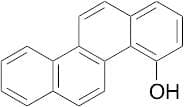
Chrysen-4-ol, mit der CAS-Nummer 63019-40-9, ist eine polycyclische aromatische Verbindung, die durch eine verschmolzene Ringstruktur gekennzeichnet ist, die vier Benzolringe umfasst. Diese Verbindung weist eine Hydroxylgruppe (-OH) an der 4-Position des Chrysene-Rahmens auf, was ihre chemische Reaktivität und Löslichkeit beeinflusst. Chrysen-4-ol ist typischerweise ein Feststoff bei Raumtemperatur und zeigt Eigenschaften, die für aromatische Verbindungen typisch sind, wie Stabilität und das Potenzial, elektrophile Substitutionsreaktionen durchzuführen. Das Vorhandensein der Hydroxylgruppe erhöht ihre Polarität im Vergleich zu ihrer Ausgangsverbindung, Chrysene, was ihre Wechselwirkungen in biologischen Systemen und ihre Löslichkeit in verschiedenen Lösungsmitteln beeinflussen kann. Chrysen-4-ol kann auch Fluoreszenz zeigen, was es in der Materialwissenschaft und der organischen Elektronik von Interesse macht. Darüber hinaus kann es, wie viele polycyclische aromatische Verbindungen, Auswirkungen auf die Umweltchemie und Toxikologie haben, was eine sorgfältige Handhabung und Bewertung seiner potenziellen Auswirkungen auf Gesundheit und Umwelt erfordert.
Formel:C18H12O
InChl:InChI=1/C18H12O/c19-17-7-3-5-13-9-10-15-14-6-2-1-4-12(14)8-11-16(15)18(13)17/h1-11,19H
InChI Key:InChIKey=CZCGRCFUEPALNV-UHFFFAOYSA-N
SMILES:OC1=C2C3=C(C=4C(C=C3)=CC=CC4)C=CC2=CC=C1
Synonyme:- 4-Chrysenol
- 4-Hydroxychrysene
- Chrysen-4-ol
Sortieren nach
Reinheit (%)
0
100
|
0
|
50
|
90
|
95
|
100
3 Produkte.
4-Hydroxychrysene
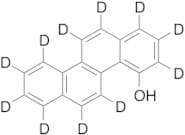
CAS:Kontrolliertes ProduktFormel:C18H12OFarbe und Form:Light Brown To BrownMolekulargewicht:244.294-Hydroxychrysene-d11
CAS:Kontrolliertes ProduktFormel:C18D11HOFarbe und Form:NeatMolekulargewicht:255.3554-Hydroxychrysene
CAS:4-Hydroxychrysene is a hydrocarbon that is found in coal tar and petroleum products. It has been shown to be a carcinogen in animals, causing lung cancer when inhaled. 4-Hydroxychrysene also causes DNA damage, chromosomal aberrations, as well as mutations. The aromatic ring of the molecule is susceptible to hydroxylation, leading to the formation of other compounds such as 2-hydroxychrysene and 3-hydroxychrysene. These compounds are also known to be carcinogenic. 4-Hydroxychrysene can also cause tumors in rats by forming adducts with DNA and proteins. 4-Hydroxychrysene emissions have been shown to cause DNA damage in cells from rat liver microsomes and mammalian cells.Formel:C18H12OReinheit:Min. 95%Molekulargewicht:244.3 g/mol