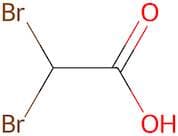
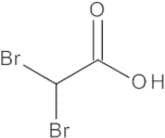
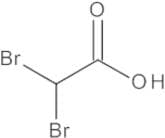
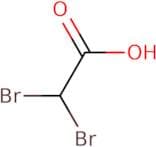
CAS 631-64-1
:Dibromessigsäure
- 2,2-Dibromoacetic acid
- Acetic acid, 2,2-dibromo-
- Acetic acid, dibromo-
- Ccris 7636
- Dibromoacetate
- Hsdb 7622
- Dibromoacetic acid
- DBAA
- Dodemorph Impurity 8
- Dibromoacetic acid@20 μg/mL in MtBE
- dibromo acetic acidmdba
- dibromo-aceticaci
- RARECHEM AL BO 0081
- Dibromoacetic acid@1000 μg/mL in MtBE
- Dibromoacetic acid solution
- DIBROMOACETIC ACID, 1000MG, NEAT
- Dibromoacetic acid 1g [631-64-1]
- DibromoaceticAcidSolution,1000mg/L,1ml
- Weitere Synonyme anzeigen
EPA Method 552 Halogenated Acetic Mixture 1000 ug/mL in Methyl tert-butyl ether
CAS:Kontrolliertes ProduktFarbe und Form:MixtureEPA Method 552.3 UCMR 4 200-2000 ug/mL in Methyl tert-butyl ether
CAS:Formel:C2H3BrO2Farbe und Form:MixtureMolekulargewicht:138.95Haloacetic acid mixture for HJ 758-2015 various concentrations in Methyl tert-butyl ether
CAS:Kontrolliertes ProduktFarbe und Form:MixtureDibromoacetic acid 1000 µg/mL in Methyl-tert-butyl ether
CAS:Formel:C2H2Br2O2Farbe und Form:Single SolutionMolekulargewicht:217.84Haloacetic Acids Mixture 929 1000-3000 µg/mL in Methyl tert-butyl ether
CAS:Formel:C2H3BrO2Farbe und Form:MixtureMolekulargewicht:138.95EPA Method 552 Halogenated Acetic Mixture 100 µg/mL in Methyl tert-butyl ether
CAS:Formel:C2H3BrO2Farbe und Form:MixtureMolekulargewicht:138.95Dibromoacetic Acid
CAS:Applications Dibromoacetic Acid is a halogenated disinfection byproduct. Dibromoacetic Acid was found to induce apoptotic changes and hydroxyl radical formation in human peripheral blood mononuclear cells (PBMCs). Dibromoacetic Acid also found to exhibit carcinogenic activity in which mice and rats were exposed to drinking water containing different concentrations of Dibromoacetic Acid that resulted in increased incidences of mononuclear cell leukemia, malignant mesothelioma, hepatocellular neoplasms, and hepatoblastoma.
Not a dangerous good if item is equal to or less than 1g/ml and there is less than 100g/ml in the package
References Michalowicz, J., et al.: Toxicol. In Vitro 29, 1416 (2015); Natl Toxicol Program Tech Rep Ser. 537, 1 (2007)Formel:C2H2Br2O2Farbe und Form:NeatMolekulargewicht:217.84Dibromoacetic Acid
CAS:Dibromoacetic acid is a genotoxic chemical that is used to form an acid. It has been shown to have toxic effects on the testes, and can also cause liver damage. Dibromoacetic acid binds to DNA and alters its structure by forming bromoacetic adducts. The binding of dibromoacetic acid to DNA alters the way in which it replicates, leading to mutations. This compound has been detected in human plasma at levels close to those seen in samples from people with occupational exposure, indicating that it may be found in the environment as well. Dibromoacetic acid has been shown to induce inflammation and increase toll-like receptor (TLR) expression through activation of NF-κB signaling pathways. It is able to do this because it contains a hydroxyl group, which allows for oxidation catalysts to bind with it easily.
Formel:C2H2Br2O2Reinheit:Min. 95%Molekulargewicht:217.84 g/molEPA Method 552 Halogenated Acetic Mixture 80-800 µg/mL in Methyl tert-butyl ether
CAS:Formel:C2H3BrO2Farbe und Form:MixtureMolekulargewicht:138.95