CymitQuimica logo

CAS 6332-28-1

:

2-phenyl-N-(2-phenylethyl)ethanamin

Beschreibung:
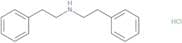
2-phenyl-N-(2-phenylethyl)ethanamin, auch bekannt unter seiner CAS-Nummer 6332-28-1, ist eine organische Verbindung, die zur Klasse der Amine gehört. Diese Substanz weist eine zentrale Ethanaminstruktur mit zwei angehängten Phenylgruppen auf, was zu ihren aromatischen Eigenschaften beiträgt. Die Anwesenheit dieser Phenylgruppen erhöht ihre Lipophilie, was potenziell ihre Löslichkeit in organischen Lösungsmitteln anstelle von Wasser beeinflusst. Die Verbindung kann biologische Aktivität aufgrund ihrer aminischen funktionellen Gruppe zeigen, die an Wasserstoffbrückenbindungen teilnehmen und mit verschiedenen biologischen Zielen interagieren kann. Ihre strukturelle Konfiguration deutet auf potenzielle Anwendungen in der medizinischen Chemie hin, insbesondere bei der Entwicklung von Arzneimitteln oder als Vorstufe in der organischen Synthese. Darüber hinaus können die Stabilität und Reaktivität der Verbindung durch die sterischen und elektronischen Effekte der Phenylsubstituenten beeinflusst werden. Insgesamt ist 2-phenyl-N-(2-phenylethyl)ethanamin eine bemerkenswerte Verbindung im Bereich der organischen Chemie, mit Implikationen sowohl für die Forschung als auch für die Anwendung in verschiedenen chemischen Bereichen.
Formel:C16H19N
InChl:InChI=1/C16H19N/c1-3-7-15(8-4-1)11-13-17-14-12-16-9-5-2-6-10-16/h1-10,17H,11-14H2
SMILES:c1ccc(cc1)CCNCCc1ccccc1
Synonyme:
  • Benzeneethanamine, N- (2-phenylethyl)-
  • Bis(2-phenylethyl)amine
  • Diphenethylamine
  • Diphenethyl-amine
Sortieren nach

Reinheit (%)
0
100
|
0
|
50
|
90
|
95
|
100
1 Produkte.
  • Bis(2-phenylethyl)amine hydrochloride

    CAS:
    <p>Bis(2-phenylethyl)amine hydrochloride (BPEA) is a compound that has been shown to have neuroprotective effects in animal models of Alzheimer's disease. This compound has been found to inhibit the formation of reactive oxygen species, which are responsible for neuronal cell death. BPEA also inhibits the enzyme amine oxidase, which is responsible for the breakdown of neurotransmitters and may be involved in the development of Alzheimer's disease and other neurodegenerative diseases. BPEA has been shown to be effective in preventing and treating symptoms of Alzheimer's disease in an experimental model. Dipropylamine (DPEA), a known inhibitor of amine oxidase, was tested with BPEA and found to have synergistic effects. DPBA was not able to prevent or treat symptoms when given alone.</p>
    Formel:C16H20ClN
    Reinheit:Min. 95%
    Molekulargewicht:261.79 g/mol

    Ref: 3D-GAA33228

    5g
    1.410,00€
    500mg
    450,00€