CAS 6384-92-5
:NMDA
Beschreibung:
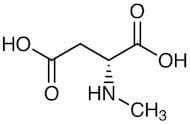
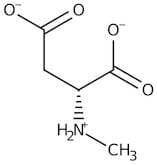
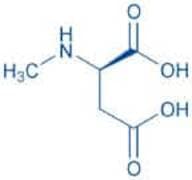
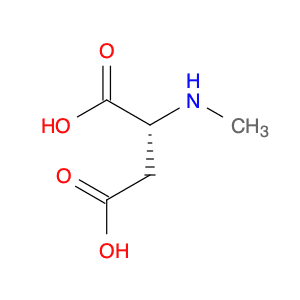
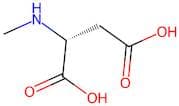
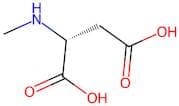
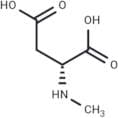
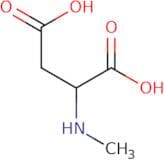
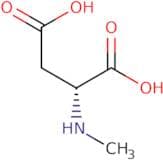
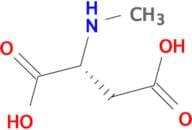
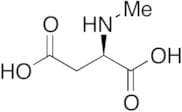
NMDA, oder N-Methyl-D-Aspartat, ist ein synthetisches Aminosäurederivat, das als selektiver Agonist für den NMDA-Rezeptor wirkt, einen Subtyp des Glutamatrezeptors im zentralen Nervensystem. Es zeichnet sich durch seine Fähigkeit aus, die synaptische Plastizität zu fördern, und ist entscheidend für Prozesse wie Lernen und Gedächtnis. NMDA ist ein weißer kristalliner Feststoff, der in Wasser löslich ist und einen hohen Schmelzpunkt aufweist. Seine chemische Struktur umfasst eine Methylgruppe, die an das Stickstoffatom des Aspartatrückgrats gebunden ist, was seine Rezeptorbindungs-Eigenschaften verbessert. NMDA wird häufig in der neurowissenschaftlichen Forschung verwendet, um die exzitatorische Neurotransmission zu untersuchen, und hat Auswirkungen auf das Verständnis verschiedener neurologischer Störungen. Darüber hinaus ist es wichtig, NMDA mit Vorsicht zu behandeln, da es in hohen Konzentrationen neurotoxische Wirkungen haben kann. Seine CAS-Nummer, 6384-92-5, wird zur Identifizierung in chemischen Datenbanken und regulatorischen Kontexten verwendet. Insgesamt ist NMDA eine bedeutende Verbindung sowohl in der pharmakologischen Forschung als auch im Studium der Neurobiologie.
Formel:C5H9NO4
InChl:InChI=1S/C5H9NO4/c1-6-3(5(9)10)2-4(7)8/h3,6H,2H2,1H3,(H,7,8)(H,9,10)/t3-/m1/s1
InChI Key:InChIKey=HOKKHZGPKSLGJE-GSVOUGTGSA-N
SMILES:[C@@H](CC(O)=O)(C(O)=O)NC
Synonyme:- (2R)-2-(Methylamino)butanedioic acid
- (2R)-2-(methylammonio)butanedioate
- (R)-2-(Methylamino)succinic acid
- <span class="text-smallcaps">D</span>-Aspartic acid, N-methyl-
- Aspartic acid, N-methyl-
- Aspartic acid, N-methyl-, <span class="text-smallcaps">D</span>-
- Aspartic acid, N-methyl-, D-
- D-Aspartic acid, N-methyl-
- N-Methyl-<span class="text-smallcaps">D</span>-aspartic acid
- Nmda
- N-Methyl-D-aspartic acid
Sortieren nach
Reinheit (%)
0
100
|
0
|
50
|
90
|
95
|
100
13 Produkte.
N-Methyl-D-aspartic Acid
CAS:Formel:C5H9NO4Reinheit:>98.0%(T)Farbe und Form:White to Almost white powder to crystalMolekulargewicht:147.13N-Methyl-D-aspartic acid, 98+%
CAS:This Thermo Scientific Chemicals brand product was originally part of the Alfa Aesar product portfolio. Some documentation and label information may refer to the legacy brand. The original Alfa Aesar product / item code or SKU reference has not changed as a part of the brand transition to Thermo SciFormel:C5H9NO4Reinheit:98+%Molekulargewicht:147.13N-Me-D-Asp-OH
CAS:Excitatory amino acid neurotransmitter. NMDA is a selective agonist of the glutamate receptor that regulates Ca²⁺ channels.Formel:C5H9NO4Reinheit:> 99%Molekulargewicht:147.13N-Methyl-D-aspartic acid
CAS:Formel:C5H9NO4Reinheit:≥ 98.0%Farbe und Form:White powderMolekulargewicht:147.13NMDA
CAS:N-Methyl-D-aspartic acid is an amino acid that, as the D-isomer, is the defining agonist for the NMDA (N-Methyl-D-aspartic acid) receptor subtype of glutamateFormel:C5H9NO4Reinheit:99.21% - 99.90%Farbe und Form:White SolidMolekulargewicht:147.13N-Methyl-D-aspartic acid - Bio-X ™
CAS:N-Methyl-D-aspartic acid (NMDA) is a neurotransmitter that activates the NMDA receptor. It is also a major excitatory amino acid in the mammalian central nervous system, playing an important role in regulating synaptic plasticity and memory functions. NMDA has been shown to be involved in the regulation of energy metabolism, drug interactions, polymerase chain reactions, neuronal death, bowel disease and α7 nicotinic acetylcholine receptors.
Formel:C5H9NO4Reinheit:Min. 95%Farbe und Form:PowderMolekulargewicht:147.13 g/molN-Methyl-D-aspartic acid
CAS:NMDA agonistFormel:C5H9NO4Reinheit:Min. 95%Farbe und Form:White PowderMolekulargewicht:147.13 g/mol(R)-2-(Methylamino)succinic acid
CAS:M03889 - (R)-2-(Methylamino)succinic acid
Formel:C5H9NO4Reinheit:98%Farbe und Form:Solid, No data available.Molekulargewicht:147.13NMDA
CAS:Applications NMDA(N-Methyl-D-aspartic acid)is a specific agonist for NMDA receptor mimicking the action of glutamate, the neurotransmitter which normally acts at that receptor.
References Cull-Candy, S., et al.: Curr. Opin. Neurobiol,, 11, 327 (2001)Formel:C5H9NO4Farbe und Form:White SolidMolekulargewicht:147.129