CAS 643-03-8
:D-Altritol
Beschreibung:
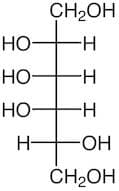
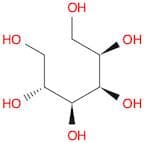
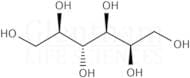
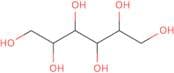
D-Altritol, auch bekannt als D-Altritol oder D-Altriose, ist ein Zuckeralkohol, der aus dem Aldose-Zucker D-Altriose gewonnen wird. Es handelt sich um eine farb- und geruchloses, kristallines Produkt, das in Wasser löslich ist und einen süßen Geschmack aufweist, was es für Lebensmittel- und Pharmaanwendungen als kalorienarmen Süßstoff interessant macht. D-Altritol hat eine chemische Formel von C6H14O6 und weist mehrere Hydroxylgruppen (-OH) auf, die zu seiner Hydrophilie und Reaktivität beitragen. Die Verbindung ist unter normalen Bedingungen typischerweise stabil, kann jedoch unter bestimmten Umständen Oxidation oder Fermentation unterliegen. D-Altritol wird häufig in der Herstellung von zuckerfreien Produkten verwendet und hat potenzielle gesundheitliche Vorteile, wie einen niedrigeren glykämischen Index im Vergleich zu herkömmlichen Zuckern. Darüber hinaus wird es in der biochemischen Forschung und als Baustein in der organischen Synthese eingesetzt. Wie bei vielen Zuckeralkoholen kann übermäßiger Konsum zu gastrointestinalen Beschwerden führen, da es eine abführende Wirkung hat. Insgesamt ist D-Altritol eine vielseitige Verbindung mit Anwendungen in verschiedenen Branchen, insbesondere in gesundheitsbewussten Lebensmittelformulierungen.
Formel:C6H14O6
InChl:InChI=1/C6H14O6/c7-1-3(9)5(11)6(12)4(10)2-8/h3-12H,1-2H2/t3-,4-,5-,6+/m1/s1
InChI Key:InChIKey=FBPFZTCFMRRESA-KAZBKCHUSA-N
SMILES:[C@@H]([C@@H]([C@@H](CO)O)O)([C@@H](CO)O)O
Synonyme:- <span class="text-smallcaps">D</span>-Altritol
- <span class="text-smallcaps">D</span>-Talitol
- Altritol, <span class="text-smallcaps">D</span>-
- D-Talitol
- D-altritol
- Altritol, D-
- Talitol
- D-TALITOL 98+%
- D-TALITOL USP/EP/BP
- D-Talitol-1-13C
- D-Altritol, Talitol
- Weitere Synonyme anzeigen
Sortieren nach
Reinheit (%)
0
100
|
0
|
50
|
90
|
95
|
100
4 Produkte.
D-Talitol
CAS:Formel:C6H14O6Reinheit:>98.0%(HPLC)Farbe und Form:White to Almost white powder to crystalMolekulargewicht:182.17D-Talitol
CAS:D-Talitol is a drug that is used to treat eye disorders and chronic pulmonary diseases. It belongs to the class of drugs called xylitol dehydrogenase inhibitors. D-Talitol inhibits the enzyme xylitol dehydrogenase, which converts xylitol into a different sugar called sorbitol. Sorbitol accumulates in certain parts of cells, such as the mitochondria, and can disrupt cellular processes by inhibiting oxidative phosphorylation and glycolysis. In addition, there are other effects of sorbitol accumulation that may lead to mitochondrial dysfunction, including inhibition of protein synthesis, induction of apoptosis (cell death), and inhibition of cell proliferation. D-Talitol has been shown to inhibit the growth of chronic kidney cells in culture by interfering with cellular metabolism in mitochondria. A kinetic study has also shown that D-Talitol inhibits b-raf activity at concentrations that are not cytotoxic. This suggests that D-Talitol may be useful forFormel:C6H14O6Reinheit:Min. 98 Area-%Farbe und Form:White PowderMolekulargewicht:182.17 g/mol