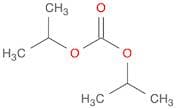
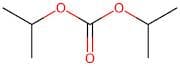
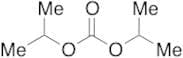
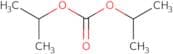
CAS 6482-34-4
:Diisopropylcarbonat
- Bis-2-propyl carbonate
- Carbonic acid bis(1-methylethyl) ester
- Dipropan-2-Yl Carbonate
- 2-Tert-Butyl-1-[2-(4-Methoxyphenoxy)Ethoxy]-4-Methylbenzene
Diisopropyl Carbonate (Stabilized with Calcium Carbonate)
CAS:Kontrolliertes ProduktApplications Diisopropyl Carbonate is used in the synthesis of Huperizine A (H826000) a reversible alkaloid inhibitor of AChE which crosses the blood-brain barrier. A potential therapeutic agent for Alzheimer’s disease. It reduces cell death induced by glutamate in primary cultures derived from forebrain, hippocampus, cortex and cerebellum of embryonic rat brain.
References Ding, X. et al.: Tetrahedron 68, 6240 (2012); Wang, Y.-E., et al.: Acta Pharmacol. Sin., 7, 110 (1986), Ved, H.S., et al.: Neuroreport, 8, 963 (1997)Formel:C7H14O3Farbe und Form:NeatMolekulargewicht:146.18Diisopropylcarbonate
CAS:Diisopropylcarbonate is a chemical compound that is used as a polymerization initiator. It is also used in the production of polycarbonates, as a corrosion inhibitor, and to inhibit the formation of fatty acids in animal feed. Diisopropylcarbonate has been shown to react with chlorine gas to yield dichlorocarbonic acid and hydrogen chloride. This reaction is an example of oxidative carbonylation. The average particle diameter of diisopropylcarbonate ranges from 0.1-0.2 microns, which can be varied by changing its boiling point or pressure during synthesis. Diisopropylcarbonate can also be prepared by reacting ethylene with carbon monoxide and hydrogen chloride at high temperature and pressure.
Formel:C7H14O3Reinheit:Min. 95%Molekulargewicht:146.18 g/mol