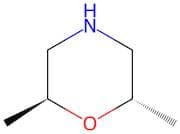
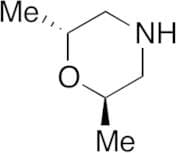
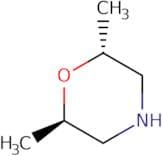
CAS 6485-45-6
:trans-2,6-Dimethylmorpholin
- Morpholine, 2,6-dimethyl-, (2R,6R)-rel-
- Morpholine, 2,6-dimethyl-, trans-
- morpholine, 2,6-dimethyl-, (2R,6R)-trans-2,6-dimethylmorpholine
- rel-(2R,6R)-2,6-Dimethylmorpholine
- trans-2,6-Dimethylmorpholine
- (2R,6R)-2,6-Dimethylmorpholine
- trans-2,6-DiMethylMorphol...
- 2,6-trans-DiMethylMorpholine
trans-2,6-Dimethylmorpholine
CAS:trans-2,6-DimethylmorpholineFormel:C6H13NOReinheit:95%Farbe und Form: colourless liquidMolekulargewicht:115.17g/moltrans-2,6-Dimethylmorpholine
CAS:Formel:C6H13NOReinheit:96%Farbe und Form:LiquidMolekulargewicht:115.176trans-2,6-Dimethylmorpholine
CAS:Kontrolliertes ProduktApplications trans-2,6-Dimethylmorpholine is used as a reagent in the synthesis of 4-Amino-5-chloro-2-methoxybenzoates as agonists and antagonists for 5-HT4 receptors. Also a reagent in the synthesis of trans-Amorolfine.
References Yang, D., et al.: J. Med. Chem., 40, 608 (1997)Formel:C6H13NOFarbe und Form:NeatMolekulargewicht:115.17Trans-2,6-dimethylmorpholine
CAS:Trans-2,6-dimethylmorpholine is an enantiomer of morpholine. It converts mandelic acid to its corresponding methyl ester with high efficiency and selectivity. Trans-2,6-Dimethylmorpholine has been used to optimize pharmaceuticals by focusing on the sensitivity of the drug's enantiomers to specific conditions. These conditions include pH, temperature, and solvent type. The enantiomers can be optimized for use in a variety of pharmaceutical applications such as oral tablets or nasal sprays.
Formel:C6H13NOReinheit:Min. 95%Molekulargewicht:115.17 g/mol