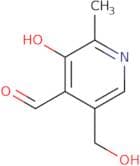
CAS 66-72-8
:Pyridoxal
Beschreibung:
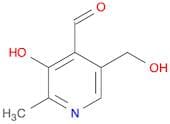
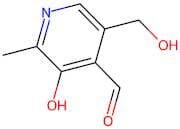
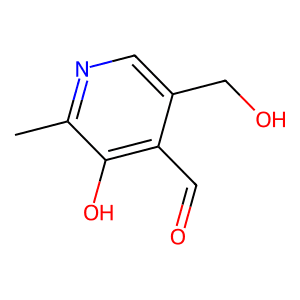
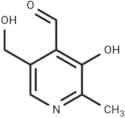
Pyridoxal, mit der CAS-Nummer 66-72-8, ist eine biologisch aktive Form von Vitamin B6, die eine entscheidende Rolle in verschiedenen enzymatischen Reaktionen im Körper spielt. Es handelt sich um eine gelbe kristalline Verbindung, die in Wasser und Alkohol löslich, aber weniger löslich in unpolaren Lösungsmitteln ist. Pyridoxal dient als Coenzym im Aminosäurestoffwechsel und erleichtert die Transaminierung, Decarboxylierung und Racemisierung von Aminosäuren. Seine Struktur weist einen Pyridinring mit einer Aldehydgruppe auf, die für seine Reaktivität und biologische Funktion entscheidend ist. Pyridoxal kann phosphoryliert werden, um Pyridoxal Phosphat zu bilden, die aktive Coenzymform, die an zahlreichen Stoffwechselwegen beteiligt ist. Darüber hinaus zeigt es antioxidative Eigenschaften und ist an der Synthese von Neurotransmittern wie Serotonin und Dopamin beteiligt. Ein Mangel an Pyridoxal kann zu verschiedenen Gesundheitsproblemen führen, darunter Anämie, periphere Neuropathie und beeinträchtigte Immunfunktion. Insgesamt ist Pyridoxal entscheidend für die Aufrechterhaltung der metabolischen Gesundheit und die Unterstützung verschiedener physiologischer Prozesse.
Formel:C8H9NO3
InChl:InChI=1/C8H9NO3/c1-5-8(12)7(4-11)6(3-10)2-9-5/h2,4,10,12H,3H2,1H3
InChI Key:InChIKey=RADKZDMFGJYCBB-UHFFFAOYSA-N
SMILES:C(=O)C=1C(CO)=CN=C(C)C1O
Synonyme:- 3-Hydroxy-5-(Hydroxymethyl)-2-Methylpyridine-4-Carbaldehyde
- 3-Hydroxy-5-(hydroxymethyl)-2-methyl-4-pyridinecarboxaldehyde
- 3-Hydroxy-5-(hydroxymethyl)-2-methylisonicotinaldehyde
- 3-Hydroxy-5-(hydroxymethyl)-2-methylpyridine-4-carboxaldehyde
- 3-Hydroxy-5-hydroxymethyl-2-methyl-4-pyridincarbaldehyd
- 3-Hydroxy-5-hydroxymethyl-2-methyl-pyridine-4-carbaldehyde
- 3-Hydroxy-5-hydroxymethyl-2-methylisonicotin aldehyde
- 4-Pyridinecarboxaldehyde, 3-hydroxy-5-(hydroxymethyl)-2-methyl-
- 4-Pyridinecarboxaldehyde, 3-hydroxy-5-(hydroxymethyl)-2-methyl- (9CI)
- Brn 0383768
- Nsc 19613
- Piridoxal
- Pyridoxaldehyde
- Unii-3Thm379K8A
- 5-21-13-00044 (Beilstein Handbook Reference)
- Pyridoxal
- 3-Hydroxy-5-(hydroxymethyl)-2-methyl-4-pyridinecarbaldehyde
- 2-Methyl-3-hydroxy-5-(hydroxymethyl)pyridine-4-carbaldehyde
- PYRIDOXALE
- 3-(Hydroxymethyl)-5-hydroxy-6-methylpyridine-4-carbaldehyde
- 3-hydroxy-2-methyl-5-methylol-isonicotinaldehyde
- Weitere Synonyme anzeigen
Sortieren nach
Reinheit (%)
0
100
|
0
|
50
|
90
|
95
|
100
6 Produkte.
Pyridoxal
CAS:Pyridoxal represents an active form of vitamin B6 [1].Formel:C8H9NO3Reinheit:99.83%Farbe und Form:SolidMolekulargewicht:167.163-Hydroxy-5-(hydroxymethyl)-2-methyl-pyridine-4-carbaldehyde
CAS:3-Hydroxy-5-(hydroxymethyl)-2-methyl-pyridine-4-carbaldehyde (3HMPA) is a natural compound that has been shown to have tissue nonspecific effects on the bowel. It is structurally similar to pyridoxal, an amino acid present in food, and may have a role in the synthesis of proteins. 3HMPA has also been shown to be an effective treatment for infectious diseases such as HIV and tuberculosis. 3HMPA binds metal ions by chelation and inhibits the growth of bacteria by inhibiting glutamate production. This compound has also been shown to stimulate physiological responses in mice, including increased heart rate and blood pressure.
Formel:C8H9NO3Reinheit:Min. 95%Molekulargewicht:167.16 g/mol