CAS 6601-37-2
:Ethansulfonamid, N-methyl-
Beschreibung:
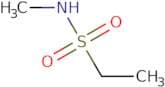
N-Methyl-Ethansulfonamid, mit der CAS-Nummer 6601-37-2, ist eine organische Verbindung, die durch ihre Sulfonamid-Funktionalität gekennzeichnet ist. Sie weist eine Sulfonylgruppe (–SO2) auf, die an ein Ethanamin-Rückgrat gebunden ist, mit einer Methylgruppe als Substituent am Stickstoffatom. Diese Verbindung ist typischerweise eine farblose bis blassgelbe Flüssigkeit oder ein Feststoff, abhängig von ihrer Reinheit und Temperatur. Sie ist in Wasser und polaren organischen Lösungsmitteln löslich, was ihre Nützlichkeit in verschiedenen chemischen Anwendungen erhöht. N-Methyl-Ethansulfonamid ist bekannt für seine Rolle als Reagenz in der organischen Synthese und kann als Baustein in der Produktion von Arzneimitteln und Agrochemikalien dienen. Darüber hinaus zeigt es Eigenschaften, die seine biologische Aktivität beeinflussen können, was es in der medizinischen Chemie von Interesse macht. Sicherheitsdaten zeigen, dass es, wie viele Sulfonamide, mit Vorsicht behandelt werden sollte, da es potenzielle Reizwirkungen haben kann. Insgesamt ist N-Methyl-Ethansulfonamid eine vielseitige Verbindung mit erheblicher Relevanz sowohl in industriellen als auch in Forschungskontexten.
Formel:C3H9NO2S
Sortieren nach
Reinheit (%)
0
100
|
0
|
50
|
90
|
95
|
100
1 Produkte.
N-Methylethane-1-sulfonamide
CAS:N-Methylethane-1-sulfonamide is a nonsteroidal antiestrogen that has been shown to inhibit the growth of breast cancer cells in vitro. It has also been shown to have a protective effect on cardiac tissues. N-Methylethane-1-sulfonamide is highly selective for estrogen receptors, and it is believed that this selectivity may be due to its ability to inhibit the enzyme 17β-hydroxysteroid dehydrogenase, which converts estrone into estradiol. The drug has been shown to increase the amount of progesterone in rats with induced ovarian cysts and decrease the number of oocytes released by female Xenopus laevis frogs. It also inhibits gene expression by binding to DNA at specific sites, thereby blocking transcription or translation. This drug is not active against bronchial asthma or cardiac arrhythmia in rodents; however, it can cause enantioselective inhibition of cardiac contractilityFormel:C3H9NO2SReinheit:Min. 95%Molekulargewicht:123.18 g/mol