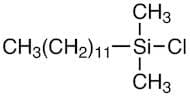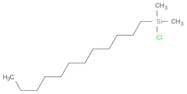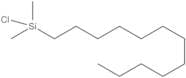
CAS 66604-31-7
:Dodecyldimethylchlorsilan
- (1-Chlorododecyl)(Dimethyl)Silyl
- 1-Dodecyldimethylchlorosilane
- Chloro(dodecyl)dimethylsilane
- Chlorodimethyldodecylsilane
- Chlorododecyldimethylsilane
- Dimethyl(dodecyl)chlorosilane
- Dimethyl-n-dodecylchlorosilane
- Dimethyldodecylchlorosilane
- Dimethyldodecylsilyl chloride
- Dodecyldimethylsilyl chloride
- Silane, chlorododecyldimethyl-
- n-Dodecyldimethylchlorosilane
- Weitere Synonyme anzeigen
Chloro(dodecyl)dimethylsilane
CAS:Formel:C14H31ClSiReinheit:>95.0%(GC)Farbe und Form:Colorless to Light yellow to Light orange clear liquidMolekulargewicht:262.94Chloro(dodecyl)dimethylsilane
CAS:Formel:C14H31ClSiReinheit:96%Farbe und Form:LiquidMolekulargewicht:262.9344Chloro(Dodecyl)Dimethylsilane
CAS:Chloro(Dodecyl)DimethylsilaneReinheit:95%Molekulargewicht:262.93g/molDodecyldimethylchlorosilane
CAS:Reinheit:>95.0%(GC)Farbe und Form:LiquidMolekulargewicht:262.94000244140625DODECYLDIMETHYLCHLOROSILANE
CAS:Alkyl Silane - Conventional Surface Bonding
Aliphatic, fluorinated aliphatic or substituted aromatic hydrocarbon substituents are the hydrophobic entities which enable silanes to induce surface hydrophobicity. The organic substitution of the silane must be non-polar. The hydrophobic effect of the organic substitution can be related to the free energy of transfer of hydrocarbon molecules from an aqueous phase to a homogeneous hydrocarbon phase. A successful hydrophobic coating must eliminate or mitigate hydrogen bonding and shield polar surfaces from interaction with water by creating a non-polar interphase. Although silane and silicone derived coatings are in general the most hydrophobic, they maintain a high degree of permeability to water vapor. This allows coatings to breathe and reduce deterioration at the coating interface associated with entrapped water. Since ions are not transported through non-polar silane and silicone coatings, they offer protection to composite structures ranging from pigmented coatings to rebar reinforced concrete. A selection guide for hydrophobic silanes can be found on pages 22-31 of the Hydrophobicity, Hydrophilicity and Silane Surface Modification brochure.
Dodecyldimethylchlorosilane; ChlorodimethylsilyldodecaneFormel:C14H31ClSiReinheit:97%Farbe und Form:Straw LiquidMolekulargewicht:262.94Chloro(dodecyl)dimethylsilane
CAS:Chloro(dodecyl)dimethylsilane is a silicon-based surfactant that is used as a solvent and in organic chemistry. It has been shown to be highly efficient for the detection of carbon nanotubes and other nanoparticles by its ability to form monolayers on the surface of these structures. The surfactant can also be used in regenerative medicine, because it is able to regenerate cell surfaces and facilitate cellular attachment. Chloro(dodecyl)dimethylsilane has been shown to have surface properties that are structured, acid catalytic, and hydrophobic, leading to high stability under various conditions. It also has a low detection time due to its high solubility in water.Formel:C14H31ClSiReinheit:Min. 95%Molekulargewicht:262.94 g/mol