CymitQuimica logo

CAS 696-31-1

:

Benzol, (1-fluorethenyl)-

Beschreibung:
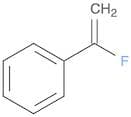
Benzol, (1-fluorethenyl)-, auch bekannt als Vinylfluorid, ist eine organische Verbindung, die durch ihre Struktur gekennzeichnet ist, die einen benzolischen Ring umfasst, der mit einer Vinylgruppe substituiert ist, die ein Fluoratome enthält. Diese Verbindung ist bei Raumtemperatur ein farbloses Gas und hat einen süßen Geruch. Sie ist bekannt für ihre Reaktivität aufgrund der Anwesenheit der Doppelbindung in der Vinylgruppe, was sie anfällig für Polymerisation und verschiedene chemische Reaktionen macht. Vinylfluorid wird hauptsächlich in der Herstellung von fluorierten Polymeren wie Polyvinylfluorid verwendet, die für ihre chemische Beständigkeit und Haltbarkeit geschätzt werden. Die Verbindung ist auch von Interesse im Bereich der organischen Synthese und der Materialwissenschaften. Es ist jedoch wichtig zu beachten, dass Vinylfluorid als gefährliche Substanz eingestuft ist, mit potenziellen Gesundheitsrisiken, die mit Inhalation oder Hautkontakt verbunden sind, was geeignete Sicherheitsmaßnahmen während der Handhabung und Verwendung erforderlich macht. Auch die Umweltauswirkungen und der regulatorische Status sind Überlegungen bei seiner Anwendung und Verwaltung.
Formel:C8H7F
Sortieren nach

Reinheit (%)
0
100
|
0
|
50
|
90
|
95
|
100
4 Produkte.
  • Benzene, (1-fluoroethenyl)-

    CAS:
    Formel:C8H7F
    Reinheit:95%
    Farbe und Form:Liquid
    Molekulargewicht:122.1396

    Ref: IN-DA005VOB

    1g
    Nachfragen
    100mg
    318,00€
    250mg
    703,00€
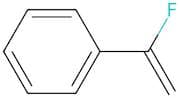
  • α-Fluorostyrene

    CAS:
    α-Fluorostyrene
    Reinheit:≥95%
    Farbe und Form:Colourless Liquid
    Molekulargewicht:122.14g/mol

    Ref: 54-PC400564

    ne
    Nachfragen
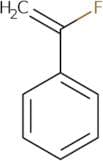
  • (1-Fluorovinyl)benzene

    CAS:
    Reinheit:98%
    Molekulargewicht:122.1419983

    Ref: 10-F775507

    1g
    1.035,00€
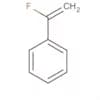
  • alpha-Fluorostyrene

    CAS:

    Styrene is a synthetic monomer that belongs to the group of cycloalkanes. It is a colorless, volatile liquid with a boiling point of at least 100°C and a viscosity of 0.5-2 mm2/s. Styrene is usually used in the production of polystyrene plastic and styrenic resins. Its most well-known application is in the manufacture of polystyrene foam insulation (commonly known as Styrofoam). Styrene can be converted into other compounds by thermolysis, oxidation, or hydrolysis. One such conversion is debromination, which occurs when styrene reacts with bromine in an alkaline solution to produce di-bromostyrene and hydrogen bromide gas. The isotopomers alpha-fluorostyrene and beta-fluorostyrene are derivatives of styrene that are used for analysis purposes because they have different physical properties due to their different masses.

    Formel:C8H7F
    Reinheit:Min. 95%
    Molekulargewicht:122.14 g/mol

    Ref: 3D-AAA69631

    50mg
    460,00€
    500mg
    1.245,00€