CAS 6982-09-8
:4-Hexadecen-1,3-diol, 2-amino-, (2S,3R,4E)-
Beschreibung:
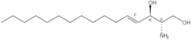
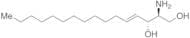
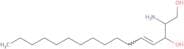
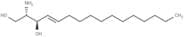
4-Hexadecen-1,3-diol, 2-amino-, (2S,3R,4E)-, mit der CAS-Nummer 6982-09-8, ist eine organische Verbindung, die durch ihre lange Kohlenwasserstoffkette und das Vorhandensein sowohl von Hydroxyl- (-OH) als auch von Amino- (-NH2) funktionellen Gruppen gekennzeichnet ist. Diese Verbindung weist eine Doppelbindung in ihrer Kohlenstoffkette auf, spezifisch an der Position 4, was zu ihrer Ungesättigtheit beiträgt. Die durch (2S,3R,4E) angegebene Stereochemie deutet auf spezifische räumliche Anordnungen der Substituenten um die chiralen Zentren hin, die ihre Reaktivität und Wechselwirkungen beeinflussen. Das Vorhandensein von Hydroxylgruppen verbessert typischerweise die Löslichkeit in polaren Lösungsmitteln und kann an Wasserstoffbrückenbindungen teilnehmen, während die Aminogruppe Basizität und Reaktivität in verschiedenen chemischen Reaktionen verleihen kann. Diese Verbindung könnte Anwendungen in Bereichen wie Biochemie, Pharmazie oder Materialwissenschaften finden, wo ihre einzigartigen funktionellen Gruppen für Synthesen oder als Zwischenprodukte in chemischen Prozessen genutzt werden können. Insgesamt deuten ihre strukturellen Merkmale auf eine potenzielle Vielseitigkeit in der chemischen Reaktivität und den Anwendungen hin.
Formel:C16H33NO2
Sortieren nach
Reinheit (%)
0
100
|
0
|
50
|
90
|
95
|
100
4 Produkte.
C16-D-erythro-Sphingosine
CAS:Formel:C16H33NO2Reinheit:>98%Farbe und Form:SolidMolekulargewicht:271.44c16-Sphingosine
CAS:Sphingosine is a long-chain fatty acid that is naturally found in the human body. It has been shown to have a role in regulating cellular metabolism and apoptosis, as well as inflammatory responses. Sphingosine is metabolized through the action of hydrochloric acid and hydrogen chloride to form sphinganine, which can then be converted into other metabolites. The metabolism of sphingosine is an important factor for determining its effects on the body. Chronic exposure to sphingosine may result in an accumulation of metabolites in the body, which may lead to metabolic profiles that are similar to those seen in various diseases such as cancer and inflammatory diseases.Formel:C16H33NO2Reinheit:Min. 95%Molekulargewicht:271.44 g/molSphingosine (d16:1)
CAS:Sphingosine (d16:1), an unconventional sphingolipid, is synthesized through enzymatic reactions starting with the condensation of myristoyl-CoA and serine by serine palmitoyltransferase long-chain base subunit 3 (SPTLC3), which shows a preference for myristoyl-CoA. This compound is found in minute quantities in its free form in human plasma and as a component of various plasma sphingolipids, such as sphingosine-1-phosphate, ceramides, sphingomyelins, and in brain cerebrosides, albeit at lower concentrations than the more common d18:1 sphingoid base. Sphingosine (d16:1) acts as an inhibitor of PKC in mixed micelle assays and diminishes superoxide production triggered by phorbol 12-myristate 13-acetate in isolated human neutrophils, as well as inhibiting the growth of CHO cells with IC50 values of 1 and 3.2 µM, respectively. Additionally, the concentration of sphingolipids containing sphingosine (d16:1) in the plasma is linked to the dietary consumption of saturated fatty acids and protein among ethnic Chinese populations.Formel:C16H33NO2Farbe und Form:SolidMolekulargewicht:271.4