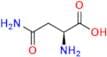
CAS 70-47-3
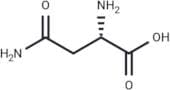
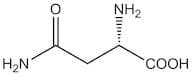
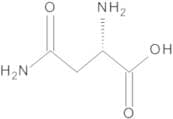
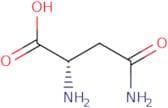
:(-)-Asparagin
Beschreibung:
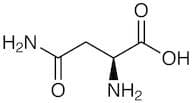
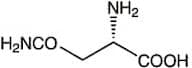
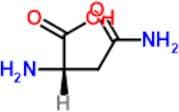
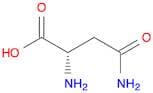
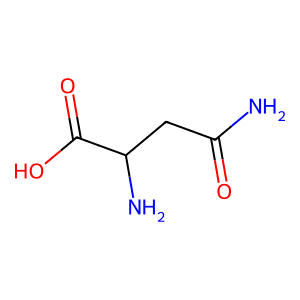
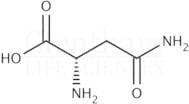
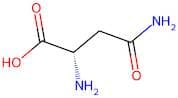
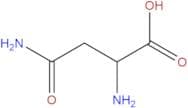
(-)-Asparagin ist eine Aminosäure, die eine entscheidende Rolle bei der Proteinsynthese und im Stoffwechsel spielt. Sie wird als nicht essentielle Aminosäure klassifiziert, was bedeutet, dass der Körper sie aus anderen Verbindungen synthetisieren kann. Die chemische Formel von (-)-Asparagin ist C4H8N2O3, und sie weist sowohl eine Aminogruppe (-NH2) als auch eine Carboxylgruppe (-COOH) auf, die für Aminosäuren charakteristisch sind. Diese Verbindung existiert in zwei enantiomeren Formen, wobei (-)-Asparagin die natürlich vorkommende Form ist. Sie ist in Wasser löslich, was ihre Rolle in biologischen Systemen erleichtert. (-)-Asparagin ist an verschiedenen Stoffwechselprozessen beteiligt, einschließlich der Synthese von Nukleotiden und der Regulation des Stickstoffstoffwechsels. Darüber hinaus kann sie als Vorläufer für die Synthese anderer Aminosäuren und Neurotransmitter dienen. In Bezug auf die Sicherheit wird sie zwar allgemein als sicher für den Verzehr anerkannt, jedoch kann eine übermäßige Aufnahme zu Stoffwechselungleichgewichten führen. Insgesamt ist (-)-Asparagin für die Zellfunktion und das Wachstum unerlässlich, insbesondere in sich schnell teilenden Zellen.
Formel:C4H8N2O3
InChl:InChI=1/C4H10N2O3/c5-2-9-1-3(6)4(7)8/h3H,1-2,5-6H2,(H,7,8)/t3-/m0/s1
InChI Key:InChIKey=DCXYFEDJOCDNAF-REOHCLBHSA-N
SMILES:[C@H](CC(N)=O)(C(O)=O)N
Synonyme:- (2S)-2-Amino-3-carbamoylpropanoic acid
- (2S)-2-amino-3-(aminomethoxy)propanoic acid
- (2S)-4-Amino-2-azaniumyl-4-oxobutanoate
- (S)-(+)-2-Aminosuccinamic acid
- (S)-(+)-Asparagine
- (S)-2,4-Diamino-4-oxobutanoic acid
- (S)-2-AMINOSUCCINIC ACID 4-AMIDEl-aspargine
- 4-AMIDE-2-aminosuccinamic acid
- <span class="text-smallcaps">L</span>-2,4-Diamino-4-oxobutanoic acid
- <span class="text-smallcaps">L</span>-Asparagine
- <span class="text-smallcaps">L</span>-Aspartamine
- <span class="text-smallcaps">L</span>-β-Asparagine
- Agedoite
- Altheine
- Asn
- Asparagin
- Asparagine
- Asparagine L-, Anhydrous
- Asparagine acid
- Asparagine, <span class="text-smallcaps">L</span>-
- Asparagine, L-
- Asparaginic Acid
- Asparamide
- Asparraguina
- Aspartamic acid
- Aspartic Acid
- Aspartic acid amide
- Aspartic acid β-amide
- Butanoic acid, 2,4-diamino-4-oxo-, (S)-
- Crystal VI
- H-Asn-OH
- L-2,4-Diamino-4-oxobutanoic acid
- L-2-Aminobutanedioic Acid
- L-2-Aminosuccinamic acid
- L-Aspartamine
- L-β-Asparagine
- Nsc 82391
- α-Aminosuccinamic acid
- L-Asparagine
- L-(+)-Asparagine anhydrous
- ALPHA-AMINOSUCCINAMIC ACID
- (S)-2-AMINOSUCCINIC ACID 4-AMIDE
- L-ASPARTIC ACID 4-AMIDE
- Aspartic acid beta amide
- alpha Amminosuccinamic acid
- L-beta-Asparagine
- Weitere Synonyme anzeigen
Sortieren nach
Reinheit (%)
0
100
|
0
|
50
|
90
|
95
|
100
16 Produkte.
L-Asparagine Anhydrous
CAS:Formel:C4H8N2O3Reinheit:>98.0%(T)Farbe und Form:White to Almost white powder to crystalMolekulargewicht:132.12L-(+)-Asparagine, 99%
CAS:L-(+)-Asparagine acts as a precursor to aspartate. It is also used as a diuretic. It is also employed in the biosynthesis of glycoproteins and proteins. It acts as a food additive. It reacts with reducing sugar to yield acrylamide, which finds application in french fries, potato chips, and toasted bFormel:C4H8N2O3Reinheit:99%Farbe und Form:White, Powder or crystalline powder or crystalsMolekulargewicht:132.12Asparagine Anhydrous
CAS:Acyclic amides (including acyclic carbamates) and their derivatives and salts thereof, nesoiFormel:C4H8N2O3Farbe und Form:White PowderMolekulargewicht:132.05349L-Asparagine, anhydrous
CAS:Formel:C4H8N2O3Reinheit:98.0 - 102.0 % (dried basis)Farbe und Form:White crystalline powderMolekulargewicht:132.12L-Asparagine, anhydrous, USP-NF grade
CAS:Formel:C4H8N2O3Reinheit:98.0 - 101.5 %Farbe und Form:White crystalline powderMolekulargewicht:132.12L-Asparagine
CAS:L-AsparagineFormel:C4H8N2O3Reinheit:99%Farbe und Form: white powderMolekulargewicht:132.12g/molL-Asparagine
CAS:L-Asparagine, a non-essential amino acid, is made from aspartic acid and ammonia for brain and nerve function.Formel:C4H8N2O3Reinheit:99.95%Farbe und Form:Orthorhombic Bisphenoidal Crystals SolidMolekulargewicht:132.12L-asparagine
CAS:Amino acidFormel:C4H8N2O3Reinheit:≥ 98.0 % (HPLC)Farbe und Form:PowderMolekulargewicht:132.12L-Asparagine
CAS:Kontrolliertes ProduktApplications L-Asparagine is one of the precursors for acrylamide formation. Added asparagine dramatically increased the content of acrylamide in crusts dry matter.
References Surdyk, N., et al.: J. Agric. Food Chem., 52, 2047 (2004);Formel:C4H8N2O3Farbe und Form:NeatMolekulargewicht:132.12L-Asparagine anhydrous
CAS:L-Asparagine anhydrous is a guanine nucleotide-binding protein that binds to the response element of the human serum albumin gene. It has been shown to stimulate liver enzymes and increase the synthesis of low-density lipoprotein (LDL) cholesterol, which may lead to atherosclerosis. L-Asparagine anhydrous has been used in wastewater treatment as a nitrogen source for nitrification and denitrification. The enzyme activity of L-asparagine anhydrous has been shown to be high in tumour cells and is also present in solid tumours. This protein can be used as a model system for studying oligosaccharides because it is able to produce these molecules from glucose. L-Asparagine anhydrous is not active against carcinoma cell lines, but it does have some activity against solid tumours.Formel:C4H8N2O3Farbe und Form:White Off-White PowderMolekulargewicht:132.12 g/molH-Asn-OH
CAS:M02999 - H-Asn-OH
Formel:C4H8N2O3Reinheit:98%Farbe und Form:Crystalline Powder,PowderMolekulargewicht:132.119