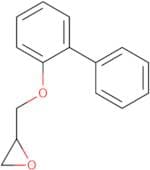
![2-[([1,1′-Biphenyl]-2-yloxy)methyl]oxirane](/_next/image/?url=https%3A%2Fstatic.cymitquimica.com%2Fcas-image%2Fthumb-webp%2F134222-2-11-biphenyl-2-yloxy-methyl-oxirane.webp&w=3840&q=75)
CAS 7144-65-2
:2-[(2'-Biphenyloxy)methyl]oxiran
- (2R)-2-[(biphenyl-2-yloxy)methyl]oxirane
- (2S)-2-[(biphenyl-2-yloxy)methyl]oxirane
- 1-(2-Biphenylyloxy)-2,3-Epoxy-Propan
- 1-(Biphenyloxy)-2,3-epoxypropane
- 2-((1,1'-Biphenyl-2-Yloxy)Methyl)-Oxiran
- 2-(2,3-Epoxypropoxy)biphenyl
- 2-(2-Phenylphenoxymethyl)oxirane
- 2-[(Biphenyl-2-Yloxy)Methyl]Oxirane
- 2-[([1,1′-Biphenyl]-2-yloxy)methyl]oxirane
- 3-(2-Biphenyloxy)Propylene Oxide
- 3-(2-Biphenylyloxy)-1,2-epoxypropane
- 3-(2-Biphenylyloxy)propylene oxide
- 3-(2-Xenyloxy)-1,2-epoxypropane
- 3-(2-Xenyloxy)Propylene Oxide
- 3-(Biphenyl-2-oxy)-1,2-epoxypropane
- Biphenyl-2-Yl 2,3-Epoxypropyl Ether
- Denacol EX 142
- Ex 142
- G 0098
- Glycidyl 2-phenylphenyl ether
- Glycidyl o-phenylphenol ether
- NSC 52971
- Opp-G
- Ortho-Phenylphenolglycidylether
- Oxirane, 2-[([1,1′-biphenyl]-2-yloxy)methyl]-
- Oxirane, [([1,1′-biphenyl]-2-yloxy)methyl]-
- Propane, 1-(2-biphenylyloxy)-2,3-epoxy-
- Propane, 3-[2-biphenylyloxy]-1,2-epoxy-
- Sy-Opg
- Weitere Synonyme anzeigen
2,2,5-trimethylthiomorpholin-3-one
CAS:Formel:C15H14O2Reinheit:99%Farbe und Form:SolidMolekulargewicht:226.27052-[([1,1'-Biphenyl]-2-yloxy)methyl]oxirane
CAS:Formel:C15H14O2Reinheit:>97.0%(GC)Farbe und Form:White or Colorless to Almost white or Almost colorless powder to lump to clear liquidMolekulargewicht:226.282-Biphenylyl glycidylether
CAS:2-Biphenylyl glycidylether is a reactive compound that is found in human urine. It has been shown to be an intermediate in the formation of galacturonic acid, which is synthesized from amide and epoxides. 2-Biphenylyl glycidylether may play a role in bladder cancer due to its ability to form biphenyl epoxide metabolites that are cytotoxic. This compound has also been shown to inhibit mitochondrial fatty acid oxidation, leading to increased mitochondrial membrane permeability and cell death by apoptosis. The homologous series of 2-biphenylyl glycidylethers are structurally similar with minor variations on the side chain length and number of hydroxyl groups. These compounds have been implicated in epidemiological studies as potential carcinogens, although their role as carcinogens remains unclear.
Formel:C15H14O2Reinheit:Min. 95%Farbe und Form:PowderMolekulargewicht:226.27 g/mol
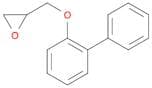

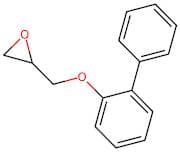

![2-[([1,1'-Biphenyl]-2-yloxy)methyl]oxirane](/_next/image/?url=https%3A%2Fstatic.cymitquimica.com%2Fproducts%2F3B%2Fthumb%2FB5601.jpg&w=3840&q=75)