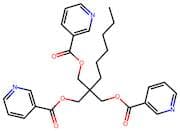
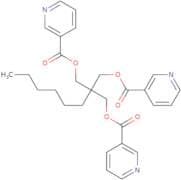
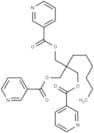
CAS 7237-81-2
:hepronizieren
Beschreibung:
hepronizieren, identifiziert durch die CAS-Nummer 7237-81-2, ist eine chemische Verbindung, die hauptsächlich für ihre Verwendung in verschiedenen pharmazeutischen Anwendungen bekannt ist. Sie zeichnet sich durch ihre spezifische molekulare Struktur aus, die zu ihrer biologischen Aktivität beiträgt. hepronizieren wird häufig wegen seiner antikoagulatorischen Eigenschaften verwendet, was es relevant für die Behandlung und Prävention von thromboembolischen Störungen macht. Die Verbindung zeigt typischerweise Löslichkeit in polaren Lösungsmitteln, was ihre Formulierung in verschiedenen Darreichungsformen erleichtert. Darüber hinaus kann sie eine Reihe von funktionellen Gruppen besitzen, die ihre Reaktivität und Interaktion mit biologischen Systemen beeinflussen. Sicherheits- und Handhabungsvorkehrungen sind beim Arbeiten mit hepronizieren unerlässlich, wie bei vielen chemischen Substanzen, um potenzielle Risiken im Zusammenhang mit der Exposition zu mindern. Ihre Wirksamkeit und Sicherheitsprofil werden in der Regel durch klinische Studien bewertet, um sicherzustellen, dass sie die regulatorischen Standards für die therapeutische Anwendung erfüllt. Insgesamt stellt hepronizieren eine bedeutende Verbindung im Bereich der medizinischen Chemie dar, die zu Fortschritten im Gesundheitswesen beiträgt.
Formel:C28H31N3O6
InChl:InChI=1/C28H31N3O6/c1-2-3-4-5-12-28(19-35-25(32)22-9-6-13-29-16-22,20-36-26(33)23-10-7-14-30-17-23)21-37-27(34)24-11-8-15-31-18-24/h6-11,13-18H,2-5,12,19-21H2,1H3
InChI Key:InChIKey=GUIBJJJLGSYNKE-UHFFFAOYSA-N
SMILES:C(COC(=O)C=1C=CC=NC1)(COC(=O)C=2C=CC=NC2)(COC(=O)C=3C=CC=NC3)CCCCCC
Synonyme:- 1,1,1-(Trihydroxymethyl)heptane trinicotinate
- 1,1,1-Trimethylolheptane trinicotinate
- 1,3-Propanediol, 2-hexyl-2-(hydroxymethyl)-, trinicotinate
- 2,2-Bis{[(Pyridin-3-Ylcarbonyl)Oxy]Methyl}Octyl Pyridine-3-Carboxylate
- 2,2-Dihydroxymethyl-n-octanol trinicotinate
- 2-Hexyl-2-(hydroxymethyl)-1,3-propanediol trinicotinate
- 2-Hydroxymethyl-2-hexyl-1,3-propanediol trinicotinate
- 3-Pyridinecarboxylic acid, 1,1′-[2-hexyl-2-[[(3-pyridinylcarbonyl)oxy]methyl]-1,3-propanediyl] ester
- 3-Pyridinecarboxylic acid, 2-hexyl-2-(((3-pyridinecarbonyl)oxy)methyl)-1,3-propanediyl ester
- 3-Pyridinecarboxylic acid, 2-hexyl-2-[[(3-pyridinylcarbonyl)oxy]methyl]-1,3-propanediyl ester
- Brn 0504308
- Cly 115
- Hepronicat
- Hepronicate [INN:JAN]
- Hepronicato
- Hepronicato [INN-Spanish]
- Hepronicatum
- Hepronicatum [INN-Latin]
- Megrin
- Nicotinic acid, triester with 2-hexyl-2-(hydroxymethyl)-1,3-propanediol
- Unii-E4Rk86Favr
- Hepronicate
- Hepronicate
- Bis(nicotinic acid)2-hexyl-2-(nicotinoyloxymethyl)-1,3-propanediyl ester
- 1,1,1-Heptanetriyltris(methanol)tris(nicotinate)
- Weitere Synonyme anzeigen
Sortieren nach
Reinheit (%)
0
100
|
0
|
50
|
90
|
95
|
100
3 Produkte.
Hepronicate
CAS:Hepronicate is a polyunsaturated fatty acid that is a precursor to prostaglandin E1. It is available as a prescription drug and is used for the treatment of symptoms caused by congestive heart failure, diabetic neuropathy, and corneal endothelial cell dysfunction. Hepronicate has also been shown to stimulate the growth of cells in culture and may be an effective treatment for many types of cancer. This drug binds to the polyunsaturated fatty acid receptor on the surface of cells, which leads to an increase in polyunsaturated fatty acids in the cell membrane and activation of protein kinase C. Hepronicate may also inhibit tumor growth by binding to DNA-dependent RNA polymerase, preventing transcription and replication.Formel:C28H31N3O6Reinheit:Min. 95%Molekulargewicht:505.6 g/molHepronicate
CAS:Hepronicate(Megrin) is a small molecule compound with hypolipidemic and vasodilatory activity.Formel:C28H31N3O6Reinheit:98.41%Farbe und Form:SolidMolekulargewicht:505.56