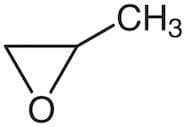
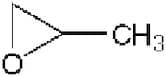
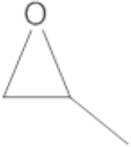
CAS 75-56-9
:(±)-Propylenoxid
Beschreibung:
(±)-Propylenoxid, mit der CAS-Nummer 75-56-9, ist eine farblose, brennbare Flüssigkeit mit einem charakteristischen Geruch. Es handelt sich um ein Epoxid, ein dreigliedriger cyclischer Ether, der es hochreaktiv macht, insbesondere mit Nucleophilen. Diese Verbindung wird hauptsächlich als Zwischenprodukt in der Herstellung von Polyetherpolyolen für Polyurethanschaum verwendet, sowie in der Synthese verschiedener Chemikalien. Seine chemische Formel ist C3H6O, und es hat einen relativ niedrigen Siedepunkt, was zu seiner Flüchtigkeit beiträgt. Die Verbindung weist sowohl polare als auch unpolare Eigenschaften auf, aufgrund des Vorhandenseins des Ether-Sauerstoffs, was es ihm ermöglicht, sich in einer Vielzahl von Lösungsmitteln zu lösen. Darüber hinaus ist (±)-Propylenoxid bekannt für seine potenziellen Gesundheitsrisiken, einschließlich Haut-, Augen- und Atemwegsreizungen, und es wird als möglicher menschlicher Karzinogen eingestuft. Der richtige Umgang und Sicherheitsvorkehrungen sind unerlässlich, wenn man mit dieser Substanz in industriellen und laboratorischen Umgebungen arbeitet.
Formel:C3H6O
InChl:InChI=1/C3H6O/c1-3-2-4-3/h3H,2H2,1H3
InChI Key:InChIKey=GOOHAUXETOMSMM-UHFFFAOYSA-N
SMILES:CC1CO1
Synonyme:- (.+-.)-2-Methyloxirane
- (R,S)-2-Methyl-oxirane
- 1,2-Epossipropano
- 1,2-Epoxipropano
- 1,2-Epoxy-Propan
- 1,2-Epoxypropan
- 1,2-Epoxypropane
- 1,2-Propylene oxide
- 1,2-エポキシプロパン
- 2,3-Epoxypropane
- 2-Methyloxiran
- <span class="text-smallcaps">DL</span>-1,2-Epoxypropane
- AD 6 (suspending agent)
- Ad 6
- Chemogas NV
- DL-1,2-Epoxypropane
- Epihydrin
- Epossipropano, 1,2-
- Epoxipropano, 1,2-
- Epoxypropan, 1,2-
- Epoxypropane
- Époxypropane, 1,2-
- Methyl ethylene oxide
- Methyl oxirane
- Methyloxacyclopropane
- Methyloxiran
- Methyloxirane
- Methyloxiranne
- Metiloxirano
- Ossido di Propilene
- Oxirane, 2-methyl-
- Oxirane, methyl-
- Oxypropylene
- Óxido de propileno
- Propane, 1,2-Epoxy-
- Propene oxide
- Propozone
- Propylene epoxide
- Propyleneoxide
- Propylenoxid
- Propylène, oxyde de
- dl-Propylene oxide
- rac-Propylene oxide
- プロピレンオキシド
- Propylene oxide
- DL-methyloxirane
- caswellno713a
- epoxy-propan
- epapesticidechemicalcode042501
- PO
- ai3-07541
- 3-Methyl-1,2-epoxypropane
- Weitere Synonyme anzeigen
Sortieren nach
Reinheit (%)
0
100
|
0
|
50
|
90
|
95
|
100
7 Produkte.
Propylene Oxide
CAS:Formel:C3H6OReinheit:>99.0%(GC)Farbe und Form:Colorless to Almost colorless clear liquidMolekulargewicht:58.08(±)-Propylene oxide, >99%
CAS:Propylene oxide is used as a precursor in the production of polyether polyols, which is utilized for making polyurethane plastics, polypropylene glycols, propylene glycol ethers and propylene carbonate. It is involved in the preparation of biological samples for electron microscopy. It plays a vitaFormel:C3H6OReinheit:99%Farbe und Form:Liquid, ColorlessMolekulargewicht:58.08Propylene Oxide
CAS:Methyloxirane (propylene oxide)Formel:C3H6OFarbe und Form:Colorless LiquidMolekulargewicht:58.04186(±)-Propylene Oxide
CAS:Kontrolliertes ProduktStability Volatile
Applications (±)-Propylene Oxide is a carcinogenic substance to rats and potentially humans (1). (±)-Propylene oxide also has the ability to self-polymerize at room temperature in the presence of powdered potassium hydroxide (2). (±)-Propylene oxide is used in industry for fumigation in the food industry, inducing the formation of persistent toxic chlorohydrins. Drinking water contaminant candidate list 3 (CCL 3) compound as per United States Environmental Protection Agency (EPA), environmental, and food contaminants.
E3
References 1. Dunkelberg, H. et al.: Brit. J. Cancer. 1982 Dec;46(6):924-33.2. St. Pierre, L. et al.: J. Am. Chem. Soc. 1956 78 (14), pp 3432–3436Formel:C3H6OFarbe und Form:ColourlessMolekulargewicht:58.08